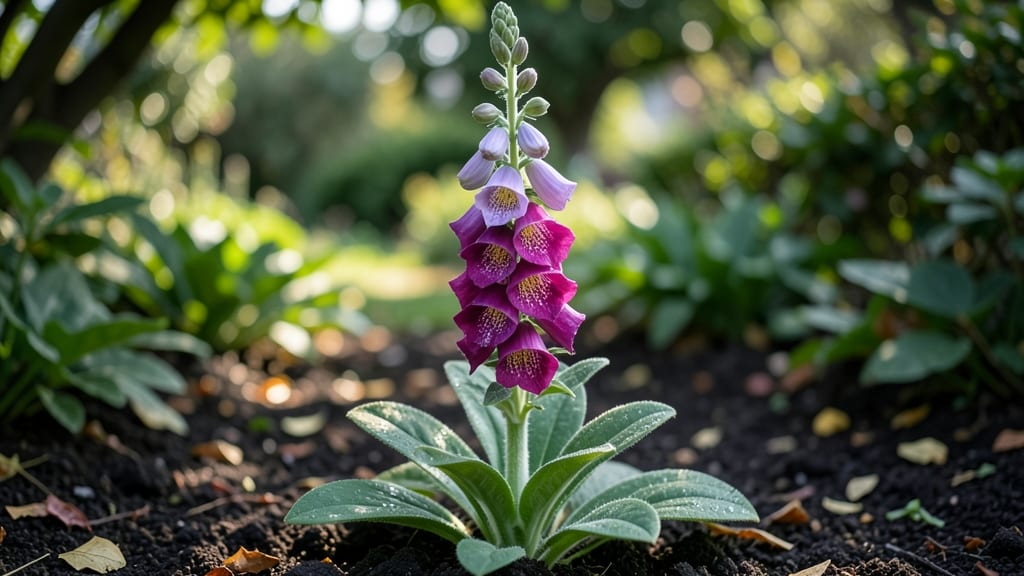
Foxglove blooms typically arrive in late spring to early summer—a 6- to 8-week wait after planting—but the exact timing depends on the variety and where you live.
If you’ve ever planted foxglove (🌸 Digitalis) hoping for those iconic bell-shaped blooms, you know timing is everything—miss the window, and you’ll be left staring at lush foliage with no flowers in sight.
The right variety in the wrong zone can shift bloom time by weeks, and even soil temperature plays a role.
In USDA Zone 6a, most foxglove varieties burst into color between June and August, but cooler climates push blooms later, while warmer regions may see them as early as May.
The key to getting those towering spikes of color on schedule? Planting at the right time, feeding just enough, and giving them the right light.
Below, I’ll break down the exact bloom windows for 10+ foxglove varieties, how climate zones shift timing, and the 5 pro tips to force earlier or later blooms—so you’re not left waiting (or overwatering) for nothing.
Foxglove bloom time by variety: when each type flowers
Foxglove (Digitalis) varieties offer a stunning range of bloom times, from early spring to late summer, making them perfect for staggered garden interest. Understanding each variety’s typical bloom window helps you plan for continuous color and avoid disappointment when your plants skip flowering.
Some varieties even rebloom if given the right care, so timing your planting and maintenance can extend their show.
The key to predicting foxglove bloom time lies in recognizing three main groups: early bloomers (spring), mid-season performers (early summer), and late-season varieties (mid-to-late summer).
Each group thrives under slightly different conditions, and their flower colors and heights also vary, making identification easier once you know what to look for. For example, Digitalis purpurea (common foxglove) typically blooms in late spring to early summer, while Digitalis grandiflora (yellow foxglove) often flowers a bit later.
Visual cues like leaf shape, flower color, and plant height can help you identify which variety you’re growing. For instance, Digitalis ambigua has hairy stems and pale yellow flowers, while Digitalis obscura features dark purple blooms with white spots. Paying attention to these details ensures you’re planting the right variety for your desired bloom time and garden aesthetic.
Below is a detailed breakdown of 10+ foxglove varieties, including their bloom periods, flower colors, and height ranges. This summary-table will help you choose the perfect varieties for your garden’s timeline and design.
Variety
Bloom Time
Flower Color
Height (ft)
Notes
Digitalis purpurea
Late spring to early summer (May-June)
Pink, purple, white, or bicolor
3-5
Classic variety; may rebloom with deadheading
Digitalis grandiflora
Early to mid-summer (June-July)
Yellow, cream, or pale green
4-6
Larger flowers; prefers cooler climates
Digitalis ambigua
Mid-summer (July-August)
Pale yellow
3-4
Hairy stems; thrives in partial shade
Digitalis obscura
Late spring (May)
Dark purple with white spots
2-3
Early bloomer; compact growth
Digitalis ferruginea
Early summer (June)
Rusty-red
3-4
Rust-colored blooms; drought-tolerant
Digitalis lutea
Mid-summer (July)
Bright yellow
3-5
Vibrant yellow; attracts pollinators
Digitalis lanata
Late summer (August-September)
White with purple spots
4-5
Woolly leaves; late-season bloomer
Digitalis nervosa
Early summer (June)
Purple
How climate zones shift foxglove bloom time (and how to adjust)
Foxglove (Digitalis) is famously finicky about timing—its bloom windows can shift dramatically depending on your USDA climate zone.
In cooler zones like 3-6, you might see flowers as early as late May, while gardeners in zones 8-10 often enjoy blooms stretching from March through July. These differences aren’t just about temperature; they’re tied to frost sensitivity and daylight exposure too.
The key to adjusting bloom time lies in understanding your zone’s last frost date and microclimates. For example, a sheltered spot in Zone 5 might bloom 2-3 weeks earlier than an exposed garden bed.
Meanwhile, in Zone 9, foxglove may rebloom if you deadhead spent spikes—something rare in colder climates. Let’s break down how to align your expectations with your local growing conditions.
USDA Zone
Typical Bloom Window
Frost Risk
Adjustment Strategy
3–4
Late June–August
High (late spring frost)
Start seeds indoors 4–6 weeks before last frost; use row covers to protect early blooms.
5–6
Mid-June–July
Moderate (early frost)
Plant in south-facing beds for warmth; deadhead to encourage reblooming in fall.
7–8
April–June (sometimes fall)
Low (occasional frost)
Sow seeds fall or early spring; mulch to retain moisture and extend blooms.
9–10
March–July (continuous)
None
Plant in partial shade to prevent heat stress; fertilize lightly in winter for spring blooms.
In zones 3–6, frost is the biggest threat to early blooms. I’ve found that Digitalis grandiflora (yellow foxglove) often handles cold better than purple varieties, making it a safer bet for northern gardens.
To push blooms earlier, try planting seeds in late summer for a fall-to-spring cycle—just be prepared to protect them with mulch or cloches during winter.
Warmer zones (7–10) offer more flexibility. Here, foxglove can bloom year-round with proper care. For example, in Zone 9, I’ve seen Digitalis ambigua (giant foxglove) flower in January if given consistent moisture.
The trick? Water deeply but infrequently to avoid root rot, and avoid heavy afternoon sun, which can scorch leaves and delay blooms.
Microclimates can shift bloom times by 2–4 weeks, even within the same zone. A north-facing wall in Zone 6 might delay blooms by 3 weeks compared to a south-facing slope.
To extend your foxglove’s season, try strategic deadheading—removing spent flowers encourages new blooms, especially in zones 5–8. In Zone 10, I’ve had success with light pruning after the first flush to trigger a second wave.
If you’re in a transition zone (like Zone 7b), experiment with container growing. Pots can be moved to shaded porches in summer or sunny spots in winter, giving you control over temperature and light.
Just ensure pots have drainage holes—foxglove hates soggy roots, which can stunt blooms entirely.