
Blooming
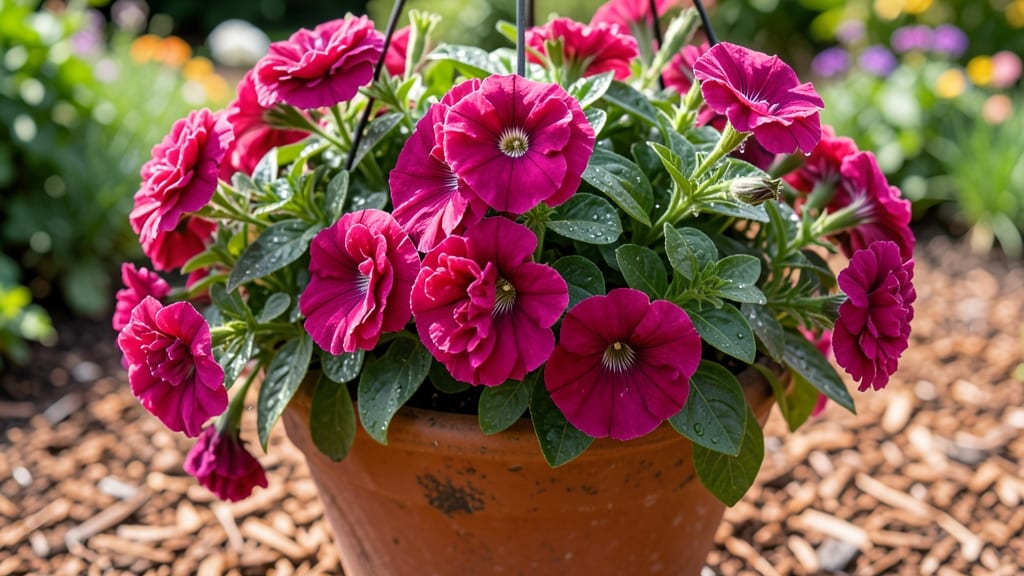
Double bloom petunias produce two flushes of flowers per season by naturally reblooming after deadheading or pruning, thanks to their hybrid genetics and proper care. Varieties like 'Wave' or 'Supertunia' thrive with consistent watering, sunlight, and fertilizer to sustain prolonged flowering.
These petunias aren't just pretty—they're genetically programmed to perform! 🌸 The secret lies in their hybrid breeding, which makes them more resilient and productive than single-bloom varieties. When you remove spent flowers (deadheading), you're essentially telling the plant, "Keep going!"—this triggers new growth hormones that push out fresh buds.
I've seen 'Supertunia' varieties keep blooming from early summer through fall with just a little extra TLC.
What sets them apart is their ability to balance flower production with leaf growth. Unlike some annuals that focus on one big bloom, these hybrids stay lush while still delivering vibrant colors.
For best results, I recommend pinching back leggy stems in early spring—this encourages bushier growth and more blooms later.
💡 In This Article
- How Genetics and Pruning Trigger Double Blooming in Petunias
- Step-by-Step Guide to Maximizing Petunia Reblooms
How genetics and pruning trigger double blooming in petunias
Double blooming in petunias starts with their hybrid genetics, specifically crossbreeding between Petunia axillaris and Petunia integrifolia. These hybrids inherit a unique trait called indeterminate growth, meaning they don't have a fixed flowering period. Instead, they produce flowers continuously along their stems as long as conditions are right.
The key lies in their ability to produce auxin hormones, which regulate both flower development and vegetative growth—this dual capability allows them to rebound after flowering.
When you remove spent blooms (deadheading), you're interrupting the plant's natural cycle of seed production. This triggers a surge of cytokinins, growth hormones that stimulate new bud formation at the leaf axils (the junction where leaves meet stems).
Without deadheading, the plant would redirect energy toward seed development instead of producing more flowers. For example, 'Wave' petunias, bred for trailing habits, can produce up to 12 inches of new growth per season when properly pruned, while 'Supertunia' varieties focus that energy into larger, more abundant blooms.
The timing matters too. Petunias typically experience their first flush of flowers in early summer, but the second bloom depends on how well you manage growth signals. Pruning isn't just about cutting back—it's about strategic stress.
When you snip stems just above a leaf node (where new buds form), you're creating a signal for the plant to shift resources from maintenance to reproduction. Think of it like giving your petunia a gentle nudge: "Hey, you've got potential—let's make more flowers!" 🌿
Light exposure plays a hidden role too. Petunias need 6-8 hours of direct sunlight daily to maintain strong flower production. In lower light, they'll focus more on leaf growth than blooms, which can delay or weaken the second flush.
The ideal scenario combines genetics, pruning, and sunlight to create a feedback loop: more light means more energy, more energy means more hormones, and more hormones mean more flowers.
Here's what most gardeners miss: the balance between flowering and vegetative growth. Single-bloom varieties prioritize one big show, then fade. Double bloomers, however, have been bred to stay in a perpetual flowering state—almost like a plant version of a marathon runner.
This is why 'Supertunia' varieties can produce continuous blooms for 120+ days with proper care, while their single-bloom cousins might only last 45-60 days.
One advanced technique worth trying is pinch-back pruning in early spring. By cutting back stems by one-third when they're about 6 inches tall, you encourage bushier growth with more flower nodes.
This works because you're forcing the plant to develop secondary stems from dormant buds, creating a denser, more productive structure. It's like giving your petunia a makeover—suddenly, it's got more branches to hold all those beautiful blooms! ✨