
Blooming
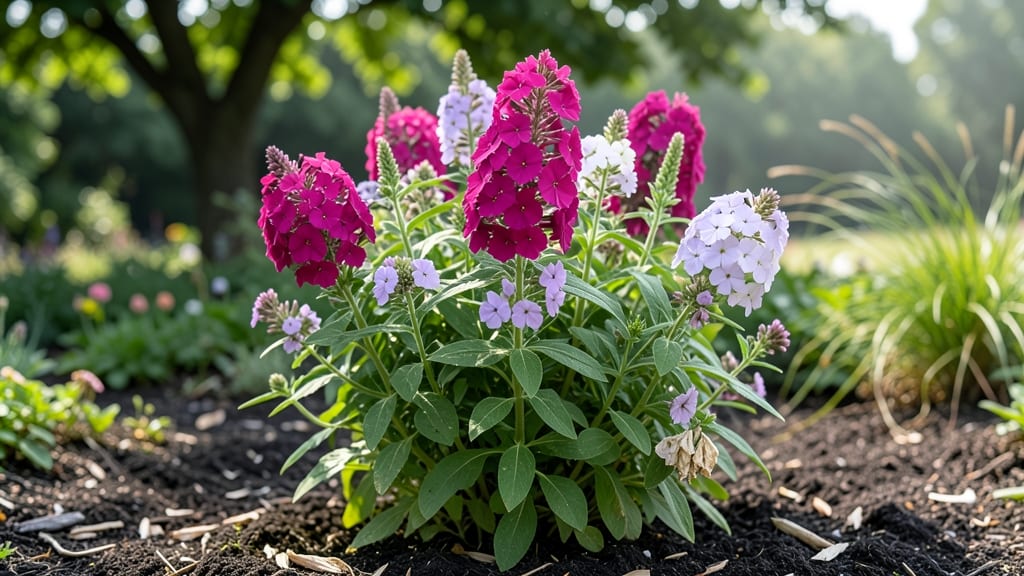
Phlox does bloom all summer in most varieties, extending from mid-to-late spring through early fall, with peak flowering between June and August. Perennial types like garden phlox often rebloom after deadheading, while annuals like Mexican phlox may bloom continuously under ideal conditions.
Most phlox varieties are designed to light up your garden from early summer through fall, with some even stretching into late autumn. 🌸 The key difference lies in whether you're growing perennials or annuals—garden phlox (perennial) rewards consistent care with multiple blooming cycles, while Mexican phlox (annual) often delivers nonstop color if you keep it happy with regular watering and deadheading.
What's fascinating is how temperature plays a role: cooler northern climates may see longer bloom seasons, while hotter southern areas might experience mid-summer slumps unless you provide afternoon shade.
For gardeners in USDA zones 3-9, timing is everything. Early bloomers like creeping phlox often start in May, while late-season varieties can extend into October. I've found that cutting back spent blooms every 2-3 weeks triggers new growth, especially for perennial types.
The secret to summer-long color? Combine proper pruning with balanced fertilizer—too much nitrogen equals lush foliage but fewer flowers.
💡 In This Article
- Phlox Bloom Seasons by Variety and Climate
- Extending Phlox Blooms: Pruning, Deadheading, and Care Tips
Phlox bloom seasons by variety and climate
The bloom cycle of phlox varies dramatically between perennial and annual varieties, with climate playing a starring role. Perennial garden phlox (Phlox paniculata) typically kicks off in late May to June and continues through August to September, with peak performance in July-August.
This timing aligns with its natural growth pattern—cool spring temperatures trigger bud formation, while summer warmth stimulates flowering. In contrast, annual Mexican phlox (Phlox drummondii) often starts blooming as early as May and can extend into October if conditions remain favorable.
Climate zones create significant variations in bloom duration. In cooler northern regions (USDA zones 3-5), garden phlox may enjoy a 3-4 month bloom season due to extended cool evenings that delay dormancy.
Meanwhile, in warmer southern zones (7-9), the same variety might experience a 6-8 week peak in summer before heat stress causes wilting. Creeping phlox (Phlox subulata) thrives in zones 3-8, often blooming from April to June, making it an early-season showstopper that complements summer varieties.
Temperature sensitivity explains why some phlox varieties bloom continuously while others need rest. Annual phlox like Mexican types produce flowers along their stems, with each bloom lasting 5-7 days before fading. The plant continuously generates new buds at the base, creating that "always in bloom" appearance when properly maintained.
Perennial phlox, however, follow a more structured cycle—after their main summer bloom, they need 6-8 weeks of rest to rebuild energy stores for next year's performance.
Light exposure creates another critical factor. Most phlox varieties require full sun (6-8 hours daily) for optimal flowering, but excessive midday heat in southern climates can cause buds to drop. This is why afternoon shade becomes essential in zones 8-10.
I've observed that phlox in partial shade (4-6 hours sun) often produces slightly smaller blooms but maintains color longer into fall. The trade-off? Reduced intensity but extended duration—perfect for gardeners seeking summer-long interest.
Soil conditions also influence bloom timing. Phlox prefers well-draining soil with a pH between 6.0-7.0. Acidic soils (below 6.0) can delay flowering by 2-3 weeks as the plant focuses energy on correcting pH rather than producing blooms.
Conversely, alkaline soils (above 7.5) may cause nutrient deficiencies that reduce bloom quantity. The ideal balance supports robust root systems that translate directly to longer, more abundant flowering periods.
Consider these key variety differences when planning your garden:
- Garden phlox (perennial): June-August peak, 3-4 month total bloom with proper care
- Creeping phlox (perennial): April-June early season, 2-3 month duration
- Mexican phlox (annual): May-October potential with continuous blooming
- Tall garden phlox: 6-8 feet height, 4-inch flower clusters
- Dwarf varieties: 6-12 inches height, 2-3 inch blooms perfect for borders
What most gardeners don't realize is how regional microclimates can shift these timelines by 2-4 weeks. Coastal areas often enjoy cooler summers that extend bloom seasons, while inland regions may experience sudden heat waves that cause temporary wilting.
Understanding these patterns lets you select varieties that align with your local growing conditions for maximum summer color. 🌿