
Blooming
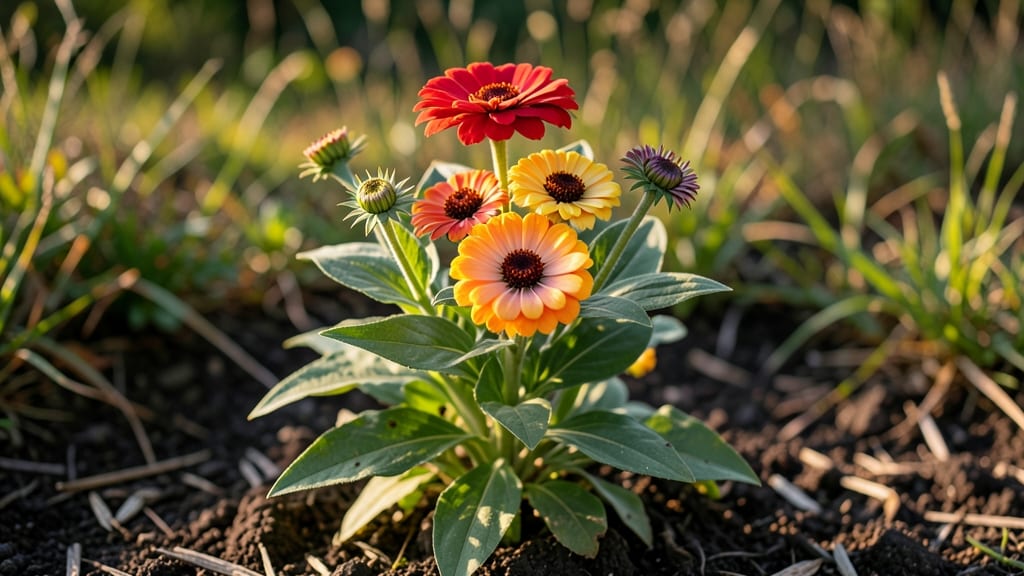
Yes, zinnias bloom more than once when you deadhead spent flowers regularly and provide consistent care, including proper pruning and balanced fertilization to encourage continuous blooming through the growing season.
Zinnias are one of the most generous annuals when it comes to reblooming—if you keep up with deadheading, you'll see new buds forming within weeks. 🌸 The secret lies in their growth habit: these plants naturally produce flowers on new stems, so removing faded blooms redirects energy to fresh growth.
I've found that cutting back stems to just above a set of leaves (about 1/3 of the plant's height) triggers even more vigorous reblooming, especially when done in the morning when stems are turgid.
For best results, combine deadheading with a light feeding of balanced fertilizer (10-10-10) every 4-6 weeks and ensure they get full sun (6+ hours daily).
The key is consistency—skipping just one pruning cycle can break the blooming pattern, but with regular attention, you'll enjoy vibrant flowers from early summer straight through fall.
💡 In This Article
- How to Encourage Zinnia Reblooming Through Pruning
- Best Soil and Fertilizer Practices for Long-Blooming Zinnias
How to encourage zinnia reblooming through pruning
Zinnias rebloom because their flowers grow on new stems rather than old wood, making them highly responsive to pruning. When you remove spent blooms, you're essentially signaling the plant to redirect its energy from seed production to creating fresh flower buds.
This process works because zinnias follow a determinate growth habit—they produce flowers along the main stem and branches, but each bloom cycle ends when the flower fades.
Cutting back stems to just above a leaf node (about 1/3 of the stem length) stimulates lateral branching, which produces more flower stems.
The timing of pruning matters just as much as the technique. For maximum reblooming, I recommend pruning in the morning when stems are fully hydrated and firm.
Use clean, sharp pruners to make cuts at a 45-degree angle about 1/4 inch above a leaf node—this prevents water from pooling and reduces disease risk.
Avoid heavy pruning late in the season (after mid-August in most climates), as this can stunt new growth before frost. 🌿 What most gardeners don't realize is that zinnias also respond well to pinching—removing the top set of leaves when plants are about 6 inches tall encourages bushier growth and more blooms.
This pruning strategy works because zinnias have a unique flowering mechanism: their buds form at the tips of new growth. By removing old flowers, you're essentially creating more growing points where new buds can develop.
Think of it like a factory assembly line—when one product (the old bloom) is removed, the line (the plant) can produce more (new flowers). For example, a single zinnia plant can produce 50-100 flowers in a season if deadheaded weekly, compared to just 10-20 without pruning.
The key is consistency—skipping just one pruning cycle can break the blooming pattern.
Seasonal timing plays a crucial role in reblooming success. In warm climates, zinnias can bloom continuously from spring through fall, but in cooler regions, they typically produce two main blooming cycles: one in early summer and another in late summer/early fall.
To extend the first bloom, start deadheading as soon as flowers open, and for the second cycle, give plants a light pruning in early summer to remove any leggy growth. This two-phase approach maximizes your blooming window and keeps your garden vibrant longer.
Here's a practical tip: color-coded pruning can help you track progress. Use red markers on stems you've pruned in the first cycle and green for the second cycle. This visual system helps you avoid over-pruning and ensures you're always working with healthy growth points.
The result? A zinnia plant that looks like it's in perpetual bloom, with fresh flowers appearing every 2-3 weeks during peak season.
What's fascinating is how zinnias respond to stress—light pruning actually stimulates growth through a process called apical dominance release. When you remove the main growing point (the flower), the plant redirects hormones to lateral buds, creating a bushier, more productive plant.
This biological response is why zinnias are such reliable rebloomers compared to other annuals that only flower once.