
Blooming
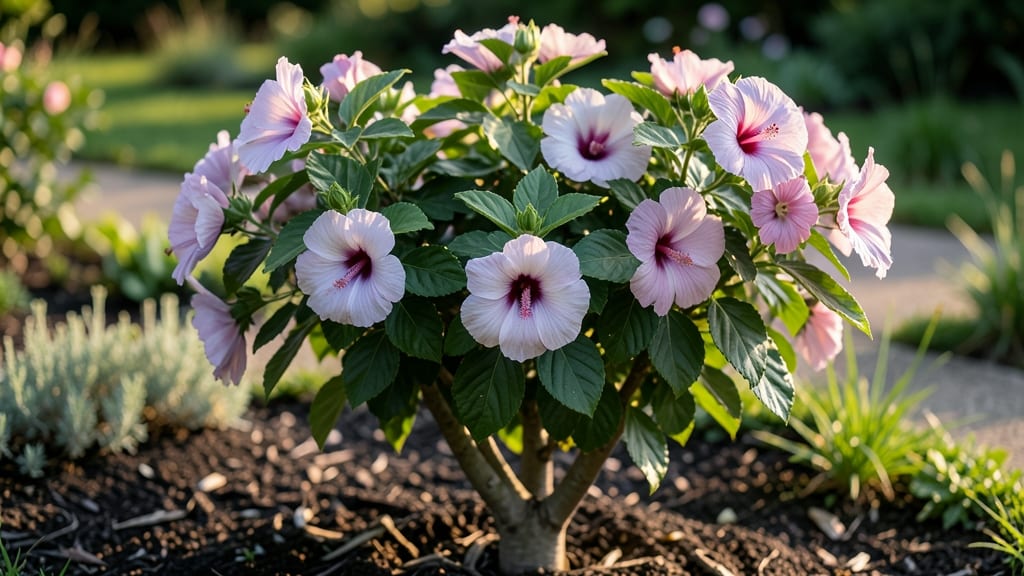
Rose of Sharon plants bloom all summer long in suitable climates, typically from late July through September, with some varieties lasting into October when given proper care. Your local USDA hardiness zone and weather patterns determine the exact timing.
This extended blooming season is what makes Rose of Sharon so popular among gardeners. 🌸 Unlike many flowering shrubs that peak and fade quickly, Rose of Sharon produces fresh blooms continuously throughout summer and early fall.
The key to this performance lies in its hardiness—it thrives in USDA zones 5 through 9, where warm days and cool nights trigger successive flower cycles. In milder southern climates, you might even see sporadic blooms into November, while northern regions typically see the last flowers by early October.
What's fascinating is how these plants respond to seasonal changes. When temperatures drop below 40°F in fall, the plant naturally prepares for dormancy, which is why you'll see blooming slow down before frost arrives.
This built-in timing means you can count on vibrant flowers from mid-summer right through the golden weeks of September, making it one of the most reliable shrubs for seasonal color.
💡 In This Article
- How Climate Zones Affect Rose of Sharon Blooming Seasons
- Extending Rose of Sharon Blooms: Pruning and Care Tips
How climate Zones affect Rose of Sharon blooming seasons
The Rose of Sharon's (Hibiscus syriacus) blooming schedule is directly tied to temperature thresholds and day length, which vary dramatically across USDA hardiness zones.
In Zones 5-6, where winters are colder, the plant typically initiates blooming in late July after soil temperatures consistently reach 65°F for at least two weeks.
This delayed start gives gardeners in these regions a shorter but intense blooming window, often ending by mid-October when nights drop below 45°F and frost approaches.
Southern climates in Zones 7-9 experience a different pattern. Here, the plant often begins flowering as early as June when daytime temperatures stabilize above 75°F, but the real show happens from August through October.
The key difference is that warmer winters prevent full dormancy, allowing some varieties to produce sporadic blooms even in November if temperatures stay above 50°F.
This extended season is why southern gardeners frequently report "all summer" blooming—what they're actually seeing is staggered cycles triggered by heat waves rather than a single continuous bloom.
The science behind this involves photoperiodism—the plant's response to daylight length. Rose of Sharon requires 12-14 hours of daylight to trigger flower buds, which explains why northern blooms peak in late summer when days begin shortening.
In southern zones, the plant can produce multiple flushes because the temperature remains above the 60°F threshold needed for continuous bud formation. This is why a Zone 8 plant might have three distinct blooming periods while a Zone 6 counterpart has just two.
Frost acts as the ultimate regulator. When temperatures drop below 32°F, the plant's metabolic processes slow dramatically, halting new flower production. This is why gardeners in Zone 5 often see their last blooms in early September—the plant is preparing for winter.
The exception occurs in microclimates where urban heat islands or protected locations maintain temperatures above freezing, potentially extending the season by 2-3 weeks. This localized warmth can make all the difference between a September finish and an October finale.
Consider these regional variations when planning your garden:
- Northern Zones (5-6): July 20 - September 15 peak, with 8-10 week total bloom time
- Mid Zones (7): June 15 - October 10, with potential 14-week seasons
- Southern Zones (8-9): August 1 - November 1, with 16+ week potential in ideal conditions
The most dramatic examples come from Zone 9 gardens where well-established plants can produce flowers in three distinct waves: early summer, late summer, and early fall. This multi-cycle blooming is what gives the illusion of "all summer" flowering when viewed from a distance.
The secret lies in the plant's ability to produce both terminal (end-of-branch) and axillary (side) buds, allowing it to compensate when some flowers fade.