
Blooming
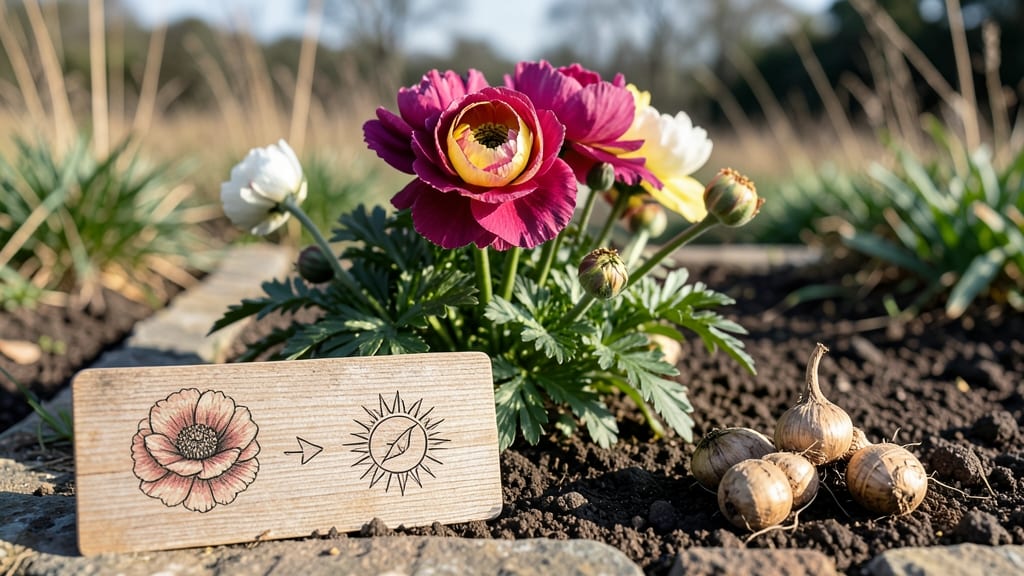
Ranunculus do not bloom every year as perennials—they typically die back after flowering and must be replanted annually. However, in mild winter climates, they may rebloom if bulbs survive dormancy, though most gardeners replant them yearly for consistent blooms.
Ranunculus bulbs behave more like tender perennials, meaning they often don't survive winter in colder zones. 🌱 Unlike hardy perennials such as peonies, these delicate blooms struggle with frost and fluctuating temperatures, which is why replanting is the norm.
In warmer regions, you might coax them back with careful overwintering, but even then, their lifespan is limited compared to true perennials.
What I’ve found works best is treating them as annuals—planting fresh bulbs each spring for vibrant blooms. This approach ensures you always get the show-stopping flowers they’re known for, without the guesswork of bulb survival. Proper deadheading after flowering also helps redirect energy, though it won’t extend their natural cycle.
💡 In This Article
- Why Ranunculus Often Die Back After Flowering
- Tips for Extending Ranunculus Blooms or Saving Bulbs
Why ranunculus often die back after flowering
Ranunculus bulbs are classified as tender perennials, meaning they lack the hardiness to survive harsh winters like true perennials such as daffodils or tulips. Their natural lifecycle involves a single bloom cycle each year, after which the foliage dies back.
Unlike hardy bulbs, ranunculus bulbs don’t store enough energy to regenerate through winter dormancy in most climates—especially those with below-freezing temperatures for extended periods.
The key issue lies in their temperature sensitivity. Ranunculus bulbs thrive in USDA Zones 7-10, where winter temperatures rarely drop below 20°F. In colder regions, even brief cold snaps can cause irreversible damage to the bulb’s delicate tissues.
What’s more, their shallow root systems make them vulnerable to soil heaving during freeze-thaw cycles, which can dislodge or rupture the bulb entirely. This contrasts sharply with daffodils, whose bulbs can endure -20°F temperatures thanks to protective outer layers.
Another critical factor is post-bloom care. After flowering, ranunculus bulbs need 6-8 weeks of uninterrupted growth to replenish energy stores. If you cut back foliage too soon, the bulb won’t have enough time to photosynthesize and store nutrients for the next season.
Even in ideal conditions, these bulbs typically decompose within 1-2 years without replanting, as they lack the robust survival mechanisms of perennial bulbs.
Soil conditions also play a surprising role. Ranunculus prefer well-draining, slightly acidic soil (pH 6.0-7.0), but poor drainage or waterlogged roots can accelerate bulb deterioration.
Unlike tulips, which can tolerate a wider range of soil types, ranunculus bulbs are highly sensitive to excess moisture, which can lead to rot. This makes them particularly challenging to overwinter in regions with wet winters.
What most gardeners don’t realize is that even in mild climates, ranunculus bulbs often fail to rebloom reliably due to bulb exhaustion. Each flowering cycle drains significant energy, and without fresh planting stock, the blooms become progressively smaller and less vibrant.
This is why professional florists and commercial growers treat them as annuals, replanting new bulbs each season for consistent quality.
For those attempting to overwinter ranunculus, the success rate drops dramatically outside of Zone 8 and above. Even with careful storage at 35-40°F and 50-60% humidity, many bulbs fail to regenerate properly.
The delicate balance of temperature, moisture, and light required for dormancy makes it a high-risk endeavor compared to the straightforward approach of replanting each spring.