
Blooming
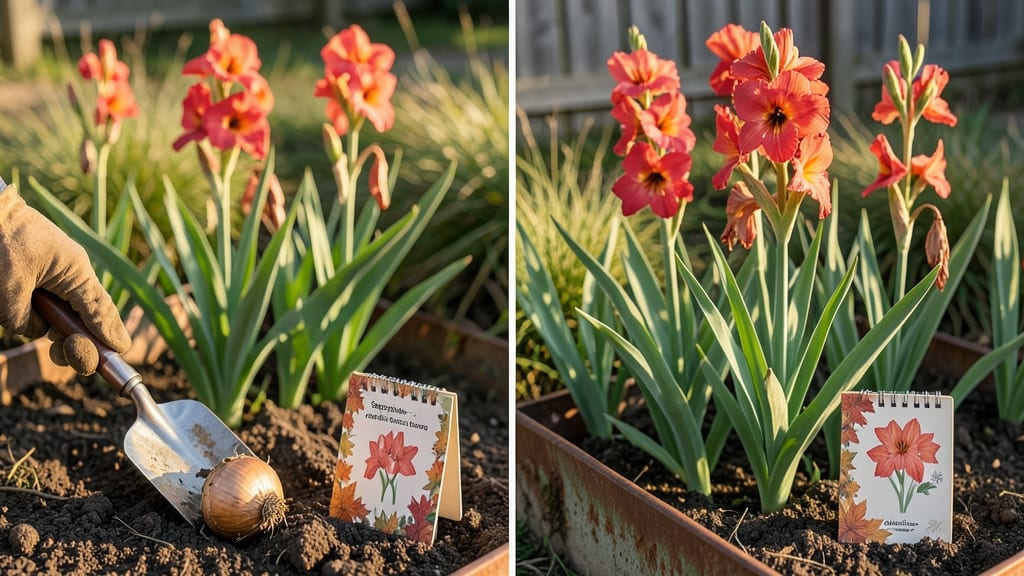
Gladiolus do not bloom every year in most climates because they are tender perennials that need annual care; cold winters force gardeners to dig and store corms, while proper deadheading can extend blooming seasons—but replanting is essential for consistent flowers.
Gladiolus rely on corms (underground bulbs) that go dormant in winter, especially in colder zones where frost kills them. 🌱 Unlike hardy perennials, they can't survive freezing ground temperatures without protection, which is why many gardeners treat them as annuals.
Even with ideal care—like removing spent blooms and fertilizing—you'll still need to replant corms each spring for reliable blooms. The key difference lies in their botanical classification: they're tender perennials, not cold-hardy ones.
This lifecycle explains why some gardeners see annual blooms while others struggle—it's not just about neglect. Proper corm storage (in dry, cool conditions) and replanting at the right depth (6 inches) make all the difference. I've found that dividing corms every 2-3 years actually improves flower production by preventing overcrowding.
💡 In This Article
- Gladiolus Lifecycle: Why They’re Tender Perennials
- Deadheading and Care Tips to Maximize Gladiolus Blooms
Gladiolus lifecycle: why they’re tender perennials
The gladiolus lifecycle revolves around its corm—a thick, underground storage organ that behaves like a bulb but isn't technically one. Unlike true bulbs (like tulips), gladiolus corms are sensitive to frost and cannot survive winter temperatures below 20°F.
When soil freezes, the corm's cells rupture from ice crystal formation, killing the plant. This is why they're classified as tender perennials—they survive only in frost-free climates (USDA zones 8-11) as true perennials.
In colder regions, the corm enters dormancy when temperatures drop, but it requires protection. The corm's survival strategy involves storing nutrients for the next growing season, but without proper care, it depletes reserves.
Digging up corms in fall, curing them in dry conditions (50-60°F for 2 weeks), and storing them in cool (40-50°F), dry conditions mimics natural dormancy. Without this process, corms often rot or fail to regrow.
What most gardeners miss is how corm size affects blooming. A mature corm (about 2 inches in diameter) produces 10-15 stems with vibrant blooms, while smaller corms may produce fewer flowers.
This is why dividing corms every 2-3 years is crucial—it prevents overcrowding and allows each corm to reach optimal size. The trade-off? Smaller corms take 1-2 years to mature enough for full blooms.
Another critical factor is the corm's root system. Gladiolus corms develop roots from the basal plate (bottom), which is why planting depth matters.
Burying corms too shallow (4 inches) exposes them to frost, while planting too deep (8+ inches) starves them of sunlight needed for photosynthesis. The sweet spot is 6 inches deep in well-draining soil, which mimics their natural African savanna habitat.
Here's what happens when you skip storage: Corms left in the ground in cold climates often sprout prematurely in spring, only to be killed by late frosts. The result? No blooms that year.
Even in mild climates, corms gradually weaken without division, leading to smaller, fewer flowers over time. The solution isn't just replanting—it's cyclical care that respects the corm's natural dormancy cycle.
Think of gladiolus corms like athletes preparing for a season: they need rest, proper nutrition, and the right environment to perform. Without these, their "performance" (blooming) suffers. 🌱