
Blooming
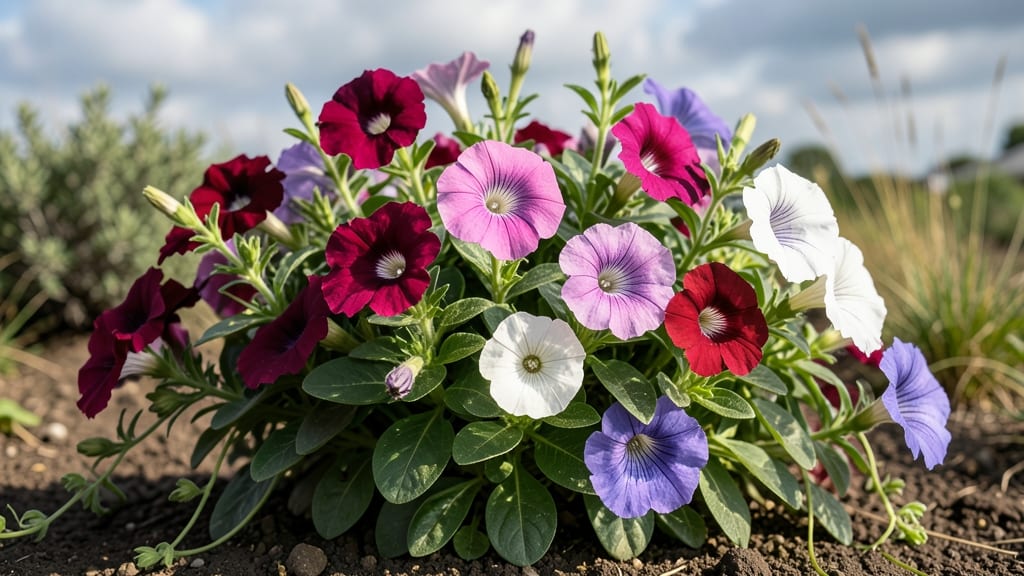
Petunias bloom all summer only if deadheaded regularly and given proper care, though some varieties like 'Wave' or 'Supertunia' naturally rebloom with minimal effort. Heat and drought stress can shorten flowering seasons for most types.
Petunias actually have a built-in flowering cycle that many gardeners overlook. 🌸 The key to summer-long blooms lies in removing spent flowers—this process, called deadheading, signals the plant to redirect energy into new buds.
Varieties like 'Supertunia' and 'Wave' are bred specifically to rebloom continuously, while others may need extra care like consistent watering and balanced fertilizer to maintain their vibrant displays.
What's interesting is that even these self-reblooming types can struggle if summer heat exceeds 90°F for prolonged periods, as the stress disrupts their natural flowering rhythm.
For those seeking effortless summer color, choosing the right variety makes all the difference. 🌿 The continuous-blooming types I mentioned earlier typically require 30% less maintenance than traditional petunias, as they've been genetically developed to produce flowers from spring through fall with minimal intervention.
However, even these varieties benefit from occasional pruning to encourage bushier growth and prevent legginess—something I've learned through years of trial and error in my own garden.
💡 In This Article
- Why Petunia Blooms Fade Mid-Summer
- Best Petunia Varieties for Nonstop Summer Color
Why petunia blooms fade mid-summer
Petunias follow a natural flowering rhythm tied to their genetic programming and environmental cues. When a bloom fades, the plant shifts energy toward seed production—a survival mechanism that triggers the formation of seed pods instead of new flowers.
This process is called senescence, and it's why you'll often see petunias with fewer blooms by mid-summer unless you intervene.
The key to continuous blooming lies in mimicking the plant's natural signals: by removing spent flowers (deadheading), you trick the petunia into thinking it's already produced seeds, prompting it to redirect its energy toward new buds.
Daylight hours play a surprising role in petunia reblooming. Most varieties thrive under 12-14 hours of sunlight daily, but when summer days stretch beyond 15 hours, the plant's internal clock shifts.
Longer daylight periods can trigger a dormant phase where the plant focuses on vegetative growth rather than flowering.
This is why some petunias bloom less vigorously in late summer—it's not just heat stress, but also the plant's response to extended daylight. 🌞 What's fascinating is how hybrid varieties like 'Supertunia Vista Bubble' have been bred to override this natural response, maintaining their flowering cycle even as daylight hours lengthen.
The science behind heat stress reveals why summer blooms sometimes wilt. Petunias are native to South America, where temperatures rarely exceed 85°F, but modern hybrids can tolerate up to 95°F with proper care. When temperatures climb beyond this range, the plant's metabolic processes slow down, particularly pollen production.
This leads to fewer successful pollinations and thus fewer new blooms. The leaves may also develop a dull, grayish cast—a clear sign of heat stress. I've noticed this most dramatically in my own garden during heatwaves, where even well-maintained petunias produce only a fraction of their usual flowers.
Variety genetics create the biggest difference in reblooming potential. Traditional petunias like 'Grandiflora' are often single-blooming, meaning they produce one spectacular flower per stem before focusing on seed production.
In contrast, modern hybrids like 'Wave' and 'Supertunia' have been selectively bred to produce multiple flower buds along each stem, creating a cascading effect that continues throughout the season.
These varieties can produce up to 30% more flowers than traditional types when given proper care, making them the go-to choice for gardeners seeking summer-long color.
Watering habits also impact reblooming. Petunias have shallow root systems that can dry out quickly in summer heat, especially in containers. When soil moisture drops below 30%, the plant's energy shifts toward survival rather than flowering.
I've found that mulching with 2-3 inches of organic material helps retain moisture and keeps roots cool, which directly correlates with more abundant blooms. The key is consistent moisture—not soggy soil—which is why drip irrigation systems work so well for petunias in garden beds.
One common misconception is that all petunias require the same care. While deadheading is crucial for most varieties, some continuous-blooming types like 'Easy Wave Red' actually benefit from light pruning every 4-6 weeks to encourage bushier growth. This pruning stimulates lateral branching, which increases the number of flower stems.
The result? A plant that looks fuller and produces flowers for a longer period. It's this combination of genetic traits and proper care that makes the difference between a petunia that blooms all summer and one that fades by July.