
Blooming
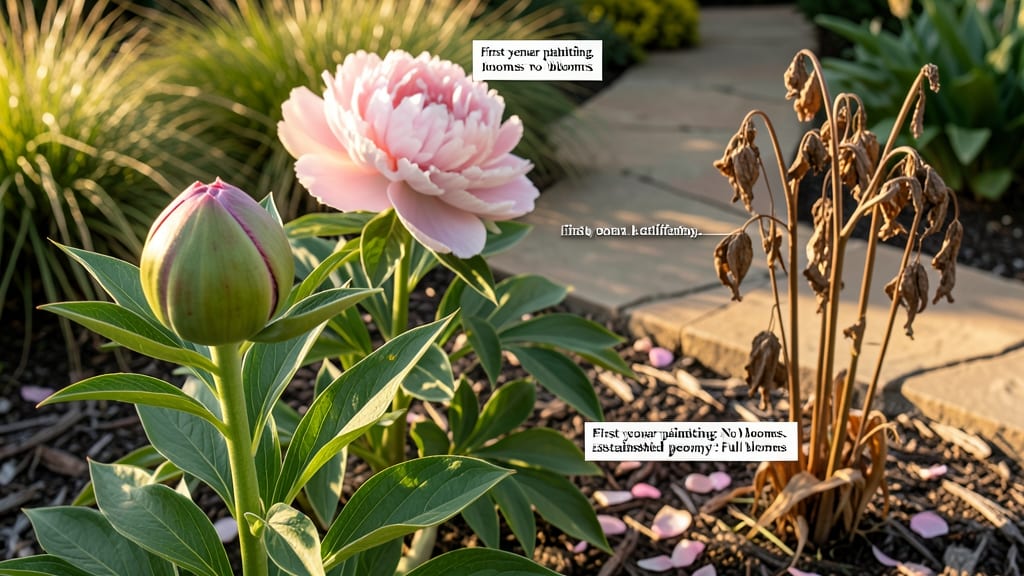
Peonies do not bloom every year naturally, often entering a biennial or triennial cycle where they alternate between blooming and resting periods. Proper care—like avoiding overwatering, ensuring full sun, and fertilizing correctly—can encourage more frequent flowering.
Peonies follow a natural rhythm where their roots store energy for future blooms, similar to how some trees skip fruiting in certain years. 🌸 This resting phase helps them survive harsh conditions, but it can be frustrating when you're waiting for those lush, fragrant blossoms.
I've found that younger plants (under 3 years old) often need more patience—they might only bloom every 2-3 years before settling into a more predictable pattern.
What many gardeners don't realize is that even mature peonies can skip blooming if they're stressed. Too much water, poor drainage, or sudden temperature swings all signal the plant to conserve energy instead of flowering.
The good news? With the right care—like well-draining soil, consistent sunlight, and balanced fertilization—you can often coax them back into regular bloom cycles. It's all about giving them the stable environment they crave.
💡 In This Article
- Why Peonies Skip Blooming: The Science Behind Their Resting Phase
- Proven Techniques to Encourage Annual Peony Blooms
Why peonies skip blooming: the science behind their resting phase
Peonies enter their biennial or triennial blooming cycle due to a biological process called floral inhibition, where the plant prioritizes root and foliage growth over flower production.
Their thick, tuberous roots act like natural batteries, storing carbohydrates (up to 30% of their dry weight) during the growing season to fuel future blooms. When stressed—like from waterlogged soil or extreme heat—the plant conserves energy by skipping flowering entirely, redirecting resources to root expansion instead.
The timing of blooming is also tightly linked to vernalization, a cold-required process where peonies need 6-8 weeks of temperatures below 50°F to trigger flowering hormones. Without proper chilling, buds remain dormant.
Even mature plants can revert to biennial cycles if they experience sudden temperature swings (like late frosts) or poor drainage, which causes root rot and energy loss. 🌱 This is why peonies in warmer climates often bloom less reliably—they may never get the cold stimulus needed to break dormancy.
Age plays a critical role too. Young peonies (under 3 years old) focus on establishing their root system, sometimes blooming only every 2-3 years. The first blooms often appear in their second or third spring, but they may produce just 1-2 buds before maturing.
Even established plants can skip blooming if their roots are disturbed—transplanting after flowering (rather than before) can delay blooms by 1-2 years as the plant recovers.
Environmental factors like overwatering or nutrient imbalances (too much nitrogen) also trigger skipped blooms. Excess water suffocates roots, preventing them from storing enough energy, while nitrogen-heavy fertilizers promote leafy growth at the expense of flowers.
The plant’s natural defense mechanism ensures survival—even if it means fewer (or no) blooms that season. 💧
Here’s what’s happening underground: Peony roots contain specialized cells that convert sugars into starches during dormancy, similar to how bulbs like tulips store energy. When conditions are ideal (6-8 hours of sunlight daily, well-draining soil, and consistent moisture), these reserves fuel 10-20 flower buds per plant.
But stress—whether from pests, disease, or improper care—can halt this process entirely, leaving you with lush foliage but no blooms.
One often-overlooked factor is competition for resources. If peonies are planted too closely together, their roots compete for water and nutrients, reducing bloom potential. Even weeds stealing sunlight can force the plant to divert energy away from flowering.
The key is creating an environment where the peony feels secure enough to invest in those showstopping blossoms. ✨