
Blooming
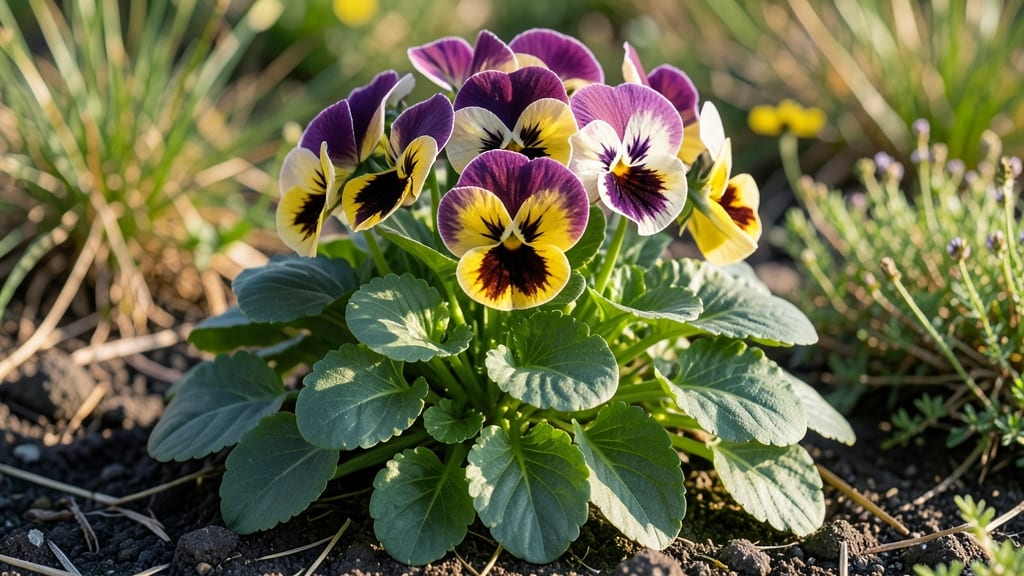
Pansies don't bloom all summer continuously—they peak in cooler seasons like spring and fall, with only occasional flowers in mild summer weather. Heat usually triggers leaf growth instead of blooms.
Pansies are cool-season flowers, meaning they naturally slow down or stop blooming when temperatures rise above 75°F. 🌸 During summer's peak heat, many gardeners notice their pansies producing more foliage than flowers—a survival response to conserve energy.
The good news? With proper care like afternoon shade and consistent moisture, you can encourage sporadic summer blooms, though they'll never match the abundance of spring or fall.
What sets pansies apart is their ability to rebound when conditions improve. Many gardeners replant in late summer for a stunning fall display, as the cooler nights trigger fresh blooming cycles. The key is understanding their seasonal rhythm rather than fighting it—patience often yields the best results.
💡 In This Article
- Pansy Bloom Cycles: Why They Fade in Summer Heat
- Extending Pansy Blooms: Summer Care and Reblooming Tips
Pansy bloom cycles: why they fade in summer heat
Pansies (Viola × wittrockiana) are cool-season annuals with a built-in survival mechanism: they enter a semi-dormant state when daytime temperatures exceed 75°F. This response is triggered by two key factors: temperature sensitivity and photoperiodism.
When heat stress occurs, the plant's metabolic energy shifts from flower production to leaf growth—a protective adaptation to conserve water and prevent wilting. Studies show that pansies exposed to prolonged 80°F+ temperatures reduce flowering by up to 80% while prioritizing foliage expansion to maintain photosynthesis.
The science behind this involves ethylene production—a plant hormone that accelerates leaf growth during stress.
At 85°F, ethylene levels spike, causing buds to abort and leaves to thicken for better heat resistance. 🌡️ This is why you'll often see pansies looking lush but flowerless in summer: the plant is essentially "batting for the fences" to survive rather than reproduce.
Interestingly, pansies from cooler climates (like those bred in the Pacific Northwest) handle summer heat slightly better than tropical varieties, which may explain regional differences in blooming patterns.
Another critical factor is day length. Pansies are short-day plants, meaning they naturally bloom when daylight hours shorten—typically in spring and fall. During summer's long days (14+ hours of sunlight), the plant receives a signal to conserve energy for later.
This photoperiodic response is hardwired into their genetics, making continuous summer blooming biologically challenging. Even with ideal care, you'll rarely see pansies maintain their spring-level flower production through peak summer.
What makes this adaptation fascinating is how it aligns with pansies' native habitat. Originating in Europe and parts of Asia, pansies evolved to thrive in temperate climates with distinct seasons. Their summer dormancy is essentially a survival strategy*—a trade-off between immediate beauty and long-term resilience.
This is why gardeners in Zone 5-7 often see their pansies "reboot" in fall when temperatures drop and day lengths shorten again.
For those hoping to coax summer blooms, understanding this cycle is half the battle. The other half involves creating conditions that mimic pansies' preferred environment—like providing afternoon shade to lower leaf surface temperatures by 10-15°F.
This simple adjustment can make the difference between a heat-stressed plant and one that produces occasional summer flowers.
One visual clue to watch for is leaf color: healthy summer pansies develop a slightly bluish-green hue (due to increased chlorophyll production) while struggling plants turn yellowish or develop brown edges.
This color shift often appears before flower production slows, giving you an early warning system. 🌿 By recognizing these signs, you can adjust care routines before the plant completely shuts down its blooming cycle.