
Blooming
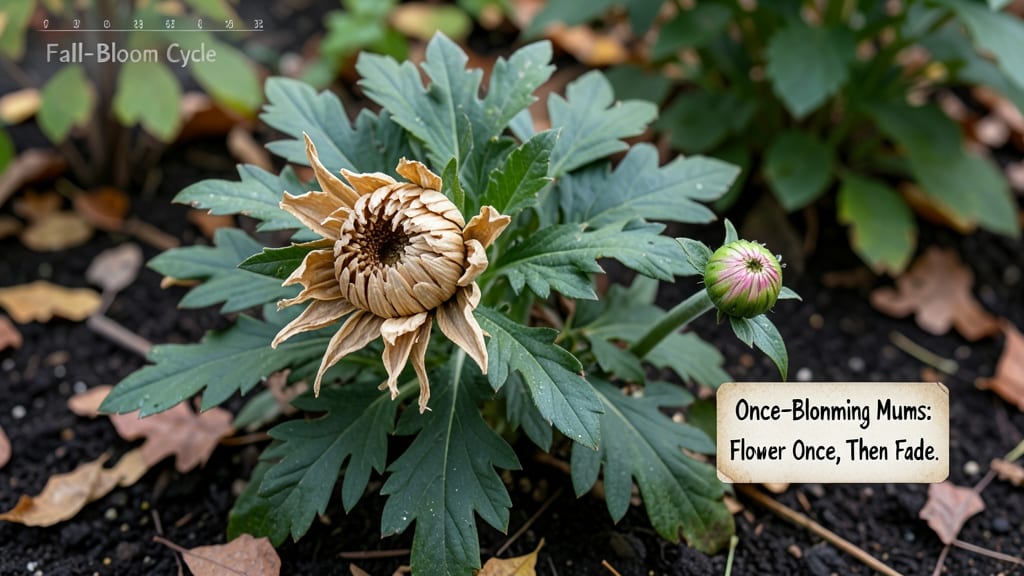
Most mums (chrysanthemums) bloom only once per season, but reblooming varieties can produce multiple flower cycles with the right care—cool evening temperatures, consistent moisture, and balanced fertilizer all stimulate extended blooming. Standard mums are designed for seasonal flowering, while hybrid types may rebloom under optimal growing conditions.
This behavior comes down to how mums respond to daylight and temperature shifts. 🌸 Standard varieties are sensitive to shorter daylight hours in fall, which naturally triggers their single bloom cycle.
Reblooming types, however, have been bred to respond differently—when you combine cooler nights with regular feeding and pruning, you essentially "reset" their flowering cycle. I've seen gardeners extend blooming from late summer into early winter by maintaining these conditions, though it requires more attention than letting nature take its course.
What's fascinating is how genetics play into this: reblooming mums often carry a photoperiod-insensitive trait, meaning they don't rely solely on daylight changes. Instead, they respond to environmental cues like temperature fluctuations and nutrient availability.
This is why consistent care becomes so important—skipping fertilizations or letting the soil dry out can break the cycle and signal the plant to stop producing flowers.
💡 In This Article
- Why Most Mums Bloom Only Once in a Season
- How to Encourage Reblooming in Chrysanthemums
Why most mums bloom only once in a season
Most chrysanthemums follow a natural seasonal blooming pattern because they're photoperiod-sensitive plants. This means their flowering cycle is triggered by changes in daylight length, particularly the shorter days of autumn.
When daylight drops below 12-14 hours, these varieties receive a hormonal signal to produce flowers—a process controlled by the plant hormone florigen. Standard mums are bred to respond aggressively to this daylight reduction, which is why they typically bloom just once between late summer and early fall.
The temperature plays a crucial role too. Mums need cool nights (below 65°F) combined with warmer days to properly set buds. Without this temperature contrast, the plant may produce fewer or weaker flowers. 🌸 What's interesting is that this single-bloom behavior isn't just about genetics—it's also an evolutionary adaptation.
In their native Asia, mums developed this pattern to ensure all their energy goes into producing seeds during the optimal fall window when pollinators are still active.
Here's where things get technical: the plant's apical meristem (growth tip) shifts from vegetative growth to reproductive mode when exposed to these specific light and temperature conditions. This transition is irreversible for seasonal mums—once they've committed to flowering, they won't produce new blooms until the following year.
The flower stems themselves contain anthocyanins, pigments that give mums their vibrant colors, which are only produced when the plant is in full bloom mode.
There's an important distinction between standard mums and reblooming varieties. While both start with similar photoperiod sensitivity, reblooming types have been selectively bred to override this response under certain conditions.
Their genetic makeup allows them to "reset" their flowering cycle when given proper care—particularly through strategic pruning and fertilization that mimics natural seasonal changes. This is why you'll often see reblooming mums producing flowers in both spring and fall.
What most gardeners don't realize is that even standard mums contain the potential for reblooming—it's just suppressed by their genetics. The key difference lies in how their vegetative buds (undeveloped growth points) behave. In seasonal mums, these buds remain dormant after the initial bloom.
But with the right environmental cues and care, you can sometimes coax them into producing secondary flowers, though this requires more work than with true reblooming varieties.
Consider this comparison: A standard mum is like a seasonal performer who gives one spectacular show and then rests for the year, while a reblooming mum is more like a versatile actor who can deliver multiple performances with the right stage directions (care, in this case).
The science behind this involves complex interactions between phytochrome proteins (light receptors) and cryptochrome proteins that regulate the plant's internal clock.