
Blooming
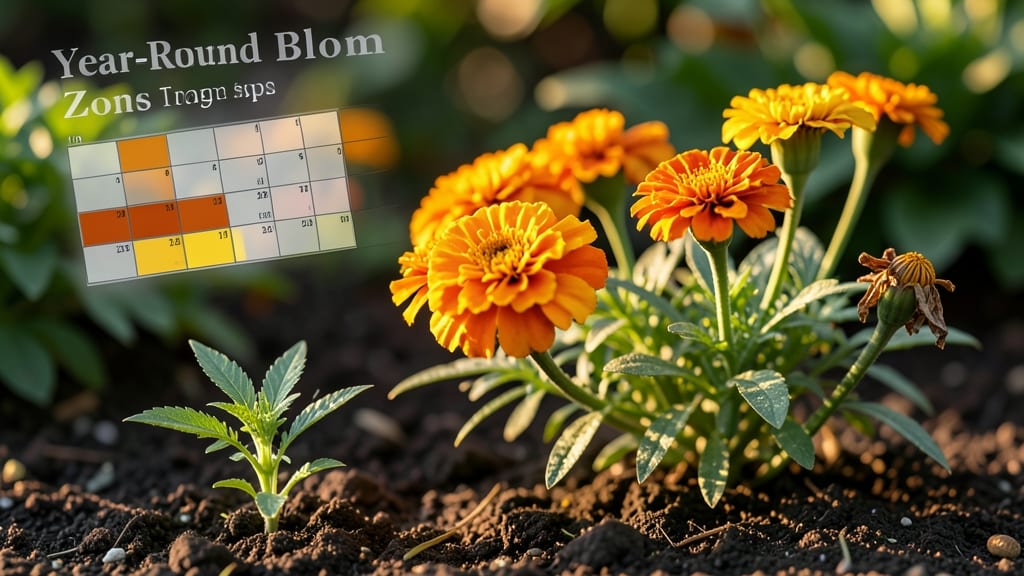
Marigolds do not bloom all year naturally, as they are seasonal plants that typically flower from early summer to frost. However, in warmer climates (USDA Zones 8-11) or with greenhouse cultivation, they may produce sporadic blooms year-round, though peak flowering still follows seasonal cues.
Marigolds are sensitive to daylight and temperature shifts, which is why they thrive best during their natural growing season. 🌸 In cooler regions (USDA Zones 3-7), frost signals the end of blooming, but in milder zones, they may continue flowering sporadically.
The key to extending their season lies in controlling their environment—whether through container gardening or greenhouse conditions. I’ve found that varieties like 'Bonanza' or 'Tangerine' are particularly resilient, often producing blooms well beyond their typical summer-to-fall window.
For gardeners in colder climates, strategic pruning and soil care can also encourage a second flush of blooms. Removing spent flowers and providing consistent moisture helps maintain plant health, while selecting long-blooming varieties gives you the best chance of enjoying marigolds for months.
The trade-off? Even with these tricks, peak blooming will always align with their natural seasonal cues.
💡 In This Article
- Marigold Blooming Seasons by Climate Zone
- Extending Marigold Blooms Beyond Their Natural Season
Marigold blooming seasons by climate Zone
Marigolds are photoperiod-sensitive, meaning their blooming cycles are tightly linked to daylight length and temperature. In USDA Zones 3-7, where winters bring frost, marigolds typically bloom from late May to October, with peak production between July and September.
The plant's internal clock detects shorter days in autumn, triggering dormancy. 🌿 In these zones, marigolds are annuals—they complete their life cycle in one season, with seeds germinating in spring when soil temperatures reach 60-65°F.
Warmer climates (Zones 8-11) offer a different story. Here, marigolds often behave as perennials, producing blooms year-round with 3-6 month breaks during extreme heat or drought.
For example, in Zone 10 (Southern California), marigolds may flower from March to November, while Zone 11 (Hawaii) sees nearly continuous blooms if moisture is maintained. The key difference? Frost-free winters and consistent 65-85°F temperatures prevent the dormancy signal, allowing sporadic flowering.
Daylight hours play a critical role. Marigolds need 12-14 hours of sunlight daily to trigger blooming. In northern zones, shorter summer days (14-16 hours) support peak flowering, while winter's 8-10 hour days halt production.
In tropical zones, the lack of seasonal daylight variation means blooms can appear anytime—though they often slow during monsoon seasons when humidity exceeds 80%.
Soil temperature matters too. Marigolds won't germinate below 55°F, and root growth stalls under 50°F. This explains why northern gardeners see blooms only after May's last frost, while southern gardeners enjoy staggered blooms.
The plant's native Mexican and South American origins explain its preference for warm, stable conditions—anything colder than 50°F for extended periods will shock the system and stop flowering.
Regional microclimates add another layer. Coastal areas with moderate temperatures (e.g., Zone 9 in Florida) often see longer blooming seasons than inland regions at the same latitude.
For instance, Miami's marigolds may bloom 2-3 months longer than those in Phoenix, due to ocean breezes preventing heat stress. 🌊 This variability means gardeners should observe their local patterns rather than relying solely on zone guidelines.
What most people overlook is how moisture stress affects blooming. Even in warm zones, prolonged drought can trigger dormancy-like behavior. Marigolds in Zone 10 may stop flowering during summer's peak heat (95°F+) unless given 1 inch of water weekly.
The plant's shallow roots (12-18 inches deep) make it vulnerable to drying out, which halts energy production for blooms.