
Blooming
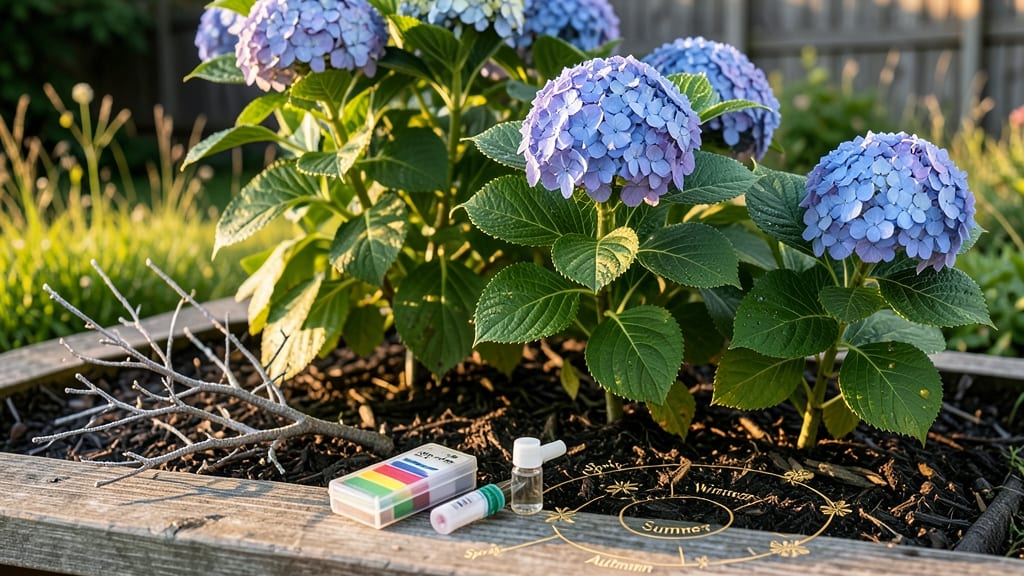
Hydrangeas don't bloom every year because most varieties rely on old wood growth from the previous season, which can die back or fail to mature properly. Reblooming types like 'Endless Summer' may produce flowers twice annually with consistent care, while traditional varieties typically bloom just once on last year's stems.
Hydrangea blooming habits depend entirely on their growth cycle. 🌸 Varieties like bigleaf and oakleaf hydrangeas set flower buds on the previous year's wood, meaning winter dieback can mean no blooms at all.
Even with perfect care, these plants might skip flowering if they didn't mature enough buds the prior season. Rebloomers like 'Endless Summer' produce flowers on both old and new wood, giving them a second chance in fall—but they still need proper pruning and nutrition to perform reliably.
What makes this tricky is that hydrangeas are sensitive to temperature shifts. Too much winter chill can damage buds before they open, while sudden spring freezes can kill emerging flowers. I've found that mulching heavily in fall and providing consistent moisture helps protect those critical buds.
The key is understanding your specific variety's blooming triggers—some need cold stratification to set buds, while others respond better to warm-season pruning.
💡 In This Article
- Why Some Hydrangeas Skip Blooming and How Growth Habits Affect Flowers
- How to Encourage Hydrangeas to Bloom Reliably Year After Year
Why some hydrangeas skip blooming and how growth habits affect flowers
The core reason many hydrangeas miss their annual show comes down to their growth habits. Most traditional varieties—like bigleaf hydrangeas—rely on old wood (stems from the previous growing season) to produce flower buds in late summer or early fall.
These buds then need 6-8 weeks of dormancy at temperatures between 32-45°F to mature properly. If winter temperatures fluctuate wildly or spring arrives too early, these buds can fail to develop, leaving your plant with no flowers. 🌱
Here's where things get fascinating: the plant's energy allocation. Hydrangeas prioritize root and stem growth over flower production when stressed.
For example, oakleaf hydrangeas set buds on old wood but also produce some flowers on new growth—yet if they experience drought stress during bud formation (typically June-July), they'll redirect energy to survival rather than blooms.
Even with perfect care, if last year's stems didn't mature enough buds, this year's display will be sparse or nonexistent.
The temperature sensitivity extends beyond winter chill. Many hydrangea varieties require a specific cold stratification period—similar to how some seeds need cold treatment to germinate. Without this, buds may form but fail to open properly.
I've noticed this particularly with mophead hydrangeas, where 10-15°F nighttime temperatures in late fall trigger proper bud development. Missing this window means flowers that look like they're opening but then wither before fully blooming.
Pruning timing creates another critical factor. Cutting back old wood in late winter or early spring (before buds swell) removes next year's potential flowers. This is why many gardeners accidentally prune their hydrangeas at the wrong time—what seems like a routine spring cleanup can mean no blooms that summer.
The exception is reblooming varieties like 'Endless Summer', which produce flowers on both old and new wood, giving them more flexibility in pruning timing.
Let's talk about the physical mechanics: hydrangea flowers develop from axillary buds located at the leaf nodes. Each bud contains both sterile florets (the showy parts) and fertile florets (the tiny center flowers that develop into seed).
When environmental conditions disrupt this process—whether through temperature extremes, improper watering, or nutrient deficiencies—the plant may produce only sterile florets or no flowers at all. This explains why some hydrangeas might have lush foliage but no blooms.
Consider this comparison: a bigleaf hydrangea that blooms only on old wood is like a fruit tree that bears fruit only on last year's branches—if those branches die back, you get no harvest.
In contrast, a reblooming variety is more like a fruit tree that can produce on both old and new wood, offering a second chance. Understanding this growth pattern helps explain why some hydrangeas might skip blooming entirely while others produce reliable displays year after year.