
Blooming
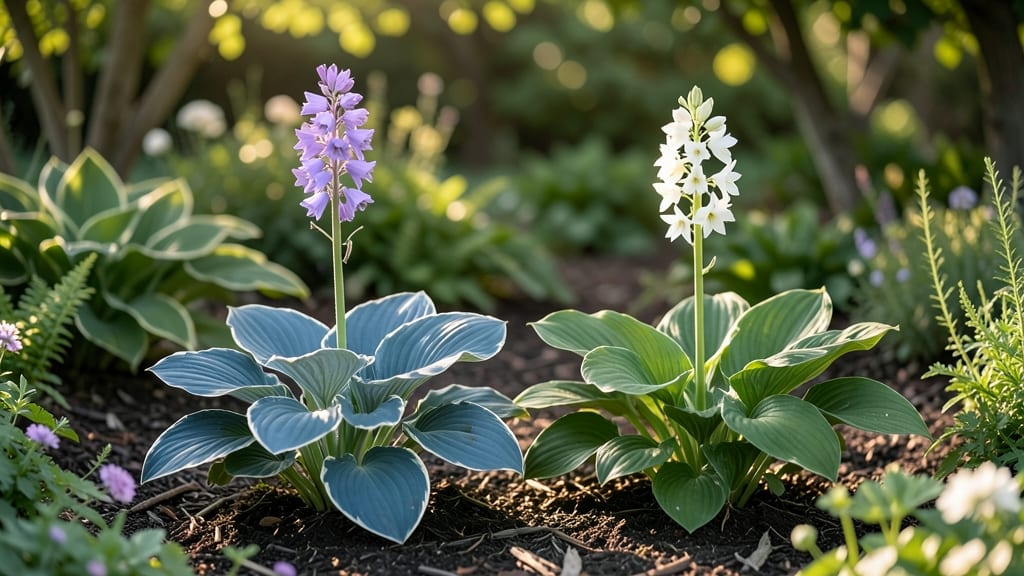
Yes, hostas do bloom flowers, producing upright spikes of lavender, white, or purple blooms in mid-to-late summer, though their lush foliage remains the star for most gardeners.
While hostas are famous for their striking leaves, their delicate flowers add a surprising charm. 🌸 These blooms often appear in late June through August, with some varieties like 'Halcyon' producing particularly showy spikes.
The flowers may attract pollinators, but they're not the main reason gardeners grow hostas—their vibrant foliage steals the show year-round. Interestingly, some hostas bloom earlier in the season, while others wait until late summer, depending on their specific needs and growing conditions.
What's fascinating is how hosta flowers change over time. Many gardeners notice the blooms start as tight buds that gradually open into star-shaped flowers. After flowering, it's important to trim spent flower stalks to redirect the plant's energy toward next year's growth and foliage development.
This simple maintenance step can make a big difference in keeping your hostas looking their best throughout the growing season.
💡 In This Article
- Why Hostas Bloom: Seasonal Triggers and Flowering Biology
- Best Hosta Varieties for Stunning Flowers and Foliage
Why hostas bloom: seasonal triggers and flowering biology
Hostas bloom as a natural response to their environment, primarily triggered by specific temperature thresholds and daylight hours. These plants are perennial, meaning they go dormant in winter and regrow each spring. Flowering typically begins when daytime temperatures consistently reach 70-75°F and nighttime temperatures stay above 55°F.
This warmth signals the plant to shift energy from foliage production to reproductive growth, producing those familiar upright flower spikes. The process is also influenced by photoperiodism—the plant's internal clock responds to increasing daylight hours in late spring, which is why blooms appear in mid-to-late summer.
What's particularly interesting is how hosta flowers develop. Each bloom starts as a tight bud at the top of the flower stalk, gradually opening into 6-petaled, star-shaped flowers that can be lavender, white, or purple depending on the variety.
The flowers are arranged in a dense, cylindrical cluster that can reach 12-24 inches tall, making them more noticeable than many gardeners expect.
The blooming period usually lasts 3-4 weeks, during which each flower lasts only 1-2 days before wilting, which is why the entire spike appears to bloom sequentially from bottom to top. 🌸
The biology behind hosta flowering also explains why some varieties bloom earlier or later in the season. Early bloomers like 'Francee' often produce flowers in late June, while late-season varieties such as 'Blue Angel' may wait until August.
This variation is influenced by the plant's genetic makeup, which determines its sensitivity to temperature changes and daylight length. For example, hostas grown in cooler climates may bloom later in the season compared to those in warmer regions, where the growing season starts earlier and temperatures rise more quickly.
Another fascinating aspect is how hostas allocate their energy. While flowering is important for reproduction, hostas are primarily grown for their foliage. This creates a natural competition for resources—when a hosta is putting energy into producing flowers, it may temporarily reduce the vigor of its leaves.
That's why experienced gardeners often remove spent flower stalks after blooming to redirect the plant's energy back toward foliage production, ensuring lush, healthy leaves for the rest of the season and the following year.
Light exposure also plays a crucial role in hosta flowering. While hostas can tolerate shade, they need at least 4-6 hours of indirect sunlight daily to produce strong flower spikes. In deeper shade, the plant may focus more on foliage growth and produce fewer or smaller blooms.
This is why hostas in bright, filtered light often have both vibrant foliage and impressive flower displays, while those in very dark shade may bloom poorly or not at all. The balance between light and temperature creates the perfect conditions for hostas to showcase their dual appeal—both foliage and flowers.
Finally, it's worth noting that hosta flowers are not just about aesthetics. They serve an important ecological function by attracting pollinators like bees and butterflies, which helps support local ecosystems.
While the flowers themselves are not showy compared to some other garden plants, their presence adds another layer of interest to the hosta's already impressive display. Understanding these biological triggers can help gardeners create the ideal conditions for their hostas to thrive and bloom beautifully each season. 🌿