
Blooming
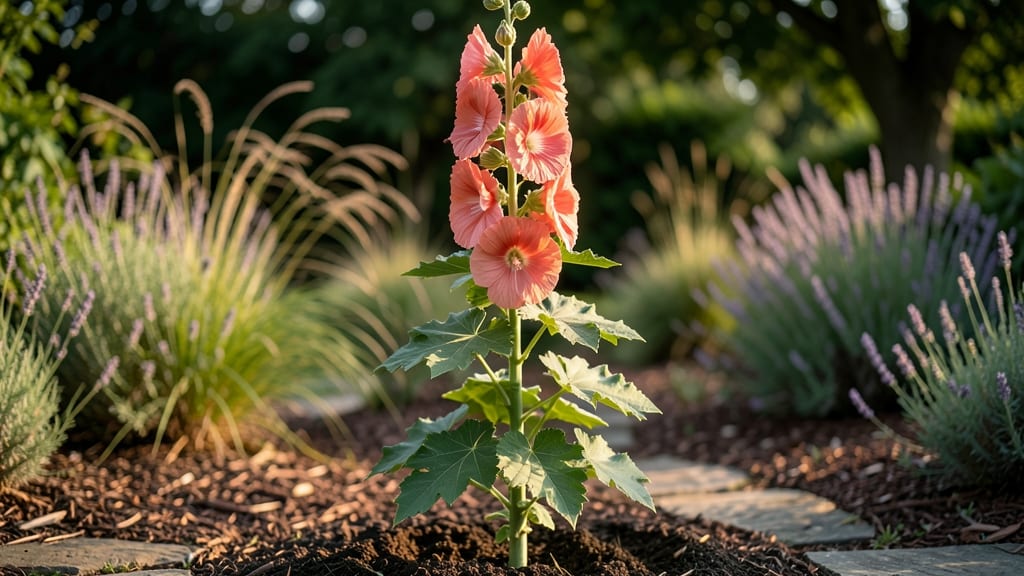
Hollyhocks don't bloom all summer—most varieties flower for just 6-8 weeks during late spring and early fall, with peak blooms in midsummer. Perennial types might produce a second, lighter flush in autumn, while annuals typically finish by early fall unless you regularly remove spent blooms.
Hollyhocks are seasonal showstoppers rather than year-round performers, with their bloom cycles tied directly to daylight changes. 🌿 The 6-8 week window occurs when days grow shorter after summer solstice, triggering natural dormancy.
Perennials like Alba or Black Prince may surprise you with late-season blooms if you prune aggressively, but don't expect the same volume as their spring display. Annual varieties, meanwhile, follow a strict one-season schedule unless you practice consistent deadheading to encourage new growth.
Your local climate plays a surprisingly large role—hollyhocks in cooler zones (USDA 3-6) often bloom slightly later but may extend their season into early fall, while warmer regions (USDA 7-10) see more concentrated summer flowering.
The key difference? Cooler nights preserve flower buds longer, while heat accelerates their development and decline.
💡 In This Article
- Hollyhock Blooming Seasons by Variety Type
- Extending Hollyhock Blooms: Pruning and Deadheading Tips
Hollyhock blooming seasons by variety type
Hollyhocks display distinct bloom patterns based on whether they're annuals or perennials. Annual varieties like Lady Alice or Chater's Rainbow produce their 6-8 week flowering display in a single season, typically from late May through July.
These plants rely on stored energy from their first growth cycle, so once they've exhausted their bloom potential, they naturally decline by early fall. Perennials, however, have a different strategy—they develop a robust root system that allows them to store nutrients for multiple seasons.
The Alba perennial variety, for example, often begins blooming in early June and continues through August, with some late-season reblooms in September if conditions are right. What sets perennials apart is their ability to produce secondary flower stalks from the base after their main bloom cycle.
This happens because perennials enter a partial dormancy period during summer heat, then respond to cooler fall temperatures by generating new growth. In cooler climates (USDA zones 3-6), this fall reblooming can be more pronounced than in warmer zones (7-10).
Climate zones dramatically affect bloom timing and duration. In northern regions, hollyhocks may start blooming as late as early June but extend their season into September due to cooler nights that preserve flower buds. The Black Prince variety, for instance, often shows better fall performance in these areas.
Conversely, southern gardeners typically see more concentrated summer blooming (June-August) because the consistent heat accelerates the plant's natural decline cycle. The 10°F temperature difference between day and night is particularly important—hollyhocks need this contrast to properly set flower buds.
Daylength also plays a crucial role in bloom regulation. Hollyhocks are short-day plants, meaning they respond to decreasing daylight hours after the summer solstice. When days shorten by just 15 minutes (which happens around mid-July), the plant's internal clock triggers bud formation.
This explains why you'll rarely see hollyhocks blooming in early summer—they need that daylight reduction signal to initiate flowering. The Lady Alice annual, for example, won't produce its first buds until after this critical daylength threshold is crossed.
Color intensity also varies by season. Early-season blooms often appear more vibrant because the plants are using stored nutrients from their initial growth phase. As the season progresses, especially in annual varieties, the flowers may show more fading or streaking.
Perennials like Alba maintain their pure white color better through the season because their root systems can replenish nutrients more effectively. The Black Prince variety, with its deep burgundy blooms, sometimes shows more dramatic color shifts—appearing almost black in full sun but revealing their true deep purple when shaded.
For gardeners in transitional zones (USDA 6-7), the bloom window often becomes a 7-9 week period rather than the typical 6-8 weeks. This extension occurs because the moderate climate allows for a more gradual transition between summer heat and fall cooling.
The Chater's Rainbow mixed variety, for instance, may produce its first blooms in late May and continue sporadically through October in these zones, though with reduced intensity after August. This makes zone selection critical when choosing varieties for maximum seasonal display.