
Blooming
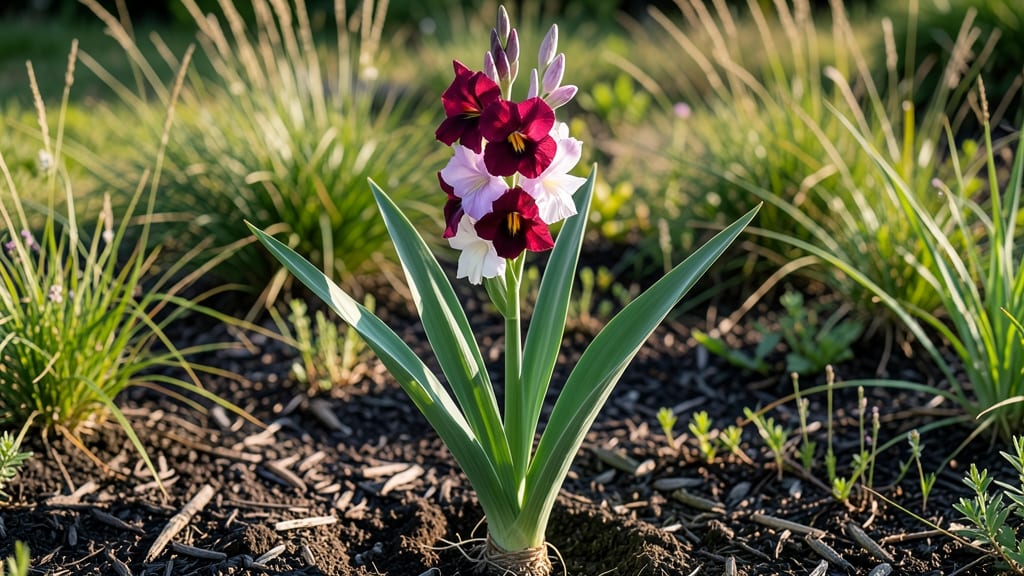
Gladiolus don't bloom all summer continuously; most varieties flower for 4-6 weeks per season, with peak blooms in mid-to-late summer. Their flowering window depends on planting time, climate zones, and variety—late-season types may bloom into early fall with proper timing.
Gladiolus follow a natural bloom cycle tied to their corm's dormancy period, which resets each season. 🌸 Unlike perennials that rebloom, gladiolus produce a single flush of flowers per growing season—typically 3-8 weeks after planting—before entering dormancy.
The key to extending their display lies in strategic planting: staggering corms by 2-4 weeks creates overlapping bloom periods, while cooler climates benefit from early spring plantings to push blooms into summer.
Varieties like 'Green Star' or 'Picasso' often bloom slightly later, giving you a 2-3 week extension if planted at the right time.
What many gardeners overlook is that gladiolus respond to day length and temperature shifts. In warmer zones (USDA 8-10), they may bloom earlier, while cooler regions (USDA 5-7) often see peak blooms delayed until late summer.
Proper care—like consistent moisture and balanced fertilizer—helps sustain blooms longer, but heat stress or drought can cut the season short. For the longest possible display, I recommend planting a mix of early, mid, and late-season varieties in succession.
💡 In This Article
- Gladiolus Blooming Cycles: How Varieties and Seasons Affect Flowering
- Extending Gladiolus Blooms: Planting Strategies for Longer Summer Color
Gladiolus blooming cycles: how varieties and seasons affect flowering
Gladiolus flowering is governed by their corm's natural dormancy cycle, which resets annually. The blooming window begins when the corm breaks dormancy—typically 3-8 weeks after planting—triggered by soil temperatures reaching 55-60°F. This process is called vernalization, where cooler spring temperatures signal the corm to initiate growth.
Once active, the plant responds to increasing daylight hours (photoperiodism), with most varieties needing 12-14 hours of daylight to trigger bud formation. This explains why late spring plantings in cooler climates (USDA zones 5-7) often bloom later than early plantings in warmer zones (USDA 8-10).
Variety selection plays a critical role in bloom timing. Early-season types like 'Pictorial' bloom in 6-7 weeks and peak in June, while late-season varieties such as 'Green Star' take 8-10 weeks and may continue into August or September.
The difference lies in their genetic programming—early bloomers prioritize rapid growth, while late bloomers focus on corm development before flowering. In tropical climates, gladiolus may bloom year-round, but their intensity often wanes during monsoon seasons when humidity exceeds 80%, causing buds to drop prematurely.
Climate zones create dramatic variations in bloom windows. In the Pacific Northwest (USDA 7-8), gladiolus planted in early May typically bloom from July to early September, while in Florida (USDA 9-10), staggered plantings every 3 weeks can create a near-continuous display from June through October.
The key factor is temperature: gladiolus require 60-75°F for optimal growth, and temperatures above 90°F can cause heat stress, shortening the bloom period by 1-2 weeks. This is why gardeners in hot climates often use shade cloth or mulch to protect plants during peak summer.
Day-length sensitivity explains why northern latitudes see later blooms. As you move toward the equator, the consistent 12-hour daylight cycle eliminates this delay, allowing for more predictable flowering. However, even in ideal conditions, gladiolus produce a single flush of blooms per season.
After flowering, the plant redirects energy to corm bulb development, entering dormancy by late summer or early fall. This biological constraint is why gardeners rely on staggered plantings—each new batch of corms planted 2-4 weeks apart creates a cascading bloom effect, extending the seasonal display.
For example, planting 1/3 of your corms in early May, another 1/3 in mid-June, and the final batch in early July can create a 10-12 week bloom window in most temperate climates. This technique leverages the plant's natural growth cycle while accounting for regional temperature variations.
In cooler zones, gardeners often add a fourth planting in late August to catch the brief window of warm fall weather, though yields may be smaller due to shortened growing days.
What's fascinating is how gladiolus adapt to their environment. In high-altitude regions (above 5,000 feet), the cooler temperatures and shorter growing season naturally delay blooming until late summer, while coastal areas benefit from milder winters that allow for earlier plantings.
Understanding these regional patterns helps gardeners optimize their planting schedules for maximum seasonal impact. 🌿