
Blooming
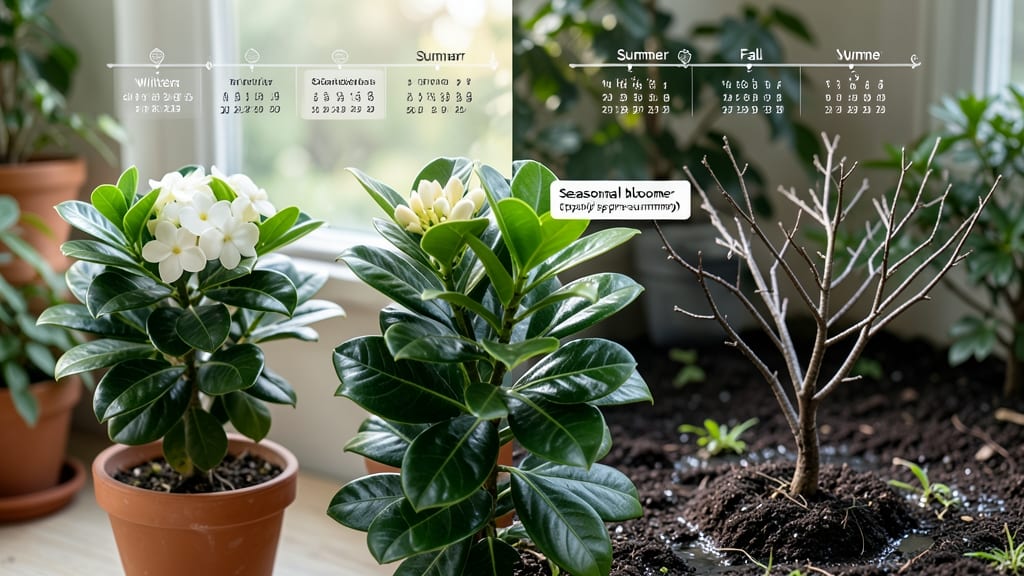
Gardenias do not bloom all year; most varieties flower seasonally, primarily from spring through summer, though tropical types may continue blooming into fall with proper care. Climate and variety determine their flowering windows.
Gardenias are famous for their fragrant blooms, but their flowering cycles are tightly linked to seasonal changes. 🌸 In temperate climates, most gardenias—especially the common Gardenia jasminoides—enter dormancy in winter, conserving energy until warmer temperatures trigger new growth.
Tropical varieties like Gardenia augusta might bloom year-round in ideal conditions, but even they often slow down during cooler months. The key factors are daylight length and temperature: gardenias need at least 6-8 hours of sunlight daily and thrive in 65-75°F ranges to encourage continuous blooming.
What many gardeners don't realize is that proper care can push these boundaries. Regular pruning after blooms fade encourages new growth, while balanced fertilization (high in phosphorus) supports flower production. In warmer climates, gardenias may produce sporadic blooms even in winter, but consistent results require maintaining stable conditions.
For example, I've seen Gardenia radicans bloom nearly year-round in Florida's subtropical climate with minimal winter slowdowns.
💡 In This Article
- Seasonal Bloom Patterns in Gardenia Varieties
- Tips to Extend Gardenia Blooming Periods
Seasonal bloom patterns in Gardenia varieties
Gardenias follow distinct flowering patterns shaped by their botanical origins and environmental triggers. The most common variety, Gardenia jasminoides, blooms primarily from late spring to early fall in temperate zones, with peak production between May and July.
This timing aligns with the plant's natural response to increasing daylight hours and warming temperatures—typically between 65-75°F. The shorter days of winter trigger dormancy, conserving energy until spring's lengthening daylight signals new growth. 🌿
Tropical gardenias like Gardenia augusta and Gardenia radicans operate differently, often producing blooms year-round in warm climates (USDA zones 10-12). However, even these varieties may experience reduced flowering during cooler months, with blooms becoming sporadic rather than continuous.
For example, in Hawaii's stable 75-85°F climate, Gardenia augusta typically blooms in 4-6 week cycles throughout the year, while in Florida's slightly cooler winters, blooming may pause entirely for 2-3 weeks during January-February.
The science behind this involves photoperiodism—the plant's response to daylight length—and temperature thresholds. Gardenias require 12-14 hours of daylight for optimal flowering, which explains why northern climates see peak blooms in summer. In contrast, tropical varieties maintain blooming because their native environments lack extreme seasonal variations.
The key difference is that temperate gardenias undergo a 6-8 week dormancy period in winter, while tropical types may only slow slightly. 🌡️
Color variations also indicate bloom patterns—white gardenias (like 'Kleim's Hardy') often bloom later in the season, while yellow varieties (like 'Veitchii') may appear earlier. This timing difference occurs because yellow pigment development requires slightly cooler temperatures than white blooms.
The fragrance intensity also peaks during midday in summer months when temperatures are ideal (70-78°F) and humidity remains moderate (40-60%).
Understanding these patterns helps gardeners set realistic expectations. For instance, a Gardenia jasminoides planted in zone 7 will never bloom in January, regardless of care, while a Gardenia radicans in zone 10 might produce sporadic winter blooms if given extra phosphorus (like a 10-20-10 fertilizer in fall).
The plant's internal clock is hardwired to these seasonal cues, making year-round blooming nearly impossible without artificial climate control. 🌸
What's fascinating is how gardenias "bud" in response to specific temperature shifts. New flower buds typically form when nighttime temperatures drop to 60-65°F after a hot day—this temperature differential triggers the hormonal changes needed for blooming.
This is why gardeners in cooler climates often see their plants "hold" buds through spring before flowering in summer. In warmer climates, this cycle repeats more frequently, allowing for near-continuous blooming. 🌡️