
Blooming
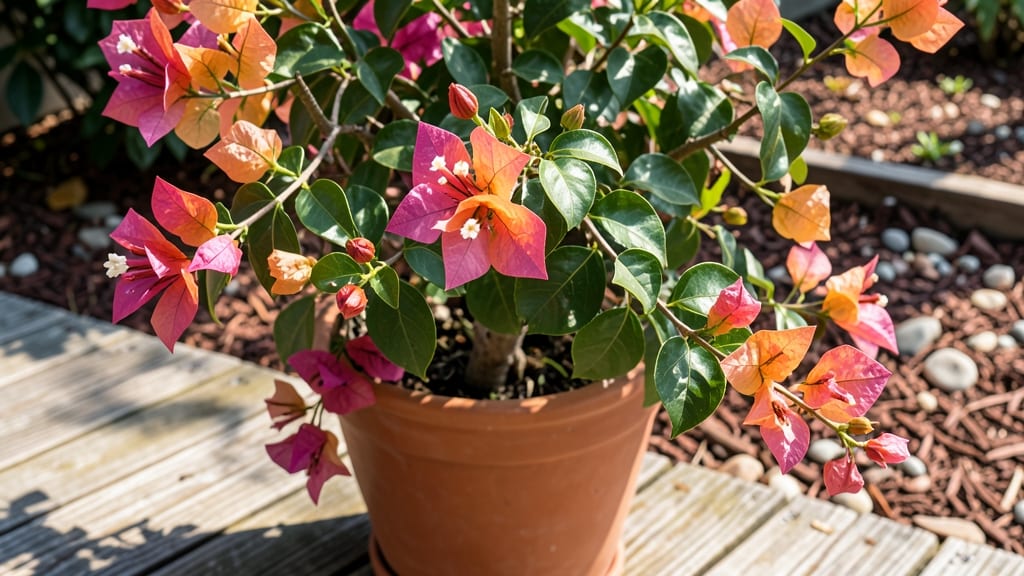
Bougainvillea blooms year-round only in tropical climates (USDA Zones 10-11) with consistent warmth and sunlight. In cooler regions, pruning in late winter and providing winter protection can extend blooming seasons, though dormancy often occurs during colder months.
Bougainvillea thrives in warm, frost-free environments where temperatures stay above 40°F year-round. 🌞 The plant's natural blooming rhythm is tied to daylight exposure and heat—without these, it enters a dormant phase to conserve energy.
Even in milder climates, strategic pruning after the last frost can stimulate new growth and prolong flowering periods. I've seen gardeners in Zone 9 achieve near-continuous blooms by combining late-winter cuts with protective covers during unexpected cold snaps.
What sets bougainvillea apart is its adaptability when given the right care. Unlike many flowering plants, it doesn't need cold periods to reset—it just needs consistent warmth. That's why container-grown bougainvillea often blooms longer in urban areas with microclimates, even when nearby gardens experience dormancy.
The key is mimicking its native tropical conditions as closely as possible.
💡 In This Article
- Climate Zones That Support Year-Round Bougainvillea Blooms
- Pruning and Care Tips to Maximize Bougainvillea Blooms
Climate zones that support year-round bougainvillea blooms
Bougainvillea's blooming cycle is directly tied to its native tropical origins, where temperatures rarely drop below 50°F and daylight remains consistent. The plant's growth hormones respond to heat—when daytime temperatures stay above 60°F and nights remain above 55°F, it enters continuous flowering mode.
This explains why USDA Zones 10-11 (like Southern California or Florida) support year-round blooms naturally. In these zones, bougainvillea receives 12+ hours of sunlight daily, triggering photoperiodic responses that maintain active growth.
The science behind dormancy involves ethylene gas production—a stress hormone bougainvillea releases when exposed to below 40°F temperatures.
This hormone signals the plant to drop leaves and conserve energy, similar to how deciduous trees prepare for winter. 🌡️ In Zone 9, where winters occasionally dip below 40°F, bougainvillea may experience partial dormancy unless protected.
The plant's vascular system also slows nutrient transport during cold snaps, halting flower production until warmer conditions return.
Daylight duration plays a surprising role too. Bougainvillea blooms most prolifically during 10-14 hour daylight periods, which aligns with summer months in temperate zones. In tropical climates, this consistency eliminates seasonal fluctuations.
For example, Hawaii's 12.5-hour daylight year-round creates ideal conditions, while Boston's 14-hour summer days followed by 9-hour winter days create natural bloom cycles. This explains why container-grown bougainvillea in Zone 5 may bloom continuously when brought indoors during winter.
Soil temperature matters just as much as air temperature. Bougainvillea roots thrive when soil stays above 55°F—below this, root activity nearly halts. In Zone 8, where winter soils often drop to 45°F, mulching with 4-6 inches of organic matter can maintain root zone warmth.
The plant's water uptake also decreases by 70% when soil temps fall below 50°F, directly impacting flower production. This is why tropical climates' warm soils create perfect conditions for uninterrupted blooming.
Humidity levels above 50% further enhance continuous flowering by reducing transpiration stress. In arid Zone 10a (like Phoenix), bougainvillea may need occasional misting to maintain optimal bloom cycles. The plant's papery bracts (often mistaken for petals) require 60-70% humidity to stay vibrant—below 40%, they dry out and fall prematurely.
This explains why coastal tropical climates (with natural humidity) support longer bloom periods than inland desert areas.
What most gardeners don't realize is that bougainvillea's blooming rhythm can be "tricked" into year-round production through artificial conditions. Growers in Zone 7 have achieved 9-month blooming periods by combining greenhouse cultivation with supplemental grow lights that maintain 12-hour photoperiods during winter.
The plant's remarkable adaptability means it can compensate for missing natural elements when given the right substitutes. 🌿