
Blooming
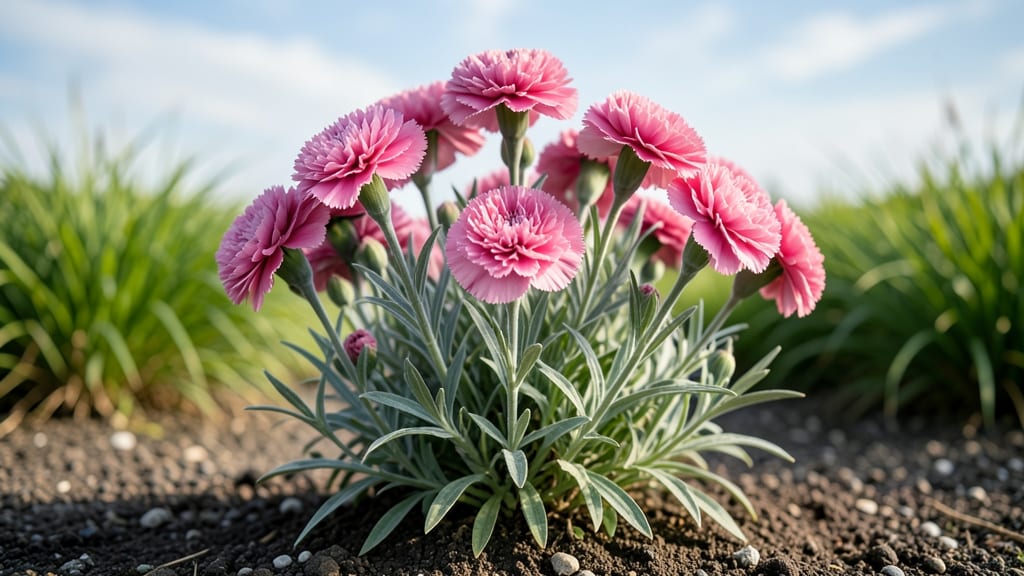
Carnations don't bloom all summer continuously; most varieties flower primarily in spring and fall, though reblooming types like Dianthus caryophyllus can produce occasional summer blooms when deadheaded consistently. Heat-sensitive varieties often go dormant during peak summer unless given proper care.
Most carnations follow nature's seasonal cues, with spring and fall being their peak blooming periods. 🌸 The reason behind this pattern lies in their evolutionary adaptation to cooler temperatures and longer daylight hours. When summer heat arrives, many varieties enter a natural dormancy phase, conserving energy until conditions improve.
This is particularly true for standard carnations, which are more sensitive to temperature fluctuations. However, some specialized varieties—like perpetual or spray carnations—have been bred to handle summer conditions better, though they still require attentive care to maintain any blooms.
What sets reblooming carnations apart is their ability to produce new flowers after deadheading—removing spent blooms encourages the plant to redirect energy toward producing more flowers. This technique works best when combined with proper watering (about 1 inch per week) and occasional shade during the hottest afternoon hours.
For gardeners in hot climates, choosing heat-tolerant varieties and providing consistent care can make a noticeable difference in summer blooming success.
💡 In This Article
- Why Carnations Bloom Seasonally: Climate and Variety Factors
- Best Summer-Blooming Carnation Varieties and Care Tips
Why carnations bloom seasonally: climate and variety factors
Carnations are deeply influenced by photoperiodism—the plant's response to daylight length—which explains their spring and fall blooming peaks. During these seasons, daylight hours are 12-14 hours, providing the ideal balance for flower production.
In contrast, summer's 14-16 hour daylight periods can trigger heat stress in many varieties, causing buds to drop or flowers to wilt prematurely. This is especially true for standard carnations, which evolved in Mediterranean climates where summers are hot but not extreme.
The science behind this involves hormone regulation: higher temperatures accelerate ethylene production, a natural plant hormone that signals aging and dormancy. When daytime temperatures exceed 85°F (29°C) for prolonged periods, carnations often enter a survival mode, conserving energy by halting flower production.
Reblooming varieties like Dianthus caryophyllus have been selectively bred to tolerate wider temperature ranges, but even they require consistent care to maintain summer blooms.
Deadheading—removing spent blooms—plays a crucial role in summer flowering. When you prune back faded flowers to the first set of healthy leaves, you stimulate the plant to produce new buds from lateral shoots.
This technique works because it redirects the plant's energy from seed production (which would occur naturally) back into vegetative growth and flower formation. Without deadheading, many carnations would focus all their energy on seed development during summer, resulting in no new blooms.
Soil moisture also affects summer blooming patterns. Carnations need consistent moisture but hate soggy roots, which can lead to fungal diseases that further stress the plant. In summer, watering deeply once every 5-7 days (rather than daily shallow watering) encourages deeper root growth, making the plant more resilient to heat.
Mulching with 2-3 inches of organic matter helps retain soil moisture while keeping roots cooler.
Another key factor is variety selection. Perpetual carnations, bred for continuous blooming, can produce flowers throughout summer if given proper care, while spray carnations (with multiple stems) often handle heat better due to their bushier growth habit.
The color of the blooms can also indicate heat tolerance—darker varieties like deep reds absorb more heat and may struggle in peak summer, while lighter colors reflect sunlight better.
For gardeners in hot climates, providing afternoon shade (especially between 12 PM and 3 PM) can make a dramatic difference in summer blooming success. A simple shade cloth with 30-50% coverage reduces leaf temperature by 10-15°F, preventing heat stress while still allowing sufficient light for photosynthesis.
This small adjustment can extend the blooming season by 4-6 weeks in many varieties.