
Blooming
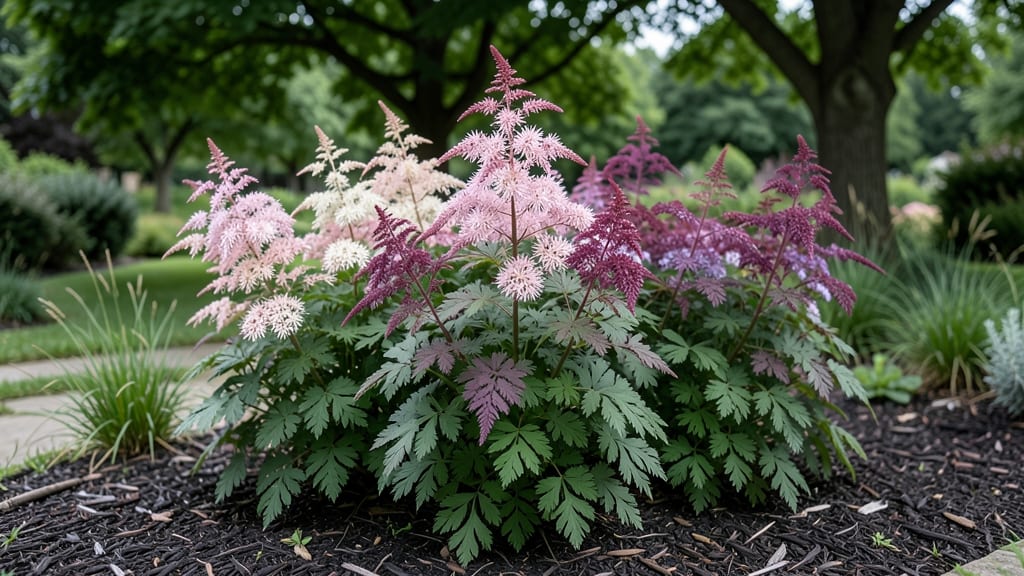
Astilbe blooms do not last all summer—most varieties produce their showy plumes in late spring to early summer, with reblooming limited to select cultivars like 'Fanal' or 'Glut' that may extend flowering into early fall. Deadheading spent blooms encourages some regrowth but rarely matches the initial display's intensity or duration.
Most astilbe varieties are seasonal showstoppers, thriving in late spring through early summer when temperatures stabilize and daylight stretches. 🌿 The key to their brief but brilliant display lies in their genetic programming—these plants evolved to bloom when conditions are ideal for pollinators, not for prolonged summer color.
Even with perfect care, their natural cycle rarely extends beyond 6-8 weeks of peak flowering.
What makes this fascinating is how cultivar selection changes the game. While classic types like 'Deutschland' fade by June, hybrids such as 'Fanal' (a deep purple variety) or 'Glut' (with fiery orange plumes) often surprise gardeners by producing a second, though less dramatic, flush in late summer.
The difference comes down to their hybrid vigor—these varieties have inherited traits that delay dormancy slightly, but they're still working against their biological clock.
💡 In This Article
- Astilbe Blooming Seasons by Cultivar Type
- Deadheading and Care Tips to Prolong Astilbe Flowers
Astilbe blooming seasons by cultivar type
The bloom cycle of astilbe is primarily governed by photoperiodism—the plant's response to daylight length. Most varieties follow a strict late spring to early summer schedule, typically blooming when daylight reaches 14-16 hours in their native growing zones (USDA zones 4-9).
This aligns with when pollinators like bees and butterflies are most active, ensuring successful reproduction.
The genetic programming of classic astilbe varieties, such as 'Deutschland' (deep pink plumes) or 'Bridal Veil' (pure white), is hardwired for this brief window, which explains why they rarely extend beyond June or early July.
Temperature plays a crucial role too. Astilbe thrives in cooler conditions, with ideal blooming occurring between 55-75°F. When summer heat intensifies—especially above 80°F—many varieties enter dormancy prematurely, causing their plumes to wilt. This is why you'll notice 'Deutschland' and 'Bridal Veil' fading faster in hot climates.
The exception lies in hybrid cultivars like 'Fanal' and 'Glut', which have been bred to tolerate slightly warmer temperatures and longer daylight exposure. These varieties can sometimes produce a second, though less vibrant, bloom in late August to September.
Hardiness zones also influence bloom duration. In cooler northern regions (zones 3-5), astilbe may bloom slightly later but often lasts longer due to milder summer temperatures. Conversely, in southern zones (6-9), the intense heat can shorten the bloom cycle significantly.
For example, in zone 7, 'Deutschland' might bloom for just 4-5 weeks, while in zone 5, the same variety could stretch to 6-7 weeks.
What most gardeners don't realize is that the intensity of the second bloom—when it occurs—is directly tied to the plant's energy reserves. After the first flush, astilbe diverts resources to root and foliage growth rather than producing another round of plumes.
This is why deadheading (removing spent blooms) can encourage some regrowth, but the results are often 50-70% less dramatic than the initial display. The hybrid vigor in varieties like 'Glut' allows them to push harder for a second bloom, but it's still a compromise between quality and quantity.
Consider this comparison: 'Bridal Veil' (white plumes) typically blooms for 5 weeks in zone 6, while 'Fanal' (purple plumes) might give you 6 weeks of primary blooms plus a 3-week secondary flush in the same zone.
The trade-off is that the second bloom is often 30% shorter in height and less dense. 🌸
For gardeners in warmer climates, choosing shade-tolerant varieties like 'Amethyst Falls' can help extend the bloom season slightly. These cultivars have been selected for better heat tolerance, allowing them to maintain their plume structure for a few extra weeks.
However, even these won't bloom all summer—they simply delay the inevitable transition to foliage-focused growth.