
Blooming
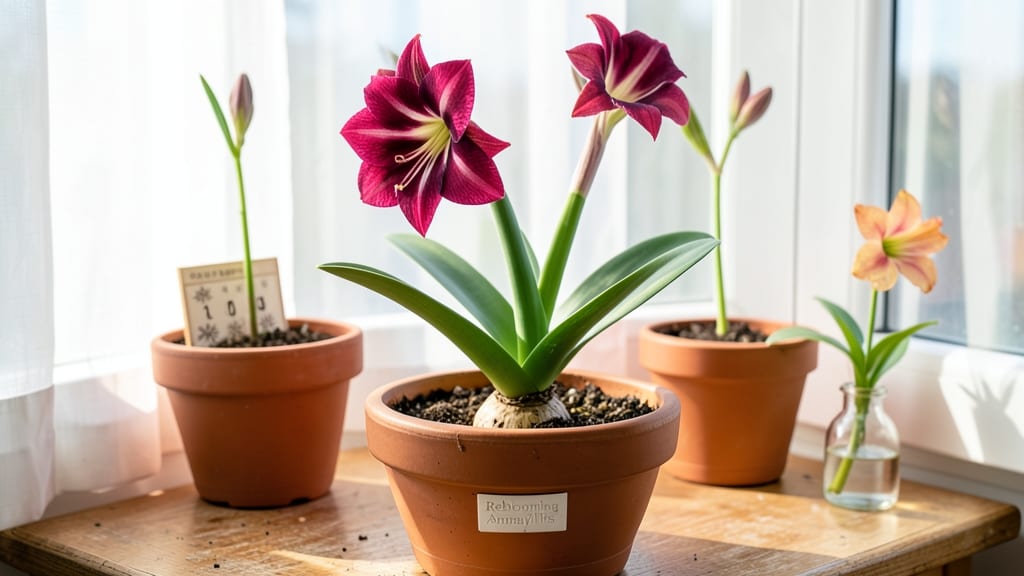
Amaryllis plants can bloom more than once when given the right growing conditions, particularly with varieties like Amaryllis belladonna or Hippeastrum, which respond well to consistent lighting, regular feeding, and a well-timed dormancy period to recharge after their first flowering season.
Amaryllis reblooming depends on two key factors: the plant's genetics and your care routine. 🌱 While some varieties like Hippeastrum are bred specifically to rebloom annually, others may only flower once before needing years of recovery.
The secret lies in mimicking their natural cycles—providing bright, indirect light for 12-14 hours daily and cutting back on water during their 6-8 week dormancy period after blooming. Even experienced growers often miss the mark because they either overwater during dormancy or don't provide enough light during active growth.
Here's what actually works: After your amaryllis finishes blooming, let the foliage yellow naturally before reducing water to just enough to keep the bulb slightly moist. In late summer, resume regular watering and fertilize with a balanced 10-10-10 formula every 4-6 weeks.
The dormancy period is when the plant stores energy for next year's flowers—skipping this step is why many amaryllis only bloom once.
💡 In This Article
- Why Some Amaryllis Varieties Rebloom While Others Don’t
- Step-by-Step Guide to Encouraging Amaryllis Reblooming
Why some amaryllis varieties rebloom while others don’t
The ability of amaryllis to rebloom depends entirely on its genetic background and how closely you mimic its natural growing conditions. Varieties like Hippeastrum (often called "amaryllis" in nurseries) are bred specifically for reblooming, thanks to their hybrid vigor and adaptability.
These hybrids store more energy in their bulbs during dormancy, allowing them to produce flowers again in as little as 9-12 months. In contrast, true Amaryllis belladonna varieties often bloom just once before requiring 2-3 years of recovery, as their energy reserves are more limited.
Light exposure is the single most critical factor in triggering reblooming. Amaryllis bulbs need 12-14 hours of bright, indirect light daily during their active growing phase (spring through fall). Without sufficient light, the plant won't develop the energy reserves needed for flower buds.
Think of it like photosynthesis on steroids—the more light the leaves receive, the more glucose the plant produces to fuel next year's blooms. 💡 For example, placing your amaryllis near an east-facing window provides gentle morning light, while a south-facing window delivers intense afternoon rays that can scorch leaves if not diffused.
Temperature cycles play a crucial role in breaking dormancy and signaling the plant to prepare for reblooming. Most varieties need a 6-8 week period at 50-60°F (10-15°C) after blooming to simulate winter conditions.
During this time, the plant's metabolic processes slow down, allowing it to redirect energy toward bulb storage rather than foliage growth. Skipping this cool period is why many amaryllis only bloom once—they never get the chance to "recharge" properly.
Even in warm climates, you can achieve this by moving the plant to a cooler room or basement during late summer.
Root health is another often-overlooked factor. Healthy roots absorb water and nutrients more efficiently, directly impacting the plant's ability to store energy. If your amaryllis has been in the same pot for years, its roots may become root-bound, restricting growth.
Repotting every 2-3 years with fresh potting mix gives the roots room to expand and access more nutrients. The ideal pot size is just 1-2 inches larger in diameter than the bulb itself—any bigger, and the plant will focus on filling the extra space rather than producing flowers.
Genetic differences between Hippeastrum and Amaryllis varieties explain why some rebloom reliably while others don't. Hippeastrum hybrids, like 'Apple Blossom' or 'Pink Beauty,' are specifically crossbred to produce flowers year after year when given proper care.
These varieties can even develop multiple flower stalks simultaneously, whereas true amaryllis (Amaryllis belladonna) typically produces just one stalk per season. The key difference lies in their bulb structure—Hippeastrum bulbs have more storage tissue, allowing them to support repeated flowering cycles.
What most people don't realize is that even reblooming varieties need a minimum of 6 months of consistent care before they'll produce flowers again. This means maintaining proper watering, fertilizing, and light conditions year-round, not just during the blooming season.
For instance, if you let your amaryllis dry out completely during dormancy or move it to a dark corner, it may take 2 full years to rebloom, if at all. 🌿 The secret to success is treating your amaryllis like a seasonal performer that needs both "stage time" (active growth) and "backstage time" (dormancy) to shine again.