
Blooming
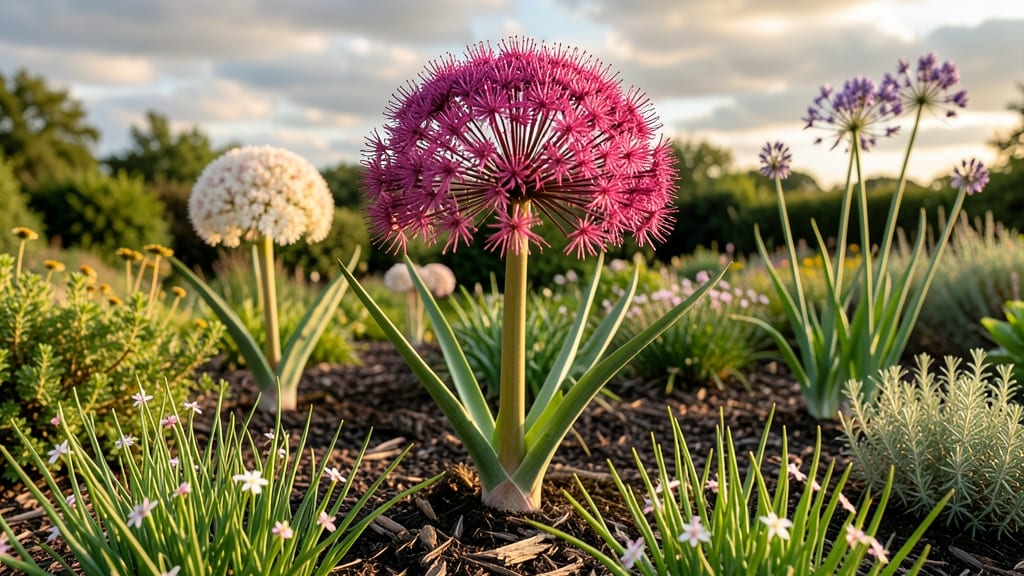
Alliums do not bloom all summer, since most types produce just one striking flower spike in spring or early summer before their energy shifts to bulb storage. However, certain perennial varieties like globe alliums can occasionally rebloom later in the season with the right care—think full sun, well-drained soil, and consistent watering.
Alliums are one-season wonders by nature, but their blooming habits vary wildly between species. 🌸 The dramatic spring spikes you love are actually their one-time reproductive effort, where the plant directs all its energy into seed production before focusing on next year's growth.
That said, globe alliums (Allium sphaerocephalon) and some ornamental types occasionally surprise gardeners with secondary blooms in late summer—though these are never as robust as their spring display.
The key to encouraging any reblooming lies in mimicking their natural conditions: full sun exposure (at least 6 hours daily) and soil that drains quickly to prevent bulb rot.
What many gardeners don't realize is that reblooming requires a trade-off: the plant must balance flower production with bulb storage for winter survival. 💡 This is why even the most attentive care might only yield a few extra blooms—think of it as nature's way of rewarding patience rather than guaranteeing a continuous show.
For consistent summer interest, consider planting alliums alongside other long-blooming perennials like catmint or Russian sage, which fill the seasonal gaps naturally.
💡 In This Article
- Allium Bloom Cycles: When and Why They Fade
- Encouraging Allium Reblooms: Pruning, Fertilizing, and Variety Tips
Allium bloom cycles: when and why they fade
Alliums follow a strict biological schedule because their energy priorities shift dramatically after their primary bloom. When that iconic spherical flower spike appears in spring, the plant is allocating up to 80% of its resources toward seed production—a one-time reproductive effort that exhausts its reserves.
This is why most alliums produce just one dramatic bloom cycle before diverting energy to bulb development for winter survival. 🌱 The process mirrors that of onions or garlic, where the plant's focus switches from flowers to food storage once pollination occurs.
Light exposure plays a critical role in this cycle. Alliums need at least 6-8 hours of direct sunlight daily to trigger blooming, but once they've produced flowers, shorter daylight hours (common in late summer) signal the plant to conserve energy.
Temperature also factors in: ideal blooming occurs between 50-75°F, while heatwaves above 85°F can stunt flower development or cause buds to drop prematurely. Even globe alliums (Allium sphaerocephalon), known for occasional reblooming, typically produce their best display when daytime temperatures stay moderate.
Moisture management is equally crucial. While alliums need consistent watering during their 6-8 week blooming window, overwatering after flowering can lead to bulb rot by preventing proper dormancy.
The plant's roots begin preparing for winter storage as soon as the main bloom fades, which is why you'll often see foliage yellowing and dying back naturally—this is a good sign, not a problem. 💧 What most gardeners miss is that reblooming attempts often fail because the plant hasn't fully recovered its energy reserves from the primary bloom.
Here's what's happening at the cellular level: Once pollination occurs, the flower stalk's vascular system begins transporting nutrients downward to the bulb. This process is irreversible—think of it like a plant version of "all in" poker where the allium bets everything on one hand.
Even if you deadhead flowers promptly, the energy shift has already begun. The only way to potentially encourage secondary blooms is to provide perfect growing conditions (full sun, well-drained soil, and balanced fertilization) that minimize stress on the plant between cycles.
Consider this comparison: While petunias or impatiens can produce continuous blooms through regular deadheading, alliums are monocarpic perennials—they prioritize reproduction over extended flowering. Their strategy makes sense evolutionarily: producing a spectacular one-time display attracts more pollinators than would multiple smaller blooms.
This is why even globe alliums, which sometimes rebloom, never match the abundance or duration of their spring display.
For gardeners hoping to extend the show, the secret lies in selecting varieties with naturally longer bloom windows. Allium giganteum (giant allium) often produces multiple stems, while Allium schubertii may rebloom if given ideal conditions.
However, even these will never bloom continuously—they simply have slightly more flexible energy budgets than most allium species. 🌿 The trade-off is that these varieties often produce fewer but larger blooms, making each one a true garden statement piece.