
Flowers
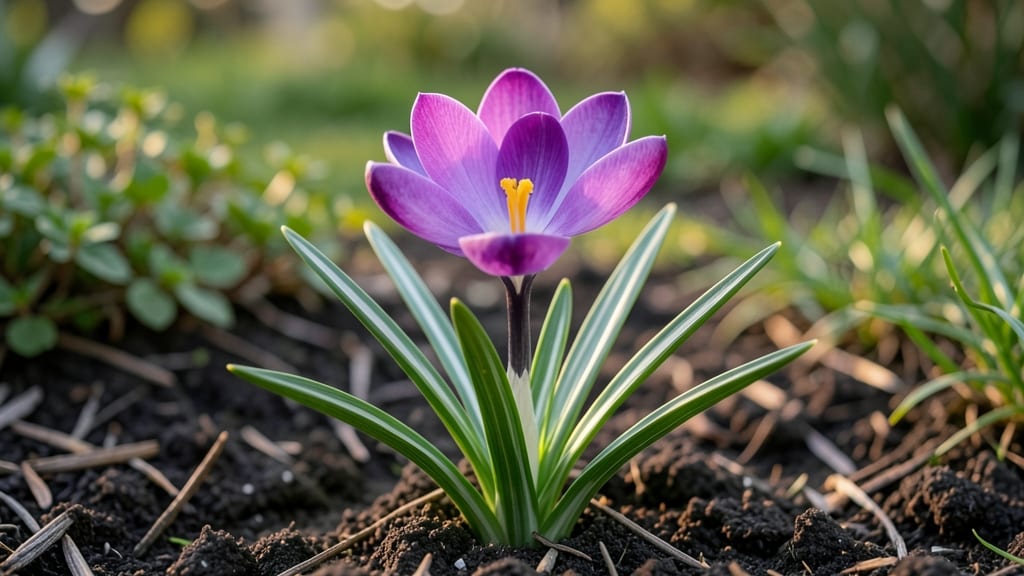
The crocus flower bloom time is a magical moment in spring gardens, when these tiny 🌷 harbingers push through frozen soil to announce warmer days ahead.
If you’ve ever wondered why crocuses bloom earlier than almost any other flower, it’s not just luck—it’s their secret survival strategy. These hardy plants trigger flowering based on temperature cues, not daylight, which is why they often pop up weeks before daffodils or tulips.
In USDA Zone 6a, where many gardeners live, crocuses typically bloom between April and early May, but the exact timing depends on variety, soil conditions, and even your local microclimate.
Some early bloomers, like the Dutch crocus, can appear as soon as late March, while others wait until May.
Below, I’ll share how to predict your crocuses’ bloom time, what factors can speed it up or delay it, and 3 simple tricks to extend their vibrant display—so you can enjoy these cheerful blooms for weeks, not just days.
Natural bloom timing: when Crocus flowers emerge by climate Zone
Crocus flowers are nature’s first harbingers of spring, emerging when soil temperatures hover between 35°F and 45°F. Their bloom timing depends on USDA climate zones, daylight hours, and specific varieties.
In colder Zones 3-4, expect blooms as early as late February, while Zones 7-8 may see them as late as March or even April. This window typically spans 4-6 weeks post-ground thaw, offering a fleeting but vibrant display.
The magic happens when crocuses experience vernalization, a biological process requiring 6-8 weeks of cold dormancy. Once temperatures rise and daylight stretches beyond 12 hours, their buds break dormancy.
Early bloomers like Crocus vernus (Dutch crocus) often pop first, while Crocus tommasinianus (woodland crocus) may linger until late spring. Understanding these triggers helps you predict—and even influence—your garden’s bloom schedule.
In USDA Zone 3, where winters are harsh, crocuses often bloom within 2-3 weeks of snowmelt. I’ve seen Crocus chrysanthus push through snowpack in Minnesota as early as February 15th, their purple blooms providing a stark contrast against white.
Meanwhile, in Zone 8, where winters are milder, blooms may not appear until late March, aligning with the first significant rainfall after winter dormancy.
Daylight length plays a crucial role too. Crocuses are long-day plants, meaning they respond to increasing daylight. In northern climates, this typically occurs in late February, while southern gardens may wait until March 15th or later.
To test this, observe how Crocus vernus blooms earlier in Zone 5 than Crocus laeviusculus, which often waits for warmer soil temperatures.
Microclimates within your garden also affect bloom timing. South-facing slopes warm faster, often triggering blooms 1-2 weeks earlier than shaded areas. I’ve noticed Crocus tommasinianus in full sun blooming in early March, while identical plants in partial shade may wait until April.
This is why I always plant my earliest varieties in the sunniest, warmest spots of my garden.
Soil temperature is another critical factor. Crocuses need soil to reach 40°F before emerging. In Zone 4, this often happens by late February, while Zone 7 gardens may not see this threshold until early March.
To check soil temperature, use a soil thermometer or press your finger into the soil—if it’s cool but not frozen, it’s time for crocuses to wake up.
Varietal differences also create a staggered bloom sequence. Early bloomers like Crocus chrysanthus may appear in late February, while Crocus tommasinianus often waits until March. This natural progression extends your garden’s early-season color palette.
For a continuous display, mix varieties like ‘Ruby Giant’ (purple), ‘Pickwick’ (yellow), and ‘Whitewell Purple’ (lavender) in the same bed.
Extreme weather can disrupt bloom timing. A late frost in Zone 5 might delay blooms by 1-2 weeks, while an early heatwave in Zone 7 can cause premature budding. To protect your crocuses, cover them with frost cloth if late frosts are forecasted.
I’ve also found that mulching lightly in fall helps insulate the soil, creating a more stable microclimate for early bloomers.
If you’re eager to see crocuses bloom earlier, focus on planting depth and soil prep. Planting bulbs 3-4 inches deep ensures they’re insulated from temperature swings, while adding compost to the soil improves drainage and warmth retention.
In my Zone 6 garden, these tweaks have helped Crocus vernus bloom as early as February 20th—sometimes even before the last snowfall melts completely.
Remember, crocus bloom timing is a delicate balance of biology, climate, and variety. By understanding these factors, you can create a garden that bursts into color at the perfect moment—just in time to chase winter’s last grip and welcome spring with open petals. 🌷
How to speed up Crocus bloom time in cold gardens
Cold gardens can feel like a race against time, but crocuses have a secret weapon: their ability to bloom early when conditions are just right.
The key to speeding up their bloom time lies in mimicking their natural preferences—well-draining soil, strategic sunlight exposure, and minimal winter interference.
Unlike many spring bloomers, crocuses thrive when they’re not smothered by heavy mulch or soggy soil, so let’s focus on what truly helps them wake up faster.
First, soil preparation is non-negotiable. Crocuses despise waterlogged conditions, which can delay or even prevent blooming. Amend your soil with compost or coarse sand to improve drainage, especially in heavy clay areas.
A light, airy mix encourages roots to establish quickly, giving your crocuses the energy they need to push through the soil earlier. Think of it as giving them a head start before winter’s last gasp.
⚠️ WARNING: Common Mistakes That Delay Blooms
⚠️ Overwatering in dormancy can rot corms before they bloom. Crocuses store energy underground—water only when soil is bone-dry in winter. Heavy mulch (like thick leaves or straw) traps moisture, suffocating buds. Instead, use a thin layer of straw (1 inch max) to protect from frost heaves.
⚠️ Planting too deep (4+ inches) forces bulbs to work harder to reach sunlight. Aim for 2-3 inches deep—shallow enough for quick emergence but deep enough to insulate roots. Seed-grown crocuses need vernalization (cold stratification) for 8-12 weeks before blooming. If growing from seed, plant in fall and let winter do the work.
⚠️ Ignoring microclimates can mean blooms weeks later. South-facing slopes, raised beds, or rock gardens warm faster than flat ground. Even a black plastic mulch (removed before blooming) can add 5-7°F warmth to the soil. For container crocuses, place pots in sunniest spots and avoid shaded patios.
Next, planting depth and timing make a surprising difference. Most gardeners bury crocus corms too deep, thinking they need protection—but the opposite is true. A 2-3 inch depth lets them push through soil faster once temperatures rise.
For seed-grown crocuses, vernalization (a cold period) is critical. If you’re growing from seed, plant in late summer or early fall so nature handles the stratification for you.
Microclimates are your secret weapon in cold gardens. Crocuses love south-facing slopes or raised beds because these areas warm up faster in spring. Even a stone border or black landscape fabric (removed before blooming) can add crucial degrees to the soil.
If your yard is flat and slow to thaw, consider planting crocuses in containers near a sunny wall—they’ll bloom weeks ahead of ground-planted bulbs.
Finally, avoid fertilizing in fall—crocuses don’t need it, and extra nitrogen can encourage leaf growth at the expense of blooms. Instead, add a light compost top-dressing in early spring as buds emerge.
This gives them a gentle energy boost without overwhelming their delicate roots. Think of it as a quick breakfast to jumpstart their bloom cycle.
With these tweaks, you can shave 2-3 weeks off bloom time in cold gardens. The earliest bloomers, like Crocus vernus (Dutch crocus), often appear by late February in mild zones, while Crocus tommasinianus (woodland crocus) may wait until March.
The difference? Soil warmth, sunlight, and minimal interference—not magic, just smart gardening.