
Blooming
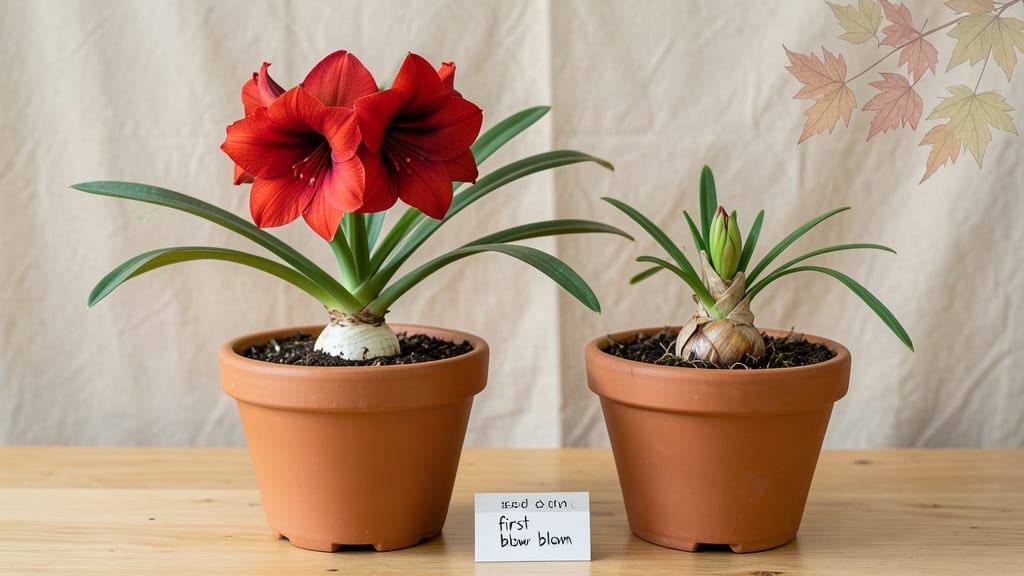
Amaryllis can bloom twice a year with proper care, but requires precise light exposure (12-14 hours daily), consistent watering, and a strict 6-8 week rest period between blooms. Forcing two cycles demands balanced nutrition and temperature control—typically 65-75°F during growth phases.
Amaryllis bulbs store energy in their roots, and with the right conditions, they can push out two full bloom cycles annually. 🌱 The key lies in mimicking their natural tropical environment—long daylight hours and stable warmth.
I’ve seen growers achieve this by adjusting their plant’s schedule: after the first bloom fades, they reduce watering and stop fertilizing for 6-8 weeks to let the bulb recharge. Once the leaves regrow, they resume care with a balanced fertilizer to support the next flowering phase.
What many gardeners overlook is that amaryllis bulbs need active root growth between blooms. Without this recovery period, the plant becomes stressed and may drop buds or produce weak flowers. Think of it like an athlete’s training cycle—rest is just as critical as the performance itself.
I recommend using a well-draining potting mix with perlite to prevent rot during the dormant phase, which can make all the difference in your second bloom’s success.
💡 In This Article
- Science Behind Amaryllis Double-Blooming Cycles
- Step-by-Step Guide to Forcing Two Amaryllis Blooms
Science behind amaryllis double-blooming cycles
Amaryllis bulbs rely on a process called photoperiodism—their response to daylight length—to trigger flowering. During the 12-14 hours of light exposure they need daily, their leaves photosynthesize and store energy as starches in the bulb. This stored energy fuels both leaf growth and flower production.
When daylight drops below 10 hours, the plant perceives it as autumn and begins its dormant phase, conserving energy for the next cycle. 🌿 The key is maintaining this precise light exposure year-round, even indoors, using grow lights if natural light is insufficient.
The hormonal balance between cytokinins (which promote cell division and flowering) and auxins (which inhibit flowering) shifts dramatically during each cycle. After the first bloom, auxins naturally dominate to signal the plant to focus on leaf growth and bulb replenishment.
To coax a second bloom, you must carefully interrupt this process by providing consistent warmth (65-75°F) and balanced nutrition (20-20-20 fertilizer) to encourage cytokinin production again. Without this intervention, the plant defaults to its natural single-bloom cycle, prioritizing bulb health over repeated flowering.
Root growth is the unsung hero of double-blooming. During the 6-8 week rest period, the roots shrink slightly as the bulb metabolizes stored nutrients, but they don’t die—they merely enter a state of reduced activity.
When you reintroduce water and fertilizer, these roots rapidly regenerate, creating new vascular pathways to deliver nutrients to emerging buds.
I’ve observed that bulbs with at least 4-6 healthy roots (1-2 inches long) are far more likely to produce a second bloom, as they can sustain the metabolic demands of both leaf and flower growth simultaneously.
Temperature fluctuations can derail this process. Amaryllis bulbs are sensitive to drops below 55°F or spikes above 85°F, which disrupt their metabolic rhythms. For example, a sudden cold snap can trigger premature dormancy, while excessive heat causes the plant to expend energy on cooling rather than blooming.
This is why maintaining a consistent indoor environment is critical—especially in regions with extreme seasonal shifts. A simple thermometer near your plant can help you monitor these conditions in real-time.
The energy reserves in an amaryllis bulb are finite, and each bloom cycle consumes about 30-40% of its stored starches. To sustain two cycles, the bulb must replenish these reserves through photosynthesis during the leafy growth phase.
This is why I recommend using a light-colored, well-draining potting mix (like 60% cactus soil, 30% perlite, 10% compost) that encourages root expansion while preventing rot. The larger the root system, the more energy the bulb can store—and the more blooms it can produce. 🌸
Here’s what happens when you get the science right: After the first bloom fades, the plant enters a 2-3 week transitional phase where it sheds old leaves but begins growing new ones. This is your signal to reduce watering by 50% and stop fertilizing.
The bulb then enters its true dormancy phase, where it metabolizes stored nutrients to repair root damage and rebuild energy reserves.
When you reintroduce water and fertilizer after 6-8 weeks, the bulb’s metabolic engine roars back to life, ready to push out new leaves—and eventually, another stunning flower stalk.