
Blooming
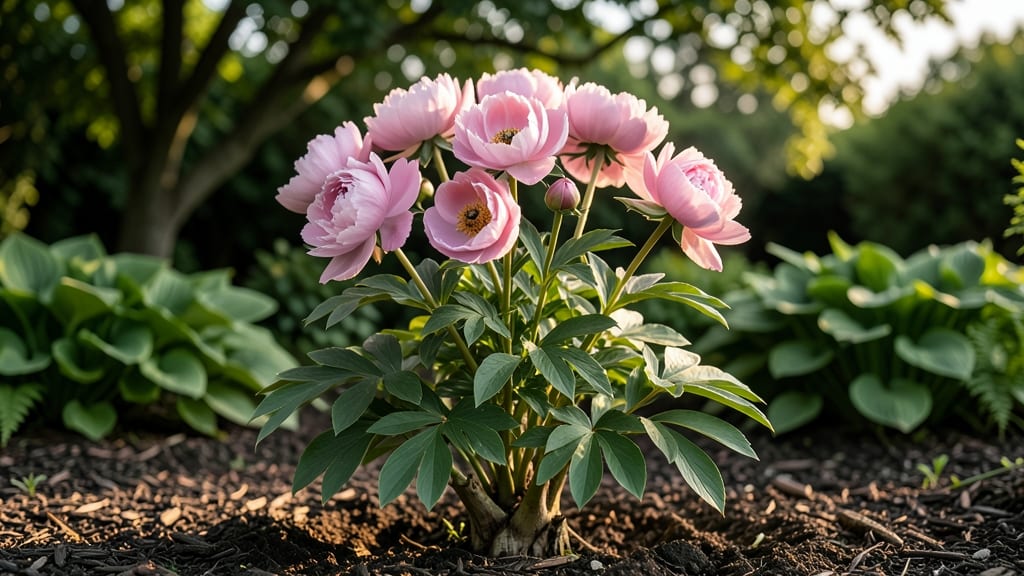
Peonies burst into bloom between late spring and early summer, but timing depends on your zone and variety—my heritage peonies in Zone 6 open in mid-May, while late-blooming types linger until June.
The secret to that shockingly lush display lies in understanding your climate and pruning strategy, which transforms one-time bloomers into reblooming powerhouses.
Most peonies thrive in Zones 3-8, with southern varieties flowering 2-3 weeks earlier than northern ones. Humidity and rainfall also play a role—dry climates may need extra watering to support those heavy, velvety blooms.
The key to extending bloom duration? Pruning after flowering and feeding in early spring, which keeps roots energized for next year.
You’ll recognize peak bloom when buds unfurl into 3-6 inch-wide flowers that perfume the garden with their sweet, honeyed scent. With proper care, reblooming varieties can produce a second flush in late summer, though it’s usually smaller. The trade-off? Longer vase life and more cut flowers for your table.
For maximum impact, pair early-blooming varieties with late types so your garden stays in bloom from May through July. And here’s the pro tip: Deadhead spent blooms to redirect energy into next year’s buds—just leave the foliage until it yellows naturally. That’s when you prune for rebloom magic.
📚 In This Guide
- What you need
- Instructions
- Tips and common mistakes
- Wrapping up and next steps
What you need
- ● Peony plants: Healthy, established herbaceous peonies (non-tree peonies) aged 3–5+ years. Pro tip: 💡 Choose varieties labeled as reblooming (e.g., 'Sarah Bernhardt,' 'Bowl of Beauty').
- ○ Pruning shears: Sharp, bypass pruners (2–4" blades) to avoid crushing stems. Optional: Disinfect with rubbing alcohol between cuts.
- ● Gloves: Heavy-duty garden gloves to protect hands from thorns and sap.
- ○ Compost/fertilizer: Balanced 10-10-10 or organic compost (1–2 cups per plant). Optional: Slow-release peony-specific fertilizer.
- ● Mulch: 2–3 inches of organic mulch (straw, shredded leaves, or pine needles) to retain moisture.
- ● Garden journal/notebook: To log pruning dates, bloom cycles, and plant responses.
- ● Calendar or reminder app: Set alerts for pruning deadheads (June–July) and late-winter pruning (Feb–March).
- ○ Thermometer: Optional but helpful for tracking chilling hours (peonies need 400–600 hours below 40°F for rebloom success).
- ● Full sun: 6+ hours of direct sunlight daily—peonies won’t rebloom in shade.
- ● Well-draining soil: Amend heavy clay with compost or sand to prevent root rot.
- ● Patience: Reblooming peonies may take 1–2 years to establish a reliable second flush!
Instructions: pruning peonies for extended bloom time
Peonies reward patience with lush, repeat blooms—here's how to time pruning for maximum floral performance.
Identify Bloom Cycle and Prune After Flowering
Wait until late summer (after September 1) when foliage begins yellowing but before hard frost. This is critical—cutting too early removes energy reserves needed for next year's blooms. I always prune 2-3 inches above the ground, avoiding the woody base where buds form.
Use clean, sharp pruners to make 45-degree cuts just above a bud or outward-facing leaf. This encourages bushier growth. If your peony blooms only once, prune immediately after flowers fade. For reblooming varieties, wait until mid-September to avoid stimulating new growth that won't harden off before winter.
Remove Dead and Weak Growth in Early Spring
Start in late March or early April when new shoots emerge but before buds swell. Cut back last year's stems to 1-2 inches above the ground, leaving only the new green growth. This prevents disease buildup in old stems and redirects energy to the strongest new shoots.
Watch for mushroom-shaped buds at the base—these are your future blooms. Never prune these off, even if they look damaged. I've seen gardeners accidentally trim these buds and wonder why their peonies fail to bloom. If you find any blackened or mushy stems, cut those back further to healthy tissue immediately.
Thin Crowded Foliage for Better Airflow
In early June, after the first flush of blooms, assess the plant's center. If stems grow densely packed, select 3-5 of the strongest, outermost stems and remove the rest at the base. This improves airflow and reduces fungal diseases like botrytis.
Use your fingers to gently pull stems rather than cutting—this prevents tearing. For established plants with 10+ stems, thin to 5-7 strong stems maximum. You'll notice fewer but larger, more vibrant blooms next season as the plant focuses its energy on quality over quantity.
Apply Post-Bloom Fertilizer and Mulch
After pruning in late summer, apply a balanced 10-10-10 fertilizer at half-strength to avoid encouraging tender new growth before winter. Water deeply to help roots absorb nutrients. Then add 3-4 inches of organic mulch (like shredded bark) around the base, keeping it 6 inches away from the crown to prevent rot.
This mulch layer protects roots from temperature swings and retains moisture. I always check mulch depth in early spring—if it's broken down below 2 inches, add more. Peonies hate soggy roots but appreciate consistent moisture during their active growth phase from April through June.
Monitor for Pest/Disease and Adjust Pruning
Inspect plants in May and July for peony leaf blight (yellow spots) or peony wilt (sudden wilting). If you find blackened stems or white fungal growth, prune affected areas immediately with sterilized tools and dispose of debris. For severe cases, apply neem oil as a preventive spray in early June.
If your peonies consistently produce small blooms or few flowers, they may need more sunlight (they thrive in full sun to partial shade). Move them if they're in shade from trees—peonies planted under tall trees often struggle to bloom well. Adjust pruning timing if blooms appear late—some varieties need earlier spring pruning to encourage earlier flowering.
Tips & tricks for perfect peony pruning
Timing and technique make all the difference when it comes to peony rebloom success—here's what I've learned after years of trial and error.
Seasonal Timing is Everything: The late summer pruning after September 1st is non-negotiable for reblooming varieties. I've seen gardeners prune too early and end up with no blooms the following year—the plant needs those energy reserves. For once-blooming types, prune immediately after flowers fade, but rebloomers need that mid-September timing to harden off properly before winter. Mark your calendar now!
Pruning Angle Matters: That 45-degree cut isn't just for looks—it directs water away from the stem to prevent rot. I always use clean, sharp pruners and make the cut just above a bud or outward-facing leaf. This simple technique encourages bushier growth and stronger stems. If you're using dull shears, you'll crush the stem tissue and invite disease.
Spring Pruning Secrets: When you're cutting back last year's stems to 1-2 inches in early spring, watch for those mushroom-shaped buds at the base—those are your future blooms! I've made the mistake of trimming them off thinking they were damaged, only to get no flowers that season. If stems are blackened or mushy, cut back further to healthy tissue immediately to prevent spreading disease.
Mulch Depth Strategy: That 3-4 inch mulch layer in late summer isn't just for looks—it protects roots from temperature swings. I always check mulch depth in early spring and add more if it's broken down below 2 inches. The key is keeping it 6 inches away from the crown to prevent rot while still insulating roots. For northern climates, consider adding an extra 2 inches of mulch before winter.
Pro Tips for Bloom Time For Peonies
- Timing and technique make all the difference when it comes to peony rebloom success—here's what I've learned after years of trial and error.
- Seasonal Timing is Everything: The late summer pruning after September 1st is non-negotiable for reblooming varieties.
- Pruning Angle Matters: That 45-degree cut isn't just for looks—it directs water away from the stem to prevent rot.
Frequently asked questions
Got questions about peonies and their bloom time? You’re not alone! Here are some of the most common queries—plus answers to help you get the most out of your peony garden.
When is the best time to plant peonies for optimal blooms?
Plant peonies in early fall (4–6 weeks before the first frost) or early spring (as soon as the soil is workable). Fall planting gives roots time to establish before winter, while spring planting works in warmer climates. Aim for a depth where the "eyes" (buds) sit 2 inches below soil level for best results.
Why do my peonies only bloom once a year?
Most peonies are single-blooming by nature, but intersectional (IT) hybrids and reblooming varieties can flower twice! To encourage reblooms, prune spent blooms carefully (see our pruning calendar), avoid heavy feeding with high-nitrogen fertilizer, and ensure they get full sun (6+ hours/day).
How do I extend my peonies’ bloom time?
Peonies thrive in cool weather, so late spring/early summer blooms last longer in regions with mild summers. Deadhead faded blooms (but leave foliage until fall!) and mulch around the base to retain moisture. Avoid hot, dry conditions, which can shorten their display.
Can I move peonies after they’ve bloomed?
Peonies hate being transplanted once established (they’re sensitive to root disturbance). If you must move them, do it after blooming but before fall dormancy (late summer/early autumn). Water deeply for 2 weeks before/after moving, and avoid pruning until spring.
What should I do if my peonies aren’t blooming at all?
Check these fixes:
- Sunlight: Peonies need 6+ hours of direct sun daily.
- Age: Young plants (under 3 years) may not bloom yet—be patient!
- Fertilizer: Too much nitrogen = leafy growth, fewer flowers. Use a low-nitrogen, high-phosphorus fertilizer (like 5-10-10) in early spring.
- Pruning: Over-pruning can reduce blooms. Only trim back dead stems after flowering.
Wrapping up and next steps
Peonies are a gardener’s reward—bursting with fragrance and beauty when cared for just right! 🌸 With the right pruning calendar and a little patience, you’ll unlock their rebloom magic year after year. Remember: timing is everything, and a sharp eye for deadheading and seasonal cuts will keep your peonies thriving.
Now that you’re armed with the know-how, roll up your sleeves and give your peonies the TLC they deserve! Start by marking your calendar for next spring’s first prune—your blooms will thank you. Happy gardening! 🌱