
Blooming
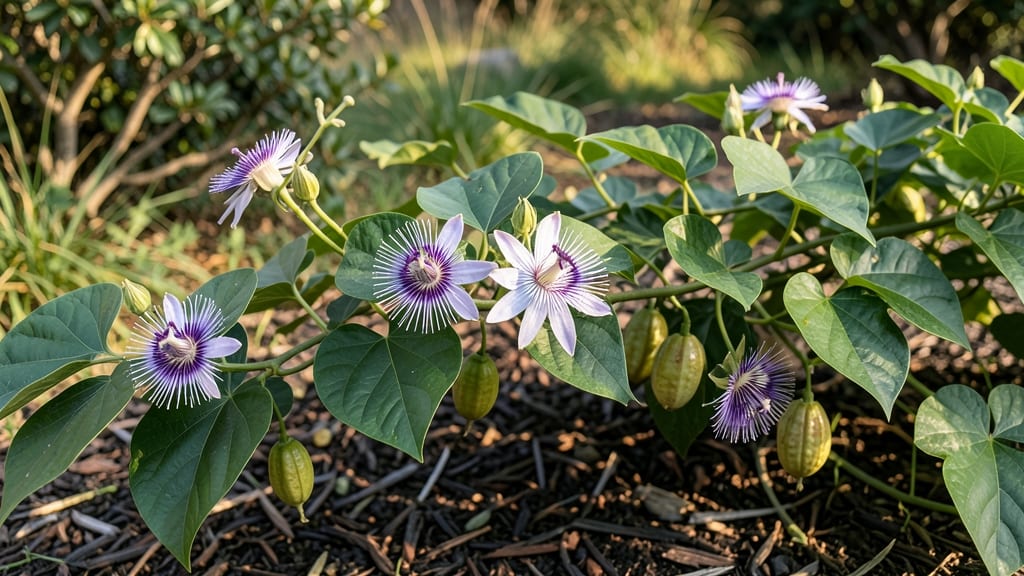
To bloom passion fruit successfully, you need warm climates, nutrient-rich soil, and targeted care. These conditions encourage vibrant flowers that mature into sweet, ripe fruit throughout the year.
Passion fruit plants thrive when temperatures stay between 70-85°F, with consistent moisture and well-draining soil to prevent root rot.
The key to abundant blooms lies in balancing nutrients—too much nitrogen promotes leafy growth while starving the flowers, so I always use a balanced 10-10-10 fertilizer during the blooming season. 🌸 What’s fascinating is how these tropical vines respond to seasonal cues: in cooler months, they’ll slow down unless you provide supplemental lighting or move potted plants indoors temporarily.
Once flowers appear, their delicate structure means they’re highly sensitive to environmental stress. Even slight changes in humidity (ideal range is 60-70%) or sudden temperature drops can cause them to drop prematurely.
I’ve found that morning watering—when the sun isn’t yet intense—helps maintain flower health while preventing fungal issues that could ruin your harvest.
💡 In This Article
- Optimal Conditions for Passion Fruit Flowering
- Step-by-Step Pruning and Care for Heavy Passion Fruit Yields
Optimal conditions for passion fruit flowering
The passion fruit vine (Passiflora edulis) thrives in specific environmental conditions that directly influence its flowering cycle. The ideal temperature range for blooming is 70-85°F, with nighttime temperatures never dropping below 55°F.
Below 60°F, flower buds may fail to open, and prolonged exposure to 40°F or colder can kill the plant entirely. This tropical species mimics its natural habitat in South America, where consistent warmth triggers hormonal signals that promote flower development.
Humidity plays a critical role too—maintaining levels between 60-70% prevents flower drop and supports pollination. Too little humidity causes petals to dry out, while excessive moisture encourages fungal diseases like powdery mildew, which can rot flowers before they open.
I’ve noticed that indoor growers often struggle here: placing a humidifier near the plant or misting leaves in the morning (but avoiding evening misting) helps replicate tropical conditions.
Soil pH should stay neutral to slightly acidic (6.0-7.0), as alkaline soils lock out essential micronutrients like boron and zinc, which are vital for flower formation.
Light intensity matters just as much as duration—passion fruit vines need 6+ hours of direct sunlight daily, but the quality of light is equally important. Artificial grow lights (full-spectrum LEDs) can supplement sunlight in cooler months, but they must provide 12,000-15,000 lux to prevent leggy growth.
What’s fascinating is how these vines respond to light cycles: they flower more prolifically when exposed to 12-14 hours of daylight, which is why growers in northern climates often use timers to extend light exposure during winter.
Nutrient balance is the final piece of the puzzle. Passion fruit plants are heavy feeders, but too much nitrogen (N) leads to lush foliage at the expense of flowers.
Instead, I recommend a balanced 10-10-10 fertilizer during the blooming season, with a boost of phosphorus (P) to encourage root and flower development. Organic options like bone meal or fish emulsion work well, but synthetic fertilizers provide more precise control over NPK ratios.
Over-fertilizing with nitrogen can actually suppress flowering—this is why I always reduce nitrogen levels by half once buds appear.
Seasonal adjustments are key for year-round production. In cooler months, passion fruit vines may enter a dormant phase, so I’ve found that moving potted plants to a greenhouse or sunroom with supplemental heat (65°F minimum) keeps them productive.
Even a small space heater near the plant can make a difference, but avoid placing it too close—80°F+ can scorch leaves. The goal is to maintain consistent warmth without creating stress points that trigger flower drop.
Pollination is another critical factor—passion fruit flowers are self-pollinating, but bees and hummingbirds significantly increase fruit set. If growing indoors, I gently shake the vines near flowers to mimic natural pollination, or use a small paintbrush to transfer pollen from male to female flowers.
The female flowers have a distinctive three-chambered ovary at their base, while male flowers lack this structure. Understanding this difference helps maximize fruit production.