
Blooming
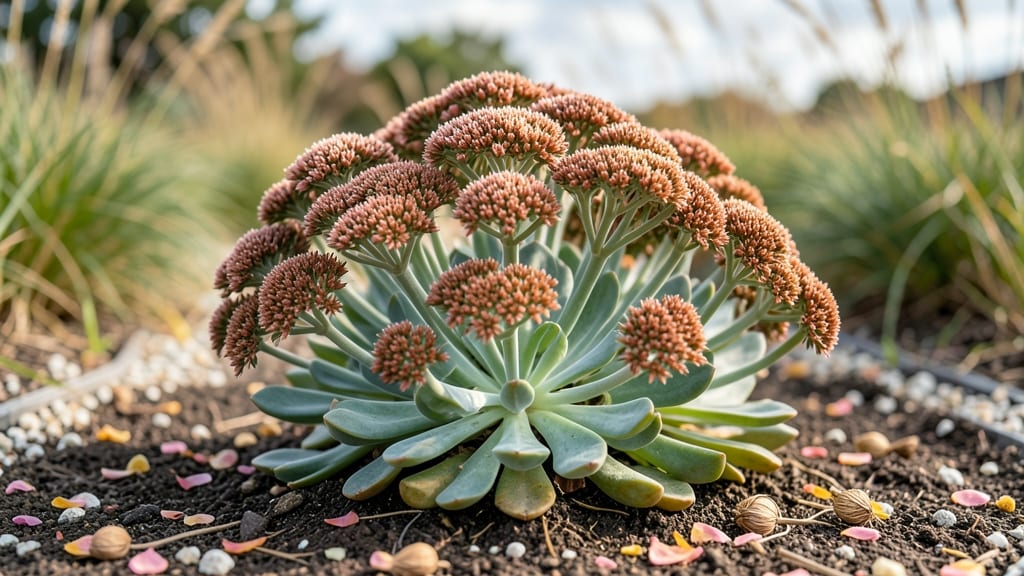
The Autumn Joy Sedum’s bloom time from late summer through fall 🌸 transforms your garden into a sea of pinkish-red flowers that last for weeks.
If your Autumn Joy Sedum is losing its wow factor year after year, the secret to reviving its showstopping blooms lies in understanding its bloom cycle—and the perfect pruning window to maximize next season’s display.
This hardy perennial thrives in full sun and drought-tolerant conditions, but its timing can shift based on your USDA zone. In Zone 6a, expect vibrant blooms from August through October, while cooler regions may see a slightly later start.
Below, I’ll break down the exact months to watch for, how to extend those rich colors, and the one pruning trick that guarantees a longer, brighter show next autumn.
Autumn Joy Sedum bloom time: exact months and what triggers its late-season color
The Autumn Joy Sedum (Hylotelephium telephium 'Autumn Joy') is a gardener’s late-season superstar, bursting into vibrant pink blooms when most flowers have faded.
Its bloom time typically spans from mid-August to October, but this window can shift based on your USDA hardiness zone, sun exposure, and plant maturity. Understanding these factors will help you predict—and even extend—its stunning display.
In USDA Zones 4–9, most gardeners see peak blooms in September, with flowers lasting until the first hard frost. However, in warmer climates (Zones 9–10), blooms may start as early as July and stretch into November.
The key trigger for its late-season color explosion is a combination of cooler temperatures (below 75°F) and longer daylight exposure after summer’s peak heat.
Here’s how sunlight, temperature, and plant maturity influence its bloom intensity and duration:
| Factor | Ideal Condition | Effect on Bloom Time |
|---|---|---|
| Sunlight | 6+ hours of full sun daily | Longer bloom duration; brighter pink color |
| Temperature | 50–75°F (cooler nights) | Triggers bud opening; extends blooms into fall |
| Plant Maturity | 3+ years old | Larger flower clusters; earlier blooming |
| Watering | Deep soak weekly (drought-tolerant) | Prevents stress; supports vibrant blooms |
| Soil pH | 6.0–7.0 (neutral to slightly acidic) | Enhances nutrient uptake for stronger stems |
Sunlight is the most critical factor for Autumn Joy Sedum bloom time. While it thrives in full sun (6+ hours), even partial shade (4–6 hours) can delay blooming by 1–2 weeks. If your plant is in a shadier spot, consider transplanting it to a sunnier location in early spring to encourage earlier—and more abundant—flowers.
Temperature plays a dual role: Hot summer days (above 85°F) can cause buds to abort, while cool nights (below 60°F) signal the plant to open its flowers. In hot climates, provide afternoon shade to prevent bud drop, or mulch heavily to keep roots cool.
In cooler regions, black plastic mulch can speed up soil warming and advance bloom time by 2–3 weeks.
Plant maturity directly impacts bloom size and timing. A 3-year-old Autumn Joy Sedum will produce larger, denser flower heads and bloom earlier than a younger plant. To accelerate maturity, prune back stems by ⅓ in early spring (before new growth starts) and fertilize lightly with a balanced 5-10-10 formula in May and June. Avoid heavy feeding in July and August, as this can promote leafy growth at the expense of flowers.
To extend the bloom period naturally, try these proven strategies:
- Deadhead spent blooms in early fall to redirect energy to new flowers.
- Reduce watering in late summer to stress the plant slightly, which can prolong flowering.
- Add a layer of mulch in September to insulate roots and delay frost damage.
- Plant near late-blooming companions like Russian sage or goldenrod to create a longer-season display.
One common misconception is that Autumn Joy Sedum blooms only once per year. While its main display occurs in late summer to fall, some gardeners report secondary blooms in early spring if they leave the dried flower heads intact over winter.
This winter interest can also attract pollinators early in the season.
If your Autumn Joy Sedum is skipping blooms entirely, check for these hidden issues:
- Overcrowding (thin plants to 12–18 inches apart).
- Poor drainage (amend soil with sand or perlite).
- Excess nitrogen (switch to a low-nitrogen fertilizer like 2-4-4).
- Pest damage (inspect for aphids or spider mites on new growth).
By tuning into these seasonal cues and adjusting care accordingly, you can turn your Autumn Joy Sedum into a year-round garden star—not just a late-summer highlight. The key is balancing sunlight, temperature, and maturity to keep those pink blooms coming until the first frost. 🌸
When to prune Autumn Joy Sedum for maximum blooms: step-by-step timing guide
Pruning your Autumn Joy Sedum at the right time can transform its blooms from modest to spectacular. The key lies in understanding when to cut back—whether in late fall or early spring—and how to trim to encourage next year’s larger, more abundant flowers.
Timing isn’t just about aesthetics; it’s about plant health and bloom longevity. Let’s break down the science-backed schedule to unlock your sedum’s full potential.
Many gardeners make the mistake of pruning too early or too late, which can stunt flower growth or even kill the plant. For example, cutting back in mid-summer removes next year’s flower buds, while waiting until deep winter leaves your sedum vulnerable to rot or pests.
The ideal window depends on your climate zone and whether you’re deadheading faded blooms or doing a hard prune for renewal.
Pruning Timing for Autumn Joy Sedum
Late Fall Pruning (After First Frost)
- Pros: Removes dead foliage, prevents disease, and encourages new growth in spring.
- Cons: Risk of over-pruning if stems are cut too short, reducing next year’s flower size.
Early Spring Pruning (Before New Growth)
- Pros: Stimulates vigorous growth, removes winter-damaged stems, and maximizes bloom potential.
- Cons: Missed deadheading in fall can lead to seed production, reducing flower abundance.
Visual Cue: Prune when flower stalks turn brown and leaves yellow (late fall) or when new shoots emerge (early spring).
For deadheading, act as soon as blooms fade in late summer or early fall. This redirects the plant’s energy toward new flower production instead of seed development. Use clean, sharp pruning shears to snip spent blooms just above a leaf node.
This method works best if you want to extend the bloom season and keep your sedum looking fresh until first frost.
If you prefer hard pruning, wait until late fall or early spring. Cut back 1/3 of the plant’s height to remove dead or weak growth. This approach rejuvenates the plant and ensures a fuller, bushier appearance next season.
Just avoid pruning in winter, as the plant is dormant and more susceptible to cold damage.
Regional climate plays a role too. In warmer zones (7-10), sedum may stay green longer, so early spring pruning works best. In cooler zones (3-6), late fall pruning after the first frost is safer.
Always prune on a dry, sunny day to prevent fungal infections and speed up healing.
Pro tip: After pruning, apply a light layer of compost around the base to boost soil nutrients and support next year’s bloom production. Water deeply but avoid overwatering, as sedum thrives in well-draining soil.
With the right timing, your Autumn Joy Sedum will reward you with larger, brighter blooms for years to come. ✂️🌸