
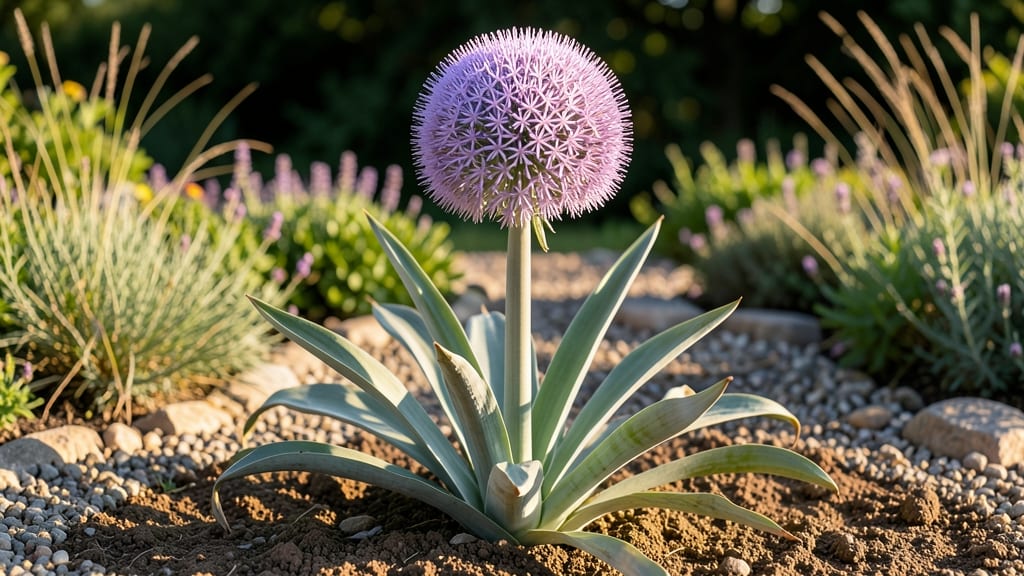
Allium Bloom Time: Predictable Months by Variety and Climate Zone

Blooming

Allium Bloom Time: Predictable Months by Variety and Climate Zone

The allium bloom time is one of those gardening moments that turns a quiet spring garden into a showstopper 🌸 — and missing it can leave you staring at empty stems.

Alliums are a gardener’s secret weapon, adding dramatic globes of color with minimal fuss. But timing their bloom can be tricky, especially when different varieties thrive in distinct seasons. Whether you’re growing Allium giganteum or Allium sphaerocephalon, knowing when to expect those stunning flower spikes makes all the difference.

Climate plays a huge role: in cooler zones like 6a, blooms often arrive later, while warmer regions may see multiple flushes. Even the planting window — March to April for most — can shift the timing by weeks.

Below, we’ll break down exactly when to expect those iconic blooms, plus 5 pro tips to extend their show.

From early spring starters to late-season performers, you’ll learn how to align your alliums with your garden’s peak moments — and keep those blooms coming back year after year.

Allium bloom time by popular variety: months and seasonal expectations

Alliums are my go-to for dramatic seasonal color, but their bloom windows vary wildly between varieties. Some burst into flower in early spring, while others wait until late summer, creating a year-round show.

Understanding these differences helps me plan perennial borders that stay vibrant from March to September. Let’s break down the bloom timing for 12+ popular alliums, including their foliage duration and seasonal expectations so you can mix and match for continuous interest.

I’ve organized these alliums into three bloom categories: early-season (spring), mid-season (late spring to early summer), and late-season (summer to fall). Each type offers unique foliage characteristics—some die back after blooming, while others provide year-round greenery.

For example, Allium moly is a spring ephemeral, while Allium sphaerocephalon lingers well into summer. Let’s dive into the details.

Here’s a quick reference for bloom windows and foliage behavior to help you visualize how these alliums fit into your garden timeline:

How climate zones shift Allium bloom timing: a USDA Zone guide

Your USDA climate zone plays a starring role in when your alliums bloom. In Zone 3 (think Minnesota or Montana), cold snaps often delay blooms until late June or July, while Zone 10 (Southern California or Florida) may see spring and fall flushes.

These shifts happen because temperature cues trigger dormancy or growth—so your Allium giganteum might bloom 2 months earlier in Zone 7 than in Zone 4.

Warm climates also trick alliums into reblooming if summer heat doesn’t stress them. For example, Allium moly in Zone 9 might flower in March and again in October, while the same variety in Zone 5 could only bloom once in May.

Understanding these patterns helps you plan companion plants and extend your garden’s color season.

🌡️ Allium Bloom Timing by USDA Zone

Zone 3-4
Late June–July
Zone 5-6
May–June
Zone 7-8
April–May
Zone 9-10
March + Oct
Note: Early bloomers like Allium schubertii may flower 1-2 weeks earlier in each zone.

In cooler zones (3–5), alliums often wait until soil temps hit 50°F before shooting up. This means Allium sphaerocephalon—a late-season beauty—won’t bloom until July in Zone 4, but could start in June in Zone 6.

To nudge blooms along, plant bulbs in well-draining soil with added compost; this gives roots a head start when warmth arrives.

Conversely, Zone 8–10 gardeners might battle heat stress if summer temps exceed 90°F. Varieties like Allium christophii may bolt prematurely or produce smaller blooms. Here, partial shade and consistent moisture help sustain flowers.

I’ve seen Allium karataviense in Zone 9 rebloom in fall after a light pruning to remove spent blooms.

Pro tip: Use microclimates to your advantage. A south-facing wall can warm soil enough to trigger earlier blooms in Zone 5, while a shady spot in Zone 10 protects alliums from scorching.

For example, Allium moly in my Zone 7 garden blooms 3 weeks earlier near the house foundation than in the open border.

Track your own allium bloom dates for 2–3 years to spot patterns. In my Zone 6 garden, Allium giganteum blooms June 15–July 10 most years, but a mild winter once pushed it to May 20.

Adjust your succession planting based on these observations—pairing early bloomers with late varieties ensures continuous color from May to August.

★★★★★5.0(7 reviews)
Categories Blooming
Variety Bloom Time Foliage Duration Height (ft) Notes
Allium moly March–April Spring ephemeral 1–1.5 Golden flowers, dies back after blooming
Allium cernuum April–May Year-round 1–2 Nodding purple blooms, drought-tolerant
Allium schubertii April–May Spring–summer 2–3 Purple globes, great for cut flowers
Allium giganteum June–July Year-round 3–5 Tallest variety, bold purple spheres
Allium sphaerocephalon June–August Summer–fall 2–3 Round purple blooms, fragrant
Allium cristophii May–June Year-round 1–2 Star-shaped purple flowers
Allium karataviense June–July Summer 2–3 Pinkish-purple blooms, late-season
Allium roseum April–May Spring–summer 1–2 Pink star flowers, great for borders