
Blooming
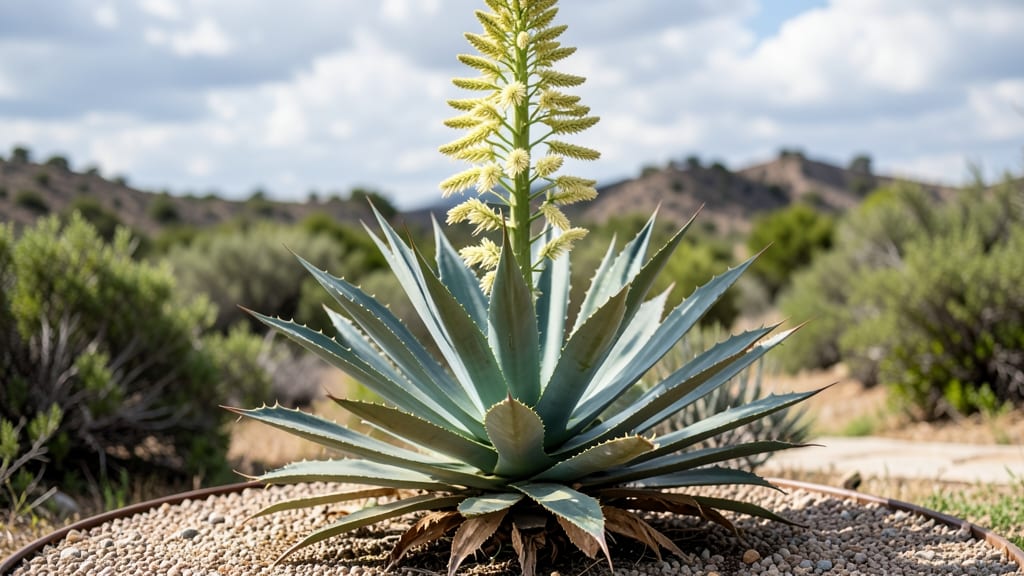
The agave bloom stalk is nature's dramatic finale for these striking plants—often appearing after decades of patience. 🌱 I've watched my own fountain agave send up that towering, architectural spike, and it's a sight that makes every year of waiting worth it.
This single, spectacular bloom is actually the plant's last act before it dies, but the experience of growing it through to flower is unforgettable.
Spotting that first sign—a thick, leafless stalk emerging from the center—can happen anytime between 10-20 years for fountain agaves. The stalk itself can grow 6-12 feet tall, with a cluster of yellow-green flowers at the top that attract hummingbirds and bees.
The real magic is in the transformation: what once looked like a simple ornamental suddenly becomes a living sculpture in your garden.
Once the stalk appears, your care shifts to supporting its growth—watering lightly to avoid toppling it, providing bright, indirect light, and protecting it from strong winds.
After the flowers fade, you'll have the option to either let the plant die naturally or propagate the pups that form at its base. Either way, the experience leaves you with a deeper connection to these slow-growing desert stars.
Here's the thing about agave blooms: they're a once-in-a-lifetime event for the mother plant, but the pups you'll get afterward mean you can keep the cycle going. That first bloom stalk isn't just beautiful—it's the beginning of a whole new generation of agaves for your collection.
Let's make the most of this incredible process together.
📚 In This Guide
- What you need
- Instructions
- Tips and common mistakes
- Wrapping up and next steps
What you need
- ● Mature fountain agave plant (at least 5–10 years old, with a thick, healthy base and multiple rosettes).
- ● Growth regulator (ethephon or ethephon-based products) like Ethrel® or Flower Power® (follow label instructions for dilution).
- ● Spray bottle (clean, 8–16 oz) for even application.
- ● Plastic sheeting or tray (to contain spills and protect surfaces).
- ● Gloves & safety goggles (ethephon can irritate skin/eyes).
- ● Bright, indirect light source (grow lights or a south-facing window).
- ● Well-draining cactus/succulent mix soil (or amend regular potting soil with perlite/pumice).
- ● Watering can with a fine rose nozzle (for gentle hydration).
- ● Humidity tray (to maintain 40–50% humidity post-treatment).
- ● Thermometer/hygrometer (to monitor temperature 65–85°F and humidity).
- ● Support stake or bamboo pole (if the stalk needs extra stability as it grows).
- ● Fertilizer (balanced 10-10-10 or bloom booster) (apply lightly 2 weeks after treatment).
- ● Camera or journal (to document the magical transformation!).
How to encourage your fountain agave to bloom indoors
Here's how I've coaxed mature agaves into flowering—it takes patience, but the results are stunning.
🌱 Step 1: Identify a Mature, Healthy Plant
Only agaves over 10 years old reliably produce bloom stalks, and they must be fully mature with a thick, woody base. Look for a plant with at least 12-18 inches of stem diameter—this indicates stored energy for flowering. Check for no signs of rot or pest damage—a healthy plant is your best bet for success.
I always examine the roots first. Gently lift the pot and inspect for compact, white roots rather than mushy or brown ones. If your agave is still small or young, forcing won't work—it needs time to build energy reserves. This is where most people give up too soon; flowering takes decades in nature, so don't rush it.
☀️ Step 2: Provide Maximum Light and Heat
Agaves need full sun exposure (6+ hours daily) to trigger flowering. Place your plant in the brightest location possible—a south-facing window or under grow lights if natural light is insufficient. In winter, supplement with 14-16 hours of artificial light to mimic long days. I use full-spectrum LED grow lights positioned 6-12 inches above the plant.
Temperature matters just as much as light. Keep your agave in a warm environment (75-90°F)—this mimics its native desert conditions. A heat mat under the pot can help maintain consistent warmth, especially in cooler months. If your home runs cold, consider moving the plant to a sunroom or greenhouse temporarily. Without proper heat, the plant won't allocate energy toward flowering.
💧 Step 3: Adjust Watering to Stress the Plant
Here's the tricky part: reduce watering significantly to force flowering. Agaves store water in their leaves, so they thrive on drought conditions. Water only when the top 3-4 inches of soil are completely dry—this can mean every 3-4 weeks in summer and once a month or less in winter. Overwatering is the #1 killer of agave flowering attempts.
I like to soak the soil thoroughly when I do water, then let it dry out completely before the next session. This mimics natural rainfall patterns in arid climates. If you see the leaves puckering or shrinking slightly, that's a good sign—the plant is conserving moisture and preparing for flowering. Avoid misting the leaves, as excess humidity encourages rot.
⏰ Step 4: Monitor for Bloom Signals
After 6-12 months of consistent care, watch for early signs of flowering: a thick, sturdy stalk emerging from the center of the plant. This can happen suddenly—one day it's just a small bump, and the next, a 3-10 foot tall stalk is shooting upward. The stalk will be woody and rigid, not floppy like some houseplants.
Once the stalk appears, stop all stress techniques—the plant needs to focus on supporting the bloom. Keep watering at the dry-but-not-drought level (water when the top 2 inches of soil are dry). The bloom itself can take weeks to months to fully open, depending on the agave species. Some varieties produce branched inflorescences, while others have a single, dramatic spike.
🌿 Step 5: Support and Care for the Bloom
If your agave's bloom stalk is tall or top-heavy, it may need physical support to prevent bending or breaking. I use bamboo stakes or small wooden dowels tied gently to the stalk with soft plant ties. Avoid tight bindings that can damage the stalk as it grows. The bloom can weigh 5-10 pounds, so stability is key.
During this phase, avoid fertilizing—the plant is already diverting all its energy to the flower. If the leaves start yellowing, it's normal; the plant is sacrificing foliage to support the bloom. Once flowering is complete, the mother plant will die back, but not before producing pups (offsets) at the base—these are your next generation of agaves. Collect and repot them for future blooms.
Tips & tricks for encouraging agave bloom stalks
Here's what nobody tells you about pushing your agave to flower—these tricks make all the difference between frustration and success.
Mature Plant Verification: The 10-year age requirement isn't arbitrary—it's when agaves accumulate enough energy reserves to support flowering. I've seen people try with 5-year-old plants and give up when nothing happens. Check for that 12-18 inch stem diameter at the base—this is your best indicator of stored energy. If your agave is smaller, it's like trying to run a marathon without proper training.
Lighting Strategy: Those 14-16 hours of artificial light in winter aren't optional—they're essential for mimicking long desert days. I use two full-spectrum LED grow lights positioned 6-12 inches above the plant, creating a canopy effect. Place the lights on timers to automate the cycle, and rotate the plant weekly for even exposure. Uneven light causes lopsided growth that can weaken the stalk.
Watering Psychology: The drought conditions in Step 3 aren't about neglect—they're about stress signaling. When you see those leaves puckering slightly, that's the plant's way of saying "I'm conserving energy." I've found that using a moisture meter helps avoid guesswork—aim for readings between 2-4 on the scale. Overwatering triggers rot, while proper drought conditions trigger the flowering response.
Stalk Support System: That 3-10 foot tall stalk can weigh 5-10 pounds when fully developed, and it grows rapidly. I've learned the hard way that waiting until it's already bending to add support doesn't work. Install your bamboo stakes or wooden dowels as soon as you see that initial 1-2 inch bump in Step 4. Use soft plant ties and check them weekly—the stalk will grow through them as it expands.
Pro Tips for Agave Bloom Stalk
- Here's what nobody tells you about pushing your agave to flower—these tricks make all the difference between frustration and success.
- Mature Plant Verification: The 10-year age requirement isn't arbitrary—it's when agaves accumulate enough energy reserves to support flowering.
- Lighting Strategy: Those 14-16 hours of artificial light in winter aren't optional—they're essential for mimicking long desert days.
Frequently asked questions
How long does it take for an agave bloom stalk to emerge after forcing?
Patience is key! With the right conditions (like consistent warmth and light), you may see a puppy (the first sign of a bloom stalk) in 3–6 months. Full flowering can take 6–12 months or longer, depending on the agave variety and its age. Some mature plants bloom faster, while younger ones may take years.
What should I do if my agave stalk turns brown or wilts before blooming?
Don’t panic—this is often normal! Brown or wilted tips can happen due to stress from forcing, temperature swings, or overwatering. Trim dead sections with clean scissors, reduce watering slightly, and keep it in bright, indirect light. If the core (center) stays firm, the stalk may still recover and bloom.
Can I force an agave to bloom indoors without sunlight?
but you’ll need grow lights! Agaves thrive on 12–16 hours of bright light daily. Use a full-spectrum LED grow light (like a 6500K bulb) placed 6–12 inches above the plant. Rotate the plant weekly for even growth. Without proper light, the stalk may grow weak or fail to emerge entirely.
Will forcing my agave to bloom kill the mother plant?
Yes—but it’s a beautiful sacrifice! Once an agave blooms, it uses up its energy reserves and typically dies. However, the good news? It often produces pups (baby plants) at its base before dying, which you can propagate. Think of it as a one-time, spectacular show with free replacements!
What’s the best temperature range to encourage blooming?
Agaves love warmth but hate extremes. Keep your plant in a range of 70–90°F (21–32°C) during the day and 60–70°F (15–21°C) at night. Avoid drafts (like AC vents) or sudden drops below 50°F (10°C), which can shock the plant and stall blooming. A heat mat (for extra warmth) can help in cooler climates.
Pro Tip: Monitor humidity!
While agaves prefer low humidity, too-dry air can stress the plant. If your home is very dry (like <10% humidity), mist the leaves lightly every few weeks or place a tray of water nearby. Just avoid soggy soil—drainage is more critical than humidity for blooming success!
Wrapping up and next steps
Watching your Agave bloom stalk emerge is a rewarding experience that brings life and beauty to your indoor space! 🌱 With patience, the right conditions, and a little care, you’ve unlocked the potential for this stunning desert plant to flower—even inside.
Now that you’re armed with the knowledge, why not share your success with fellow plant lovers or dive deeper into agave care to keep your plant thriving for years to come?
Ready to take the next step? Experiment with different agave varieties or explore other forcing techniques to encourage blooms in your collection. Happy growing! 🌟