
Trees
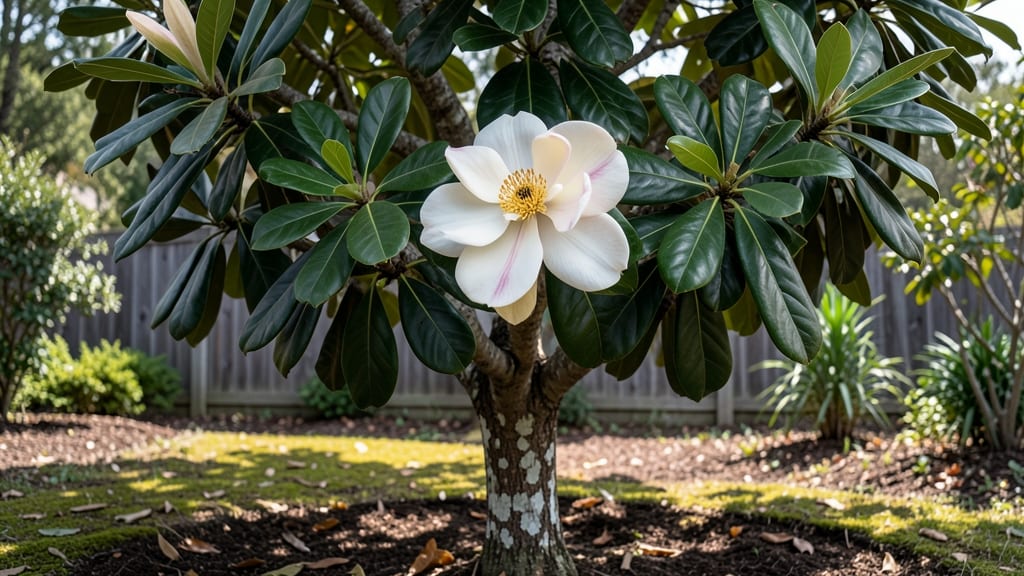
Magnolia trees in Georgia bloom between late winter and early spring 🌸, with timing that depends entirely on the variety you’ve chosen.
Picture this: you’ve spent months waiting for that first burst of creamy-white or blush-pink blooms to transform your yard, only to wake up one morning and realize your neighbor’s magnolia is already in full glory while yours hasn’t even budded.
That’s because some varieties, like the Southern magnolia (Magnolia grandiflora), wait until April, while others, such as the star magnolia (Magnolia stellata), burst into bloom as early as February.
Climate plays a huge role, too. Coastal Georgia’s milder winters often push blooms earlier, while the Piedmont’s cooler nights can delay them by weeks. Even within the same zone, microclimates—like a sheltered spot near your house—can shift timing by 10 days or more.
In this guide, I’ll break down the exact bloom windows for Georgia’s most popular magnolias, share pro tips for predicting (and even nudging) your tree’s schedule, and help you pick the perfect variety for your landscape—whether you’re dreaming of a romantic spring wedding backdrop or just love the idea of waking up to fragrant blooms every year.
Georgia magnolia bloom seasons: month-by-month variety breakdown
Georgia’s magnolia trees create a spectacular floral display, but their bloom times vary dramatically by variety and region. In the coastal areas like Savannah, mild winters mean some magnolias bloom as early as late January, while Piedmont regions like Athens may see delays until April.
Understanding these patterns helps you plan your garden for year-round interest.
Southern magnolias (Magnolia grandiflora) are the most iconic, but their blooms appear at different times. Other varieties like star magnolia (Magnolia stellata) and saucer magnolia (Magnolia soulangeana) offer earlier or later displays.
Let’s break down the timeline so you can anticipate each variety’s showstopping performance.
🌱 Key Insight: Coastal Georgia’s warmer winters often trigger earlier blooms, while inland areas may experience delayed flowering due to colder temperatures.
If you’re in coastal Georgia, you’ll likely see star magnolias (Magnolia stellata) burst into bloom as early as late February, offering a welcome splash of color after winter.
These early bloomers thrive in the milder climate, while saucer magnolias (Magnolia soulangeana) follow in March, their large, saucer-shaped flowers adding drama to landscapes.
The Southern magnolia (Magnolia grandiflora) is Georgia’s state tree and delivers its iconic blooms in April–May along the coast, but Piedmont gardeners may wait until May–June. This evergreen variety’s glossy leaves and fragrant flowers make it a year-round star, but its blooms are a seasonal highlight.
For Piedmont regions, colder winters can delay blooms by 2–4 weeks. If you’re planning a wedding or photoshoot, note that star magnolias in Athens may not peak until mid-April, while saucer magnolias could wait until late April.
Always check your specific microclimate—urban areas like Atlanta can be 3–5°F cooler than rural spots.
🌸 Pro Tip: If you want earlier blooms, plant star magnolias in sheltered, south-facing locations. These spots capture more winter sun, encouraging buds to open sooner.
Less common but equally stunning is the swamp magnolia (Magnolia virginiana), which blooms in May–June across Georgia. Its creamy-white flowers and adaptability to wet soils make it perfect for rain gardens.
In coastal areas, these blooms may appear as early as late May, while Piedmont gardeners should expect them in June.
Finally, dwarf varieties like Magnolia × 'Little Gem' follow the same timeline as their larger counterparts but on a smaller scale. Their April–May blooms (coastal) or May–June blooms (Piedmont) make them ideal for urban gardens where space is limited. Their compact size doesn’t sacrifice fragrance or beauty.
🌿 Regional Note: Coastal Georgia’s warmer winters can cause some magnolias to bloom 2–3 weeks earlier than in the Piedmont. Use this to your advantage by mixing varieties for a staggered spring display.
To maximize your magnolia’s bloom potential, monitor bud development in late winter. Healthy buds should plump up by February, signaling an impending show. If buds appear but don’t open, it could indicate late frost damage—a common issue in Georgia’s transitional climate.
Protect vulnerable varieties with lightweight frost cloth if frost is forecasted.
How to predict your magnolia’s bloom time in Georgia (without guessing)
Predicting when your magnolia will bloom in Georgia isn’t just about flipping a calendar—it’s a mix of science and observation. The USDA hardiness zones 7b-8b in Georgia create a perfect stage for magnolias, but microclimates and variety-specific traits can shift bloom times by weeks.
For example, Magnolia grandiflora often blooms in late spring (May-June), while Magnolia stellata might surprise you with late winter (February) flowers. Understanding these factors lets you plan your garden like a pro.
Start by tracking your last frost date, which varies across Georgia—from mid-March in Atlanta to late February along the coast. Most magnolias bloom after the risk of frost passes, but some varieties, like Magnolia × 'Jane', can handle a light frost.
Use your local Cooperative Extension Service frost maps to pinpoint your exact window. For instance, if you’re in Zone 7b, aim for March-April blooms, while Zone 8a gardeners might see earlier February displays.
⚠️ WARNING: Don’t Rely on Calendar Dates Alone! Magnolia bloom times shift based on bud development, which starts 6-12 months before flowering. A late summer drought or over-pruning can delay buds, while consistent moisture and balanced fertilization (like a 10-10-10 NPK in early spring) can encourage earlier blooms.
For example, if your Magnolia soulangeana (saucer magnolia) usually blooms in April, but you notice smaller buds forming in late summer, expect a 2-3 week delay. Pay attention to these visual cues—they’re your magnolia’s way of communicating!
To fine-tune your predictions, monitor your magnolia’s bud development stages. In late summer (August-September), healthy buds should appear as green, pea-sized bumps on last year’s growth. By winter (December-January), they’ll swell and turn pink or purple—a sure sign blooms are coming soon.
If buds drop off before opening, it’s often due to late frost damage or inconsistent watering. Adjust your care: mulch heavily in winter to protect roots and water deeply in drought-prone months (June-August) to keep buds hydrated.
Adjusting your magnolia’s bloom time is easier than you think. For earlier blooms, prune in late winter (February) to remove dead or crossing branches—this redirects energy to bud development. To delay blooms, avoid heavy pruning until after flowering (June-July).
Also, consider your tree’s microclimate: A magnolia in a sheltered, south-facing spot may bloom 2 weeks earlier than one in a windy, north-facing area.
For instance, my Magnolia virginiana near a brick wall blooms in April, while the same variety in an open field waits until May.
Pro tip: Keep a gardening journal to track your magnolia’s bloom history. Note the year, variety, bud appearance date, and bloom start/end dates. Over time, you’ll spot patterns—like how hot summers delay next year’s buds or how early springs trigger earlier blooms.
Share your observations with local gardening groups; Georgia’s varied climates mean every yard tells a unique story. With these tools, you’ll go from guessing to predicting your magnolia’s grand entrance like a seasoned horticulturist!
Remember, magnolias reward patience. A well-cared-for tree can bloom for 2-3 weeks, filling your garden with fragrance and color that’s unmatched. By mastering these predictive techniques, you’ll turn bloom time from a mystery into a celebration—every single year. Happy gardening! 🌸