
Blooming
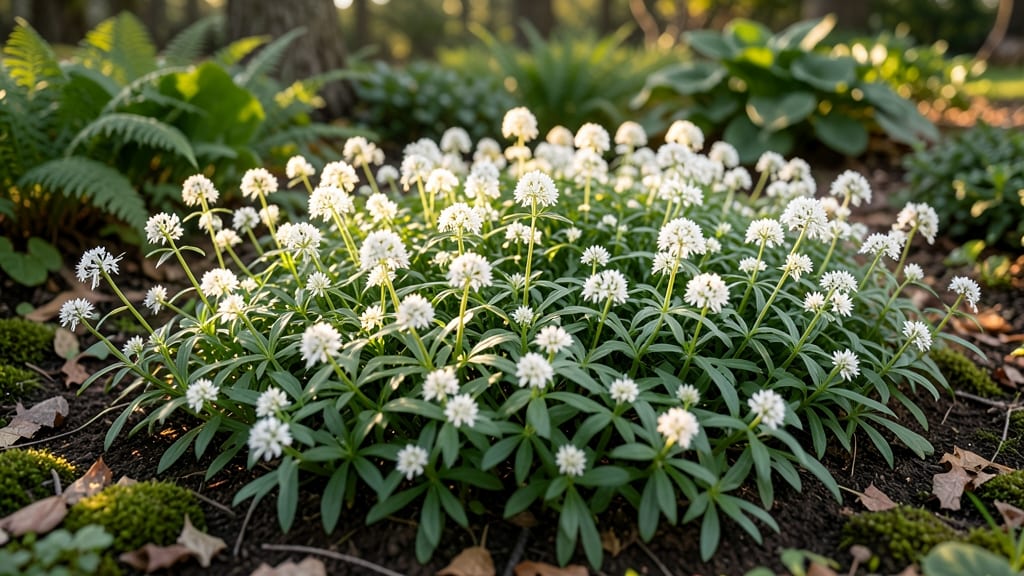
Sweet woodruff’s bloom time is a fleeting yet fragrant spectacle in late spring to early summer, turning your garden into a whisper of vanilla with delicate white flowers.
If you’ve ever planted this shade-loving ground cover only to wonder why it never seems to bloom—or why the scent fades so quickly—you’re not alone.
The secret lies in understanding its timing, soil needs, and a few simple care tricks that can turn a two-week burst into a longer show.
In USDA Zone 6a, sweet woodruff typically puts on its best display from May to June, but cooler springs or denser shade can delay it.
The good news? With the right conditions—like well-draining soil and partial shade—you can coax it into blooming earlier or extending its fragrance for weeks.
Below, I’ll break down exactly when to expect those signature blooms, how to spot the signs of a healthy plant, and the easiest ways to keep your sweet woodruff 🌿 smelling fresh and flowering longer.
Sweet woodruff bloom time: exact months and seasonal patterns
Sweet woodruff (Galium odoratum) typically bursts into bloom between late April and early June, with peak flowering occurring in May across most temperate regions.
This shade-loving perennial rewards gardeners with delicate white flower clusters that release a vanilla-like fragrance—but timing can vary dramatically based on your climate zone and local weather patterns. Understanding these seasonal cues helps you anticipate its fleeting beauty and plan your garden layout accordingly.
The exact bloom window depends on your location. In cooler northern climates (USDA zones 4-6), blooms often appear in late May to early June, while in warmer southern regions (zones 7-9), you might see flowers as early as mid-April.
High-altitude gardens may experience a 2-3 week delay compared to sea-level areas. Even within the same region, microclimates—like a north-facing slope or urban heat island—can shift bloom times by 10-14 days.
Here’s how to identify pre-bloom signs so you’re ready when the flowers arrive. In early spring, watch for new leaf growth that forms dense, whorled clusters along trailing stems. The leaves themselves are small, rounded, and slightly aromatic—a key indicator the plant is gearing up for flowering.
By late April, healthy plants will develop small flower buds at the stem tips, which open into star-shaped white blooms over 7-10 days. The fragrance peaks during full bloom but fades quickly once flowers begin to brown.
Climate plays a critical role in bloom timing. Sweet woodruff thrives in cool, moist springs—if temperatures rise above 75°F (24°C) before flowering, buds may abort, and you’ll see fewer or no blooms. Drought stress in early spring can also delay flowering by 3-4 weeks. Conversely, a warm, wet spring often triggers earlier blooms, sometimes as early as late April in mild climates like the Pacific Northwest or Appalachian regions.
| Region | Typical Bloom Window | Key Climate Factors | Pre-Bloom Signs |
|---|---|---|---|
| Northern US (Zones 4-6) | Late May–Early June | Cool springs, frost risk | Dense leaf growth by April |
| Southern US (Zones 7-9) | Mid-April–Late May | Warm, humid springs | Flower buds visible by March |
| Pacific Northwest | Early May–Mid-June | Mild, wet springs | Fragrant leaves by April |
| High Altitude (6,000+ ft) | June–Early July | Short growing season | Slow leaf growth until May |
If you’re new to growing sweet woodruff, planting time matters for bloom timing. For established plants, dividing clumps in early spring (March-April) encourages vigorous growth and earlier flowering the same year.
Young plants (transplanted in fall or early spring) may not bloom until their second year, but with proper care, they’ll follow the same seasonal pattern as mature plants. I’ve found that dividing in late winter—just as new shoots emerge—gives the best results for spring blooms.
To extend the bloom window, focus on soil moisture and shade conditions. Sweet woodruff prefers consistently moist, well-draining soil—dry spells can cause buds to drop. In hotter climates, provide afternoon shade to prevent stress.
I’ve had success using mulch (2-3 inches) to retain moisture and cool roots, which can delay bud drop by 1-2 weeks in late spring. Avoid heavy fertilizers during bloom, as they can reduce fragrance intensity and shorten the display.
One of my favorite tricks for prolonging blooms is to deadhead spent flowers—but only after they’ve faded naturally. Cutting back stems just above a leaf node encourages secondary flowering in some plants, though sweet woodruff’s blooms are typically one-and-done.
Instead, focus on preserving foliage, which remains fragrant even after flowers fade. The leaves’ vanilla scent peaks in early summer, making them perfect for cutting and drying for winter potpourri.
For gardeners in extreme climates, consider microclimate adjustments. In arid regions, plant sweet woodruff near deciduous trees to create natural shade. In humid areas, ensure good air circulation to prevent fungal issues that can stress plants.
I’ve grown sweet woodruff successfully in USDA zone 5 by siting it against a north-facing foundation, where it blooms reliably in late May—a full 3 weeks earlier than in a sunny border.
Remember, sweet woodruff’s fragrance is its star feature, and timing is everything. By understanding your local climate and watching for pre-bloom leaf growth, you’ll be ready to enjoy its vanilla-scented magic when it arrives—typically in May or June, depending on where you live.
With the right conditions, you might even coax a second, weaker flush of blooms in late summer, though this is rare. 🌿
How long sweet woodruff blooms and how to prolong its fragrance
Sweet woodruff (Galium odoratum) typically blooms for just 2-4 weeks each year, usually between late May and June in most temperate climates. This short window can feel disappointing after eagerly anticipating its vanilla-scented foliage and delicate white flower clusters.
The fleeting nature of its blooms isn't due to poor care—it's simply part of this shade-loving perennial's natural cycle.
Once the flowers fade, the plant shifts focus to foliage regrowth and underground rhizome expansion, storing energy for next year's display. Understanding this pattern helps you manage expectations while still finding ways to enhance its fragrance throughout the growing season.
The key lies in creating optimal growing conditions that encourage both prolonged foliage scent and healthier blooms when they do appear.
🌿 Pro Tip: Extend Sweet Woodruff's Bloom Time
The 2-4 week bloom window can feel brief, but strategic care can delay fading by 1-2 weeks. Start by pruning spent blooms immediately after flowering to redirect energy to foliage growth. Combine this with consistent moisture (1 inch per week) and light spring fertilization (5-10-10 NPK) to encourage stronger regrowth. For maximum fragrance, plant in rich, humus-filled soil with partial shade—this combo keeps leaves lush and aromatic long after blooms fade.
One common misconception is that sweet woodruff's fragrance disappears after blooming, but this isn't true. The leaves retain their vanilla scent throughout the growing season when given proper care. To intensify this aroma, focus on maintaining consistent soil moisture without waterlogging.
This plant thrives in well-draining soil that stays evenly moist—think of it as mimicking the forest floor conditions it naturally grows under.
For gardeners in warmer climates (zones 7-9), sweet woodruff may produce secondary blooms in late summer if given ideal conditions. To encourage this, avoid heavy pruning after the main bloom and instead shear back only 1/3 of growth in early July.
This leaves enough foliage to photosynthesize while still allowing new growth to develop for potential fall blooming.
Companion planting plays a surprising role in prolonging fragrance. Pair sweet woodruff with hostas or ferns to create a moisture-retentive microclimate that keeps leaves lush. Avoid planting near strong-scented herbs like mint or oregano, which can overpower its delicate aroma.
Instead, opt for complementary fragrances like lamb's ear or lungwort to create a multi-sensory garden experience.
Remember that sweet woodruff's rhizomatous growth habit naturally spreads over time, creating denser foliage that traps more moisture near the soil surface. This helps maintain consistent fragrance levels even during hotter summer months.
If your plants appear less fragrant than expected, check for compacted soil or nutrient deficiencies—both can dull the plant's signature scent.
With these techniques, you can transform sweet woodruff from a briefly beautiful spring bloomer into a season-long fragrance feature that keeps your shade garden smelling heavenly long after the flowers fade.
The secret lies in balancing bloom support with foliage care—giving this plant what it needs to shine in both its flowering and non-flowering phases. 🌿