
Blooming
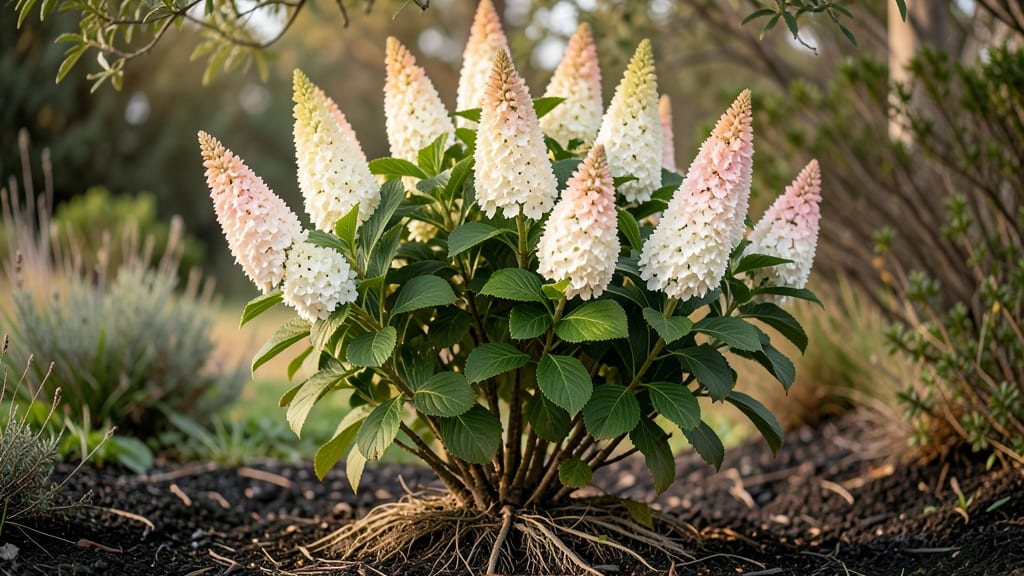
Panicle hydrangeas light up gardens with the panicle hydrangea bloom time stretching from late June through September, but timing shifts dramatically depending on your hardiness zone. 🌸 I’ve watched mine burst into color as early as mid-June in Zone 7 and linger until hard frost in Zone 5—proof that location dictates everything.
The secret to extending that bloom window? Prune in late winter or early spring (before new growth starts) and avoid cutting back old flower stems too aggressively. These hydrangeas bloom on new wood, so heavy pruning in fall can rob you of next year’s show.
A little deadheading after blooms fade also tricks the plant into putting energy toward fresh flowers instead of seed production.
You’ll end up with weeks of continuous color—creamy white, soft pink, or deep burgundy—depending on the variety. The blooms stay intact even when wilted, making them perfect for drying or winter arrangements. Just remember: more sun means earlier blooms, while shade keeps flowers lush but delays the show.
Works in full sun to partial shade, and thrives in zones 3–8. Here’s how to fine-tune your timing based on where you live.
📚 In This Guide
- What you need
- Instructions
- Tips and common mistakes
- Wrapping up and next steps
What you need
- ● Panicle hydrangea plants (e.g., Hydrangea paniculata varieties like ‘Limelight,’ ‘Little Lime,’ or ‘Grandiflora’). Quantity: 1–3 plants (depending on garden size).
- ● Well-draining potting mix (or garden soil amended with compost and perlite for aeration). Quantity: 5–10 gallons per plant.
- ● Balanced fertilizer (10-10-10 or 20-20-20). Quantity: 1–2 lbs per season.
- ● Slow-release granules (e.g., Osmocote or Alfalfa meal) for long-term nutrients. Quantity: 1 cup per plant.
- ● Mulch (shredded bark, pine straw, or wood chips). Quantity: 2–3 inches around the base.
- ● Pruning shears (sterilized, sharp blades for clean cuts). Quantity: 1 pair.
- ● Garden gloves (nitrile-coated for durability). Quantity: 1 pair.
- ● Watering can or hose with a spray nozzle (for gentle hydration). Quantity: 1.
- ● pH test kit (to monitor soil acidity/alkalinity). Quantity: 1.
- ● Stakes or plant supports (for tall varieties like ‘Grandiflora’). Quantity: 2–4 per plant.
- ● Epsom salt (for magnesium boosts, especially in clay soils). Quantity: 1 tbsp per gallon of water.
- ● Copper fungicide (prevents powdery mildew in humid zones). Quantity: As directed on label.
- ● Soil moisture meter (to track hydration levels). Quantity: 1.
- ● Seasonal bloom enhancers (e.g., fish emulsion for summer blooms). Quantity: 1–2 applications.
- ● Frost cloth (for late-season protection in cold zones). Quantity: 1 roll.
How to time panicle hydrangea blooms for your growing zone
Here's how I plan my garden around these stunning shrubs—adjusting for your local climate ensures perfect timing.
📅 Step 1: Identify Your USDA Hardiness Zone
Panicle hydrangeas bloom on new wood, so they're more forgiving than mopheads—but timing still matters. First, find your zone by checking the USDA map or asking your local extension office. Most varieties bloom late spring to early fall, but zone 3-4 plants start 2-3 weeks later than zone 7-8.
I always note my zone number on my garden calendar. For example, in zone 5, expect blooms from mid-June to September, while zone 9 gardens see flowers from May through November. This helps me schedule nearby plants that complement their bloom time, like coneflowers or black-eyed Susans.
☀️ Step 2: Observe Last Frost Dates for Your Region
Panicle hydrangeas tolerate light frost, but new growth emerges in spring. Check your average last frost date—this determines when to expect bud formation. In zone 4, buds typically appear 2-3 weeks after last frost, while zone 8 gardens see buds within 1-2 weeks.
I mark this date on my calendar and count backward 6-8 weeks to estimate when new growth begins. This is when I start watching for the first flush of leaves—your signal that blooming season is about to begin. In my zone 6 garden, I see the first leaves in early May, followed by buds in late May.
🌱 Step 3: Watch for Bud Formation and Leaf Growth
The real magic happens when you see buds forming at the tips of new growth. These are your first visual cue that blooming is imminent. In zone 5, I notice buds in early June, while zone 7 gardens see them by mid-May. The buds will swell and turn a pale greenish color before opening.
Here's the thing—panicle hydrangeas bloom on current year's growth, so you won't see flowers until 60-90 days after bud formation. I always make a note when I first see buds, then set a reminder for 8-12 weeks later to expect peak blooms. This helps me plan summer garden maintenance around their flowering cycle.
🌿 Step 4: Adjust Care Based on Bloom Progression
Once buds form, water consistently to support flower development. I increase irrigation to 1-1.5 inches per week during this critical period. In zone 6, I see first blooms opening 7-10 days after buds appear, with peak color lasting 6-8 weeks if conditions are right.
Watch for color changes—the buds start green, then turn white, pink, or purple depending on your variety. I take photos of my first blooms each year to track progression. In my zone, 'Limelight' hydrangeas bloom 2 weeks before 'Little Lime'**, so I plant them together for a staggered display.
⏰ Step 5: Plan for Seasonal Maintenance Around Bloom Time
Panicle hydrangeas bloom on new wood, so I prune after blooming in late winter or early spring. This means timing your pruning for 2-3 months after flowers fade. In zone 5, I prune in February-March, while zone 8 gardens can prune until April.
I also schedule fertilizing for early spring, just as new growth begins. This gives the plant energy for bud formation. The key is to avoid heavy pruning or fertilizing after mid-July, as this can stimulate tender growth that won't harden off before winter in cooler zones.
Tips & tricks for perfect panicle hydrangea bloom timing
These practical strategies will help you anticipate bloom windows with precision—no more guessing when your hydrangeas will shine.
Zone-Specific Visual Cues: In Step 3, when you spot those first pale green buds, take a photo and note the date. This becomes your personal baseline for future years. For example, if you see buds on June 1 in zone 5, you can expect peak blooms around August 10—give or take 7-10 days. The key is tracking that 60-90 day window from bud formation to full bloom, which varies by variety and microclimate.
Climate Adjustment Strategy: If you're in a transition zone (like 6a/6b), err on the side of caution with your 6-8 week backward count from last frost. Cooler microclimates within zones may delay bud formation by 1-2 weeks. I've found that adding a 10-day buffer to my initial estimates prevents me from missing the first signs of new growth in my slightly shaded garden corner.
Watering Precision: During the critical 1-1.5 inches per week period after bud formation (Step 4), I use a rain gauge to track accumulation. If we get 2 inches of rain in one week, I reduce irrigation to just 0.5 inches the following week to prevent overwatering. This balance is crucial—too much water can cause bud drop, while too little stunts flower development.
Variety Pairing Hack: For staggered blooms, plant 'Limelight' and 'Little Lime' together—they naturally bloom 2 weeks apart. I mark their locations on my garden map and use them as visual markers for bloom progression. This creates continuous color from early summer through fall, which is especially helpful when planning seasonal garden displays.
Pro Tips for Panicle Hydrangea Bloom Time
- These practical strategies will help you anticipate bloom windows with precision—no more guessing when your hydrangeas will shine.
- Zone-Specific Visual Cues: In Step 3, when you spot those first pale green buds, take a photo and note the date.
- Climate Adjustment Strategy: If you're in a transition zone (like 6a/6b), err on the side of caution with your 6-8 week backward count from last frost.
Frequently asked questions
Got questions about panicle hydrangea bloom time?
Here are the most common ones—plus quick answers to help you plan your garden like a pro!
When do panicle hydrangeas typically bloom?
Panicle hydrangeas usually bloom in late spring to early summer, with some varieties (like 'Limelight') reblooming in fall. In warmer zones (7-9), expect blooms as early as May, while cooler zones (3-6) may see them in June or July. Check your zone-specific calendar for exact timing!
Can I prune panicle hydrangeas to adjust bloom time?
Yes! Prune in late winter or early spring (before new growth starts) to encourage earlier, larger blooms. For reblooming varieties, avoid heavy pruning after mid-summer—this can cut off fall flowers. Pro tip: Use clean, sharp shears and remove 1/3 of the oldest stems to balance growth and blooms.
Why aren’t my panicle hydrangeas blooming?
Common culprits include over-pruning (cutting back too late or too much), poor sunlight (they need 6+ hours of sun), or nutrient deficiencies. Check for yellowing leaves (possible nitrogen lack) or stunted growth (phosphorus/potassium issue). Feed with a balanced fertilizer in early spring and adjust pruning habits!
Are there early-blooming panicle hydrangea varieties?
For earlier blooms, try:
- 'Little Lime' – Compact, blooms May–June.
- 'Quick Fire' – Heat-tolerant, flowers late spring.
- 'Gold Rush' – Starts blooming early summer.
How does climate affect panicle hydrangea bloom time?
Climate plays a big role! In hotter zones (8–9), blooms may arrive earlier but fade faster due to heat stress. In cooler zones (3–6), expect delayed blooms (often June–July) unless you choose cold-hardy varieties like 'Bobo' or 'Vanille Fraise'. Mulching and consistent watering help regulate bloom timing year-round.
Wrapping up and next steps
Understanding your panicle hydrangea bloom time is the first step to enjoying vibrant blooms year after year! Whether you're in the cool coastal climates of Zone 7 or the warmer stretches of Zone 9, timing pruning, watering, and fertilizing can make all the difference.
With the right care, your hydrangeas will reward you with stunning summer displays—so grab those shears and get ready to transform your garden into a lush, colorful paradise! 🌸
Ready to take action? Mark your calendar with the zone-specific bloom times, and start planning your seasonal care routine today!