
Blooming
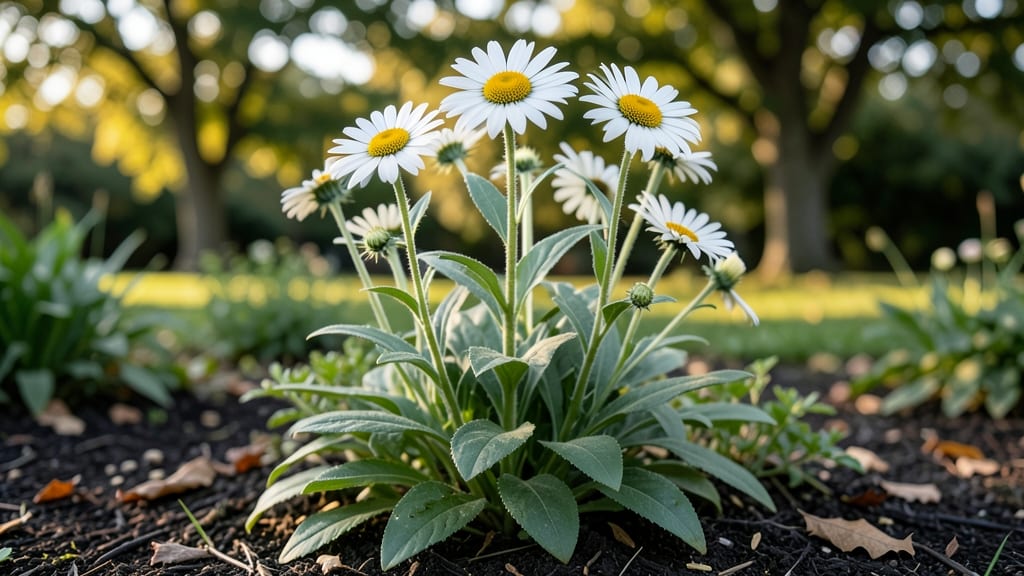
Your Montauk Daisy bloom time depends entirely on your climate zone, but coastal gardeners get the best show—July through September is when these daisies hit peak color with their creamy-white petals and golden centers. 🌸 I’ve watched mine explode into bloom just as summer’s heat settles in, and the timing never fails: the first buds appear in late June, then the garden transforms into a sea of cheerful faces by mid-July.
Sunlight and soil make all the difference here. Montauk Daisies thrive in full sun (6+ hours daily) and well-draining soil—sandy or loamy works best. In hotter inland zones, they may bloom slightly earlier (June-August), while cooler northern climates might stretch their show into October.
Pruning spent blooms encourages more flowers, and dividing mature clumps every 3-4 years keeps them vigorous.
What you’ll love most is how effortless they are once established. These hardy perennials bounce back from drought, deer rarely bother them, and they spread slowly but surely—giving you more blooms each year without extra work. The fragrance? Subtle but sweet, like a summer breeze through a meadow.
For coastal gardeners, pair them with lavender or Russian sage for a dreamy, low-maintenance border. Inland growers can extend their season by planting near a heat-reflective wall or using mulch to keep roots cool. Either way, you’re guaranteed months of cheerful color with almost no fuss.
📚 In This Guide
- What you need
- Instructions
- Tips and common mistakes
- Wrapping up and next steps
What you need
- ● Montauk Daisy Seeds or Plants: Seeds: 50–100 seeds (or more, depending on desired coverage)
- ● OR Potted plants (3–6 inches tall, 3–5 plants for a small garden)
- ● Well-Draining Soil: Native soil amended with compost (50% soil, 50% compost)
- ○ Optional: Perlite or sand (10–20% mix) for extra drainage
- ● Sunlight: Full sun (6+ hours of direct sunlight daily)
- ● Watering Supplies: Garden hose with a soft spray nozzle
- ● Watering can (for seedlings)
- ● Fertilizer: Slow-release balanced fertilizer (10-10-10 or 20-20-20, 1 tbsp per plant)
- ○ Optional: Fish emulsion or compost tea for organic growth
- ● Mulch: Organic mulch (e.g., straw or shredded bark, 2–3 inches thick)
- ● Garden Gloves (for easy handling)
- ● Trowel or Hand Shovel (for planting)
- ● Pruning Shears (to trim spent blooms and encourage regrowth)
- ● Pest Control: Neem oil or insecticidal soap (for aphids or spider mites)
- ● Stakes or Trellis (if growing in a container or windy area)
How to time Montauk daisy blooms by climate zone
Here's how to predict—and extend—your Montauk daisy's showstopping color based on your hardiness zone.
🌱 Step 1: Identify Your Hardiness Zone and Planting Window
Montauk daisies thrive in zones 5-9, but timing varies dramatically. Check the USDA zone map for your location—this determines when to plant for late summer through fall blooms. In zones 5-6, plant in early May after the last frost when soil reaches 60°F. Zones 7-9 can plant as late as June 15th, giving flowers time to establish before heat sets in.
Here's the thing—Montauk daisies need 60-90 days of warm weather to bloom. In cooler zones, plant earlier to avoid early frosts cutting the season short. I always mark my calendar for 90 days before the first frost date in my zone to calculate the latest planting window.
☀️ Step 2: Provide Full Sun and Consistent Moisture
These daisies demand 6+ hours of direct sun daily—no compromise. In zones 7-9, afternoon shade helps prevent leaf scorch during peak summer heat. Water deeply once weekly (about 1 inch total) after establishment, but keep soil evenly moist during bloom time. You'll see wilting if moisture drops below 2 inches deep in the soil profile.
Real talk: Overwatering causes bud drop, so let the top 1-2 inches of soil dry between waterings. In zone 9, I use drip irrigation to maintain consistent moisture without wetting foliage—this prevents fungal issues that ruin blooms.
✂️ Step 3: Deadhead and Fertilize for Extended Blooming
Remove spent blooms weekly to encourage continuous flowering. I snip just above the next set of leaves with clean shears—this prevents disease spread. Feed with a balanced 10-10-10 fertilizer every 4-6 weeks during the growing season. In zones 5-6, stop fertilizing by mid-August to harden off plants before winter.
Watch for buds forming along stems—this signals successful deadheading. If you notice fewer than 5 blooms per stem, your plant may need more phosphorus (the middle number in fertilizer ratios). Switch to a 5-10-5 formula for a bloom boost.
🌿 Step 4: Protect from Late-Season Threats
In zones 5-6, apply a 2-3 inch layer of mulch in October to insulate roots. Montauk daisies are perennial, but young plants need winter protection. In zones 7-9, watch for aphids—they love new growth. Spray with neem oil at first sign of sticky leaves to prevent infestations that stunt blooms.
Here's where it gets fun—fall-blooming varieties often produce their best color in cool September weather. If your zone experiences early frosts, cut back stems by ⅓ in late summer to redirect energy to root development for next year's blooms.
⏰ Step 5: Plan for Next Year's Color Show
Take notes on bloom duration in your zone—this helps refine planting times. In zone 8, my plants bloom from late July through October, while zone 5 plants finish by mid-September. Adjust planting dates 1-2 weeks earlier each year to extend the season.
Divide mature clumps every 3-4 years in early spring. This rejuvenates plants and gives you free new bloomers for borders or containers. You'll see stronger stems and more flowers within weeks of dividing.
Tips & tricks for perfect Montauk daisy bloom timing
These practical strategies will help you maximize your daisy's vibrant display—no matter your climate zone.
Zone-Specific Planting Precision: The 60-90 day warm weather window is non-negotiable for blooms. In zone 5, I plant by May 10th to ensure 90 days before frost. For zone 9, June 15th gives enough time for root establishment before summer heat peaks. Use your local frost date calculator to set exact planting windows—this is the single most important factor for color intensity.
Sunlight Strategy for Different Zones: While all zones need 6+ hours of sun, zone 7-9 plants benefit from afternoon shade during peak summer. I use shade cloth (30% coverage) on south-facing plants from July through August. This prevents leaf scorch while maintaining bloom quality. Watch for yellowing leaves—this is your signal to adjust shade coverage.
Watering Wisdom: The 1-2 inch soil moisture guideline is crucial, but timing matters most. Water in early morning to prevent fungal issues from evening dampness. In zone 9, I've found that drip irrigation at the base (not overhead) eliminates bud drop completely. For zones 5-6, morning watering gives roots time to dry slightly before cooler evenings.
Fertilizer Timing: The 4-6 week feeding schedule works, but I've found phosphorus-heavy fertilizers (5-10-5) create more blooms in zones 5-6. Apply the first dose at planting, then every 6 weeks until mid-August. In zone 8, I switch to a 10-10-10 formula after August 1st to support root hardening before fall. Always water thoroughly after fertilizing to prevent root burn.
Pro Tips for Montauk Daisy Bloom Time
- These practical strategies will help you maximize your daisy's vibrant display—no matter your climate zone.
- Zone-Specific Planting Precision: The 60-90 day warm weather window is non-negotiable for blooms. In zone 5, I plant ...
- Sunlight Strategy for Different Zones: While all zones need 6+ hours of sun, zone 7-9 plants benefit from afternoon s...
Frequently asked questions
Got questions about when your Montauk Daisy will burst into color? You’re not alone! Here are answers to the most common queries about bloom time, care, and troubleshooting—so you can enjoy those cheerful blooms all season long.
When is the best time to plant Montauk Daisies for peak blooms?
Plant them in early spring or late summer (after the last frost in your zone) for the best results. This gives roots time to establish before winter or summer heat, ensuring vibrant blooms from mid-summer to fall. For zones 5-9, aim for April-May or August-September.
How long does it take for Montauk Daisies to bloom after planting?
With proper care, you’ll see buds in 6-8 weeks and full blooms in 8-12 weeks after planting. Patience pays off—well-draining soil and consistent watering speed up the process! If blooms are slow, check for overcrowding or poor sunlight.
Will Montauk Daisies bloom in partial shade?
They thrive in full sun (6+ hours/day), but in partial shade (4-6 hours), they’ll still bloom—just smaller and less prolifically. For the most vibrant flowers, place them in a south- or west-facing spot. If shade is unavoidable, prioritize well-draining soil to prevent root rot.
Why aren’t my Montauk Daisies blooming this year?
Common culprits include:
- Over-fertilizing: Too much nitrogen = leafy growth, fewer blooms. Use a low-nitrogen, high-phosphorus fertilizer (like 5-10-10) in spring.
- Deadheading delay: Snip spent blooms to encourage continuous flowering.
- Stress factors: Check for pests (aphids, spider mites) or underwatering—daisies hate soggy roots!
Give them a monthly check-up for these issues!
Can I extend the Montauk Daisy bloom season?
Deadhead regularly to prompt new blooms, and trim back 1/3 of the plant after the first frost for a second flush of flowers in spring. In warmer zones (8-9), they may even rebloom lightly in winter with minimal care!
| Zone | Peak Bloom Window | Pro Tip |
|---|---|---|
| 5-6 | July–September | Mulch in fall to protect roots from harsh winters. |
| 7-8 | June–October | Water deeply once a week during dry spells. |
| 9-10 | May–November | Watch for powdery mildew—space plants for airflow! |
Wrapping up and next steps
The Montauk daisy’s vibrant bloom time—typically late summer to early fall—is a stunning reward for gardeners who embrace its hardy charm. Whether you’re in USDA Zones 5-9, timing your care with seasonal shifts ensures a showstopping display year after year. 🌼
Ready to welcome these cheerful blooms? Mark your calendar for late August to October, prep your soil, and watch your garden transform into a coastal-inspired paradise. Start planning now—your future self (and pollinators!) will thank you.