
Blooming
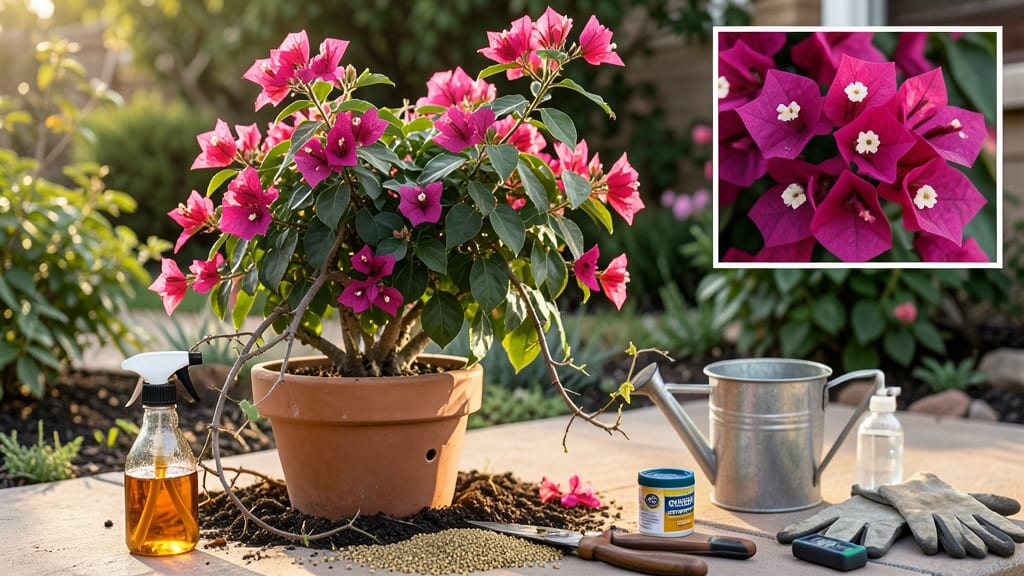
How to make bougainvillea bloom in pots turns bare branches into vibrant bursts of color year-round with just three secrets: sunlight, pruning, and the right soil mix. 🌸 I’ve watched my potted bougainvillea go from sad and sparse to a riot of pink, purple, and magenta by mastering these basics. The key isn’t complicated: it’s about mimicking its natural habitat in a container.
Start with a pot at least 12 inches wide (larger for mature plants) and soil that drains fast—bougainvillea hates soggy roots. Place it where it gets 6+ hours of direct sun daily, and feed it with low-nitrogen fertilizer every 4-6 weeks.
Pruning isn’t optional: trim back leggy growth in early spring to encourage bushier blooms, and deadhead faded flowers to keep production going.
What you’ll end up with is a potted plant that blooms continuously from spring through fall, with the right care even into winter. The flowers aren’t the leaves—those papery bracts come in bold colors, while the tiny white blossoms hide behind them.
Your neighbors will ask how you do it, and you’ll know the magic was in the details.
This works for any bougainvillea variety in pots, from dwarf types to climbing vines. The only real mistake? Overwatering or under-pruning. Let’s fix that—your bougainvillea’s best blooming season starts now.
📚 In This Guide
- What you need
- Instructions
- Tips and common mistakes
- Wrapping up and next steps
What you need
- ● Bougainvillea plant: Choose a healthy, mature plant (preferably 1–3 years old) with visible buds or new growth.
- ● Pot: Size: 12–18 inches in diameter (larger pots for established plants, smaller for cuttings).
- ● Material: Terracotta or ceramic (breathable, prevents root rot) or plastic (retains moisture better).
- ● Drainage: MUST have 3–5 drainage holes at the bottom.
- ● Well-draining potting mix: 60% cactus/succulent mix (or regular potting soil with 30% perlite/pumice).
- ● 30% coarse sand or grit (for aeration).
- ● 10% compost or worm castings (for nutrients).
- ● Fertilizer: Balanced liquid fertilizer (10-10-10 or 20-20-20, diluted to half-strength).
- ○ Slow-release granular fertilizer (optional, for steady nutrition).
- ● Pruning tools: Clean, sharp bypass pruners or sterilized shears (for cutting stems).
- ● Rubbing alcohol or bleach (to sterilize tools between cuts).
- ○ Support (optional): Trellis, bamboo stakes, or wire cage (if training vining varieties).
- ● Sunlight: Full sun (6+ hours of direct light daily)—bougainvillea thrives in heat!
- ● Temperature: Ideal range: 60–100°F (15–38°C). Avoid frost (below 32°F/0°C).
- ● Water source: Hose with adjustable nozzle or watering can with a rose attachment (for gentle watering).
Step-by-step guide for year-round bougainvillea blooms in pots
Here’s how I coaxed my bougainvillea into blooming nonstop—sunlight tricks, pruning secrets, and soil tweaks included.
☀️ Step 1: Position for Full Sunlight and Heat
Bougainvillea thrives in 6+ hours of direct sunlight daily, but here’s the catch: it needs hotter than most plants tolerate. Place your pot in the sunniest spot—south-facing is ideal—where temperatures stay above 70°F during the day. If your climate dips below 50°F at night, move it indoors near a bright window or under grow lights.
Watch for these signs: if leaves yellow or stems grow leggy, your plant isn’t getting enough heat. I’ve found that black or dark-colored pots absorb more sunlight and help keep roots warmer, which encourages blooming. Rotate the pot quarter-turn weekly so the plant doesn’t lean toward the light—this keeps growth even and blooms balanced.
✂️ Step 2: Prune for Shape and Encourage New Growth
Pruning isn’t just about shaping—it’s how you trigger more blooms. Cut back 1/3 of the plant’s length in late winter or early spring, just above a leaf node (where leaves meet the stem). This shock tells the plant to focus on new, vigorous growth, which is where the brightest blooms appear. Use clean, sharp pruners to avoid tearing the stems.
Here’s the thing—bougainvillea blooms on new wood, so heavy pruning in summer will stop flowers from forming. Wait until after a bloom cycle to prune again. If you notice weak, sparse growth, that’s your cue to fertilize lightly (more on that next). Never prune into bare, woody stems—always leave some green growth to sustain the plant.
💧 Step 3: Water and Feed for Continuous Blooms
Bougainvillea hates soggy roots, so let the top 2 inches of soil dry out completely between waterings. Stick your finger in the soil—if it feels damp past your first knuckle, wait another day. Overwatering causes root rot, which kills blooms faster than anything. I water mine in the morning so excess moisture evaporates by evening, keeping roots healthy.
Feed your plant every 4-6 weeks during growing season with a balanced, water-soluble fertilizer (like 10-10-10). The key is consistency: bougainvillea responds to regular feeding by producing more vibrant bracts (the colorful "petals" you see). In winter, cut back to monthly feeding or stop entirely if growth slows. If leaves turn yellow, you’re overdoing it—flush the soil with water to cleanse excess salts.
🌱 Step 4: Refresh Soil and Repot for Better Blooms
Every 2-3 years, repot your bougainvillea into fresh, well-draining soil mix. I use a blend of 50% cactus/succulent mix and 50% perlite or coarse sand to prevent compaction. Bougainvillea roots need oxygen—packed soil suffocates them and reduces blooms. Choose a pot just 1-2 inches larger in diameter than the current one; bigger pots hold too much moisture and delay flowering.
When repotting, trim any circling or tangled roots gently with sterilized scissors. This encourages outward growth, which leads to more blooming sites. After repotting, hold off on watering for 3-5 days to let roots establish. You’ll see new shoots within 2-3 weeks—that’s your sign the plant is happy and ready to bloom again.
🔄 Step 5: Adjust for Seasonal Changes
Bougainvillea slows down in winter, but you can keep it blooming with a few tweaks. Move it to a sunny indoor spot (like a greenhouse or bright room) and reduce watering to every 10-14 days. If you notice buds forming but not opening, it’s too cold—aim for above 55°F at all times. A heat mat under the pot can help maintain root warmth.
In late winter, bring it back outside gradually—start with 2 hours of morning sun and increase over 1-2 weeks. Sudden temperature swings cause stress, which drops buds. I’ve found that a light misting in dry indoor air keeps bracts vibrant until outdoor conditions stabilize. With these adjustments, you’ll have blooms year-round, not just in summer.
Tips & tricks for perfect bougainvillea blooms in pots
Here's what nobody tells you about keeping your bougainvillea blooming nonstop—these tricks saved my plants after years of frustration.
Heat and Light Secret: Bougainvillea needs more than just sunlight—it craves heat. If your daytime temps dip below 70°F, your plant will struggle to bloom. I've had the best results placing pots on concrete patios or using black pots to absorb extra heat. In cooler climates, a small greenhouse or sunroom can make all the difference. Watch for leaves turning yellow or stems elongating—these are clear signs your plant needs more warmth.
Pruning Strategy: The key to continuous blooms is understanding bougainvillea's growth cycle. Always prune in late winter or early spring, cutting back 1/3 of the plant's length. This shock encourages new growth where the brightest blooms form. I've learned the hard way that summer pruning stops flowers from appearing—wait until after a bloom cycle before pruning again. And never cut into bare stems—always leave some green growth to keep the plant healthy.
Soil and Water Wisdom: Your soil mix makes all the difference. I blend 50% cactus/succulent mix with 50% perlite or coarse sand to ensure proper drainage—bougainvillea roots need oxygen to thrive. When watering, let the top 2 inches dry completely between waterings. I've ruined plants by overwatering, so I now use a moisture meter to check soil conditions. In winter, reduce watering to every 10-14 days and never let water sit in saucers—this prevents root rot that kills blooms.
Seasonal Transition Hack: Moving your bougainvillea indoors for winter? Don't rush it. Start with just 2 hours of morning sun and gradually increase over 1-2 weeks. Sudden temperature changes cause stress that drops buds. I've found that a heat mat under the pot helps maintain root warmth during cold nights. And if you notice buds forming but not opening, it's definitely too cold—aim to keep temperatures above 55°F at all times.
Pro Tips for Make Bougainvillea Bloom In Pots
- Here's what nobody tells you about keeping your bougainvillea blooming nonstop—these tricks saved my plants after years of frustration.
- Heat and Light Secret: Bougainvillea needs more than just sunlight—it craves heat.
- Pruning Strategy: The key to continuous blooms is understanding bougainvillea's growth cycle.
Frequently asked questions
about growing bougainvillea in pots—and keeping those vibrant blooms coming!Why isn’t my potted bougainvillea blooming, even with lots of sun?
Bougainvillea blooms best when it’s slightly stressed—too much water or rich soil can delay flowers. Prune aggressively (cut back 1/3 of growth) in early spring to encourage new shoots, and use well-draining soil mixed with perlite or sand. Also, ensure it gets 6+ hours of direct sunlight daily—shade stunts blooms!
How long does it take for bougainvillea to bloom after pruning?
Patience is key! With proper care, you’ll see new growth in 4–6 weeks and blooms in 6–8 weeks after pruning. Feed with a balanced fertilizer (like 10-10-10) every 4–6 weeks during growing season to speed things up.
Can I keep bougainvillea blooming year-round in pots?
In warm climates (Zones 9–11), bougainvillea can bloom year-round with consistent sunlight, pruning, and watering. In cooler areas, move pots indoors near a sunny window or grow lights during winter, but expect slower growth and fewer blooms until spring.
How often should I water potted bougainvillea?
Water when the top 1–2 inches of soil are dry—bougainvillea hates soggy roots! In summer, this may mean every 2–3 days; in winter, every 1–2 weeks. Yellow leaves? You’re overwatering. Dry, crispy leaves? It’s thirsty! Use a pot with drainage holes to prevent root rot.
Are there bougainvillea varieties that bloom better in pots?
Yes! ‘San Diego Red’ and ‘California Gold’ are compact and pot-friendly, while ‘Double Pink’ offers lush, double blooms. Dwarf varieties like ‘Bougainvillea spectabilis’ (3–5 ft tall) are ideal for containers. Choose a variety based on your pot size—smaller pots = more frequent blooms (but less overall plant size).
What should I do if my bougainvillea gets pests like aphids or mealybugs?
Start with a neem oil spray or insecticidal soap to treat soft-bodied pests. For stubborn infestations, prune affected areas and dispose of them. Prevent pests by avoiding overwatering and keeping the plant well-ventilated. If mites appear, wipe leaves with a damp cloth and repeat treatments every 5–7 days.
Wrapping up and next steps
Growing bougainvillea in pots is totally doable—just follow the sunlight, soil, and pruning secrets we’ve shared! With the right balance of bright light, well-draining soil, and strategic trimming, your plant will reward you with vibrant blooms all year long. 🌸
Now that you’re armed with the know-how, grab those shears and get pruning! Start small, observe your plant’s progress, and adjust as needed. Before you know it, your patio or balcony will be bursting with color—and you’ll be the proud bougainvillea whisperer of your neighborhood. Happy gardening! 🌿