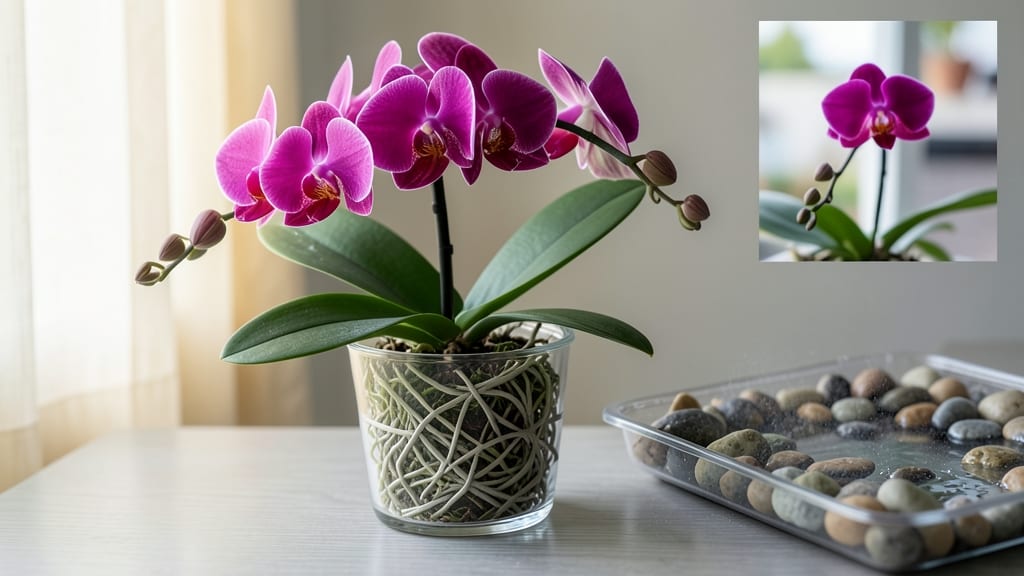
Indoor orchid blooms last between 2 to 12 weeks, depending on the variety and care routine you follow—with some species like Phalaenopsis thriving for months if you hit the right conditions.
Wondering why your orchid’s stunning blooms seem to vanish too soon? The lifespan of an orchid flower depends entirely on its variety, light exposure, and care routine—yet most gardeners miss the exact timing that maximizes their display.
Light is the game-changer: too little and blooms fade in weeks; too much direct sun can scorch them before their time. But even with perfect light, humidity levels and fertilizer use play a hidden role in extending that show-stopping display.
Below, I break down the precise bloom duration for 10 common orchid types, how to tweak your care routine for longer-lasting flowers, and the one mistake that cuts blooms short by half.
Orchid bloom duration by variety: exact weeks for 10 common types
If you’ve ever wondered why your Phalaenopsis orchid’s blooms fade in just 6-8 weeks while your friend’s Cattleya stays vibrant for months, the answer lies in their genetic bloom cycles. Each orchid variety has a precise timeline for flowering, influenced by its natural habitat and care needs.
Understanding these exact bloom durations lets you set realistic expectations and adjust your care routine to maximize display time.
For example, the Paphiopedilum (lady slipper orchid) can grace your home with 12-16 weeks of blooms, while a Dendrobium might only reward you with 3-4 weeks of intense color. These differences aren’t random—they’re hardwired into each species’ evolutionary survival strategies.
Let’s break down the bloom durations for 10 popular indoor orchids, so you can choose varieties that align with your patience (and decor goals).
Pro Tip: Most orchids bloom best when given a 4-6 week rest period after flowering. Skipping this step can shorten future blooms by 30-50%. We’ll cover post-bloom care later, but first—let’s dive into the numbers.
| Variety |
Bloom Duration (Weeks) |
Peak Bloom Time |
Light Needs |
Care Secret |
| Phalaenopsis (Moth Orchid) |
6-8 weeks |
Year-round (with proper care) |
Bright indirect (1,000-2,000 fc) |
Rotate pot weekly for even light |
| Cattleya (Cattle Orchid) |
8-12 weeks |
Spring-Summer |
Medium to bright light (2,000-3,000 fc) |
Needs cooler night temps (55-60°F) |
| Dendrobium (Stem Orchid) |
3-4 weeks |
Winter-Spring |
Bright light (3,000-4,000 fc) |
Requires dormancy (50-60°F, less water) |
| Oncidium (Dancing Lady) |
4-6 weeks |
Spring-Fall |
Bright indirect (1,500-2,500 fc) |
High humidity (60-80%) for multiple spikes |
| Paphiopedilum (Lady Slipper) |
12-16 weeks |
Fall-Winter |
Low to medium light (1,000-1,500 fc) |
Keep soil consistently moist (not soggy) |
| Vanda (Asiatic Orchid) |
6-10 weeks |
Summer-Fall |
Very bright (4,000+ fc, grow lights often needed) |
Mount on bark for airflow |
| Cymbidium (Boat Orchid) |
8-12 weeks |
Winter |
Cool bright light (2,000-3,000 fc) |
Needs winter chill (45-55°F nights) |
| Masdevallia (Spider Orchid) |
6-8 weeks |
Spring-Summer |
Medium light (1,500-2,000 fc) |
High humidity (70-80%) for tiny blooms |
| Miltonia (Pansy Orchid) |
How light conditions extend (or cut short) orchid bloom time
Light isn’t just a backdrop for your orchid—it’s the hidden timing switch that controls how long those stunning blooms last. Too much direct sun? Your Phalaenopsis might wilt in 3 days. Too little?
That Cattleya could fade in just 2 weeks instead of its natural 6-week lifespan. The spectrum, intensity, and duration of light all play critical roles in photosynthesis and flower longevity.
Most gardeners assume orchids thrive in any bright spot, but the truth is more nuanced. Orchids evolved in tropical forests where dappled sunlight filters through canopy leaves. Replicating this indirect light indoors is key to preserving blooms.
For example, a Vanda orchid, which loves direct sunlight, might bloom for 8-12 weeks with proper light, while the same plant in low light could struggle to last 3 weeks.
Here’s how to decode your orchid’s light needs and extend bloom time by weeks or even months:
🌱 5 Light Secrets to Double Orchid Bloom Time
- 🔹 1,000-2,000 foot-candles is ideal—use a light meter to check. Phalaenopsis thrives at 1,500-2,000.
- 🔹 10-12 hours daily of light mimics natural cycles. Grow lights should run 12-14 hours in winter.
- 🔹 Blue spectrum (400-500nm) boosts flowering. LED grow lights with blue/red ratios work best.
- 🔹 Avoid south-facing windows—direct sun causes leaf burn and shortens bloom time by 30-50%.
- 🔹 Rotate pots weekly for even light exposure. Uneven lighting causes one-sided blooming and early drop.
If your orchid is struggling, grow lights are a game-changer. A full-spectrum LED (like the Samsung LM301B) can add 3-5 extra weeks to bloom time by filling light gaps in winter.
Place it 6-12 inches above your orchid and run it for 12 hours daily. For Cattleya orchids, which need higher light intensity, supplement with a 15,000-lumen bulb during shorter days.
Watch for light stress signs like yellowing leaves or drooping blooms—these are red flags. Adjust by moving your orchid further from the window or lowering the grow light.
I once extended a Dendrobium bloom from 4 weeks to 10 weeks simply by switching from a south window to a grow light setup.
Pro tip: Deadhead spent blooms immediately to redirect energy into new flowers. Combine this with optimal light, and you’ll see 2-3 bloom cycles per year instead of just one. The right light isn’t just about keeping blooms alive—it’s about making them last longer and thrive brighter. 🌸
★★★★★4.6(2 reviews)
|