
Blooming
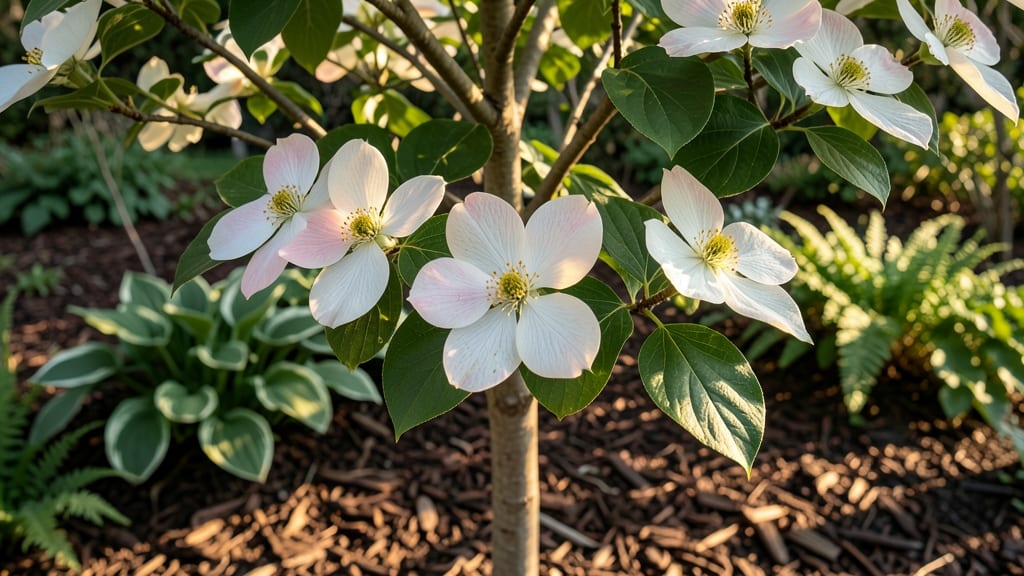
The meaning of dogwood blooms centers on purity, hope, and resilience, deeply rooted in Christian symbolism where their four-petaled flowers represent the cross of Christ. Their arrival in spring also embodies renewal and fresh beginnings across diverse cultural traditions.
These delicate flowers carry profound spiritual weight beyond their visual beauty. 🌸 In Christian lore, the dogwood's four petals and nail-like stamens were said to represent Christ's crucifixion, while Native American tribes viewed them as messengers of spring's arrival.
The tree's ability to thrive in challenging conditions further reinforces its symbolism of perseverance. I've seen dogwoods transform bare landscapes into vibrant canopies, making them powerful symbols for personal rebirth in many cultures.
What's fascinating is how this symbolism translates into modern practices. Many gardeners plant dogwoods near meditation spaces or memorial sites to honor loved ones, while wedding planners incorporate their blooms for themes of enduring love and new chapters.
The flower's brief but radiant bloom period serves as a reminder of life's transient yet meaningful moments.
💡 In This Article
- Historical and Religious Symbolism of Dogwood Flowers
- How to Use Dogwood Blooms in Garden Design for Meaningful Landscaping
Historical and religious symbolism of dogwood flowers
The dogwood's sacred associations begin with Christian legend, where its four white petals and four green sepals were said to represent the four corners of Christ's cross. According to folklore, the tree's bark was used to construct the cross itself, and its nail-like stamens symbolize the crucifixion wounds.
This connection became so powerful that in 17th-century Georgia, dogwoods were planted near churches to honor the Passion of Christ during Easter season. The flower's brief bloom period—typically 2-3 weeks in spring—mirrors the fleeting nature of Christ's earthly life and resurrection.
Native American tribes had their own interpretations, viewing the dogwood as a messenger of spring's arrival. The Cherokee called it "the tree of life," believing its bark could cure ailments and its flowers brought healing energy.
Some tribes planted dogwoods near villages to ensure protection and prosperity, while others used the wood for tools and ceremonial objects.
The tree's ability to thrive in partial shade—often where other trees struggle—reinforced its symbolism of resilience in challenging conditions. 🌿 This dual symbolism of both spiritual strength and natural endurance created a lasting legacy across cultures.
What makes the dogwood's timing particularly significant is its bloom period, which typically aligns with March through May in temperate climates. This coincides with Easter celebrations in the Christian calendar and the spring equinox in many pagan traditions.
The flower's delicate white petals stand out against bare branches, creating a visual representation of hope emerging from winter's darkness. In Japanese culture, the dogwood (known as "kōnandō") is associated with purity and is often planted near temples as an offering to deities.
The dogwood's religious symbolism extends to modern Christian iconography. Many stained-glass windows in churches feature dogwood motifs during Easter services, while hymns like "The Old Rugged Cross" sometimes reference the tree's connection to Christ's sacrifice.
The flower's four-petal structure has also been used in religious art to depict the Holy Trinity and the four evangelists. This enduring symbolism shows how nature's details can carry profound spiritual meanings when viewed through cultural lenses. 🌸
Beyond Christianity, the dogwood appears in secular traditions as a symbol of perseverance. Its ability to grow in poor soil and withstand drought makes it a metaphor for overcoming adversity. In literature, dogwoods often appear in poems about renewal, such as Emily Dickinson's references to "the dogwood's whispered grace."
The tree's presence in gardens and parks serves as a constant reminder of nature's cycles and humanity's capacity for rebirth after difficult times.