
Blooming
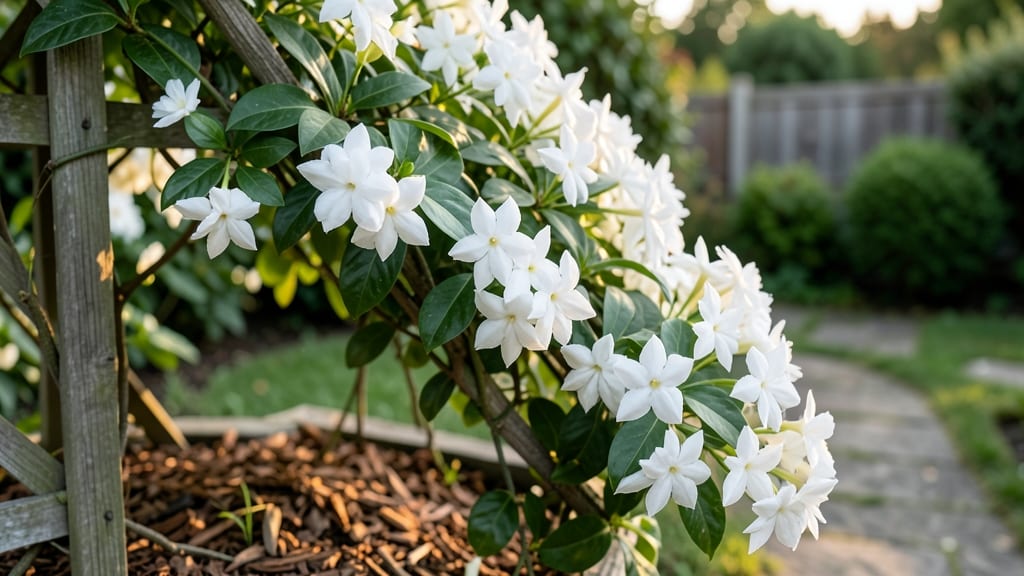
Star jasmine blooms all summer in warm climates, typically from late spring through early fall, with peak flowering between June and August. Proper sunlight and pruning extend its blooming season, but cooler regions may see shorter flowering periods.
Star jasmine thrives in heat and humidity, which is why it delivers those signature white, star-shaped blooms from May through September in most regions. The key to its summer-long display lies in temperatures staying above 60°F—cooler areas might see blooms taper off by late August.
I’ve noticed that in USDA zones 8-11, where summers are long and hot, the plant can keep flowering until frost arrives. 🌸
What sets star jasmine apart is its ability to rebloom after pruning—cutting back leggy stems in early summer encourages fresh growth and more flowers. This vine also loves full sun but tolerates partial shade, making it adaptable for different landscapes. Just remember: consistent moisture and occasional fertilizer boosts its performance.
💡 In This Article
- Star Jasmine Flowering Seasons by Climate Zone
- Tips to Prolong Star Jasmine Blooms Through Summer
Star jasmine flowering seasons by climate zone
The star jasmine's blooming cycle is primarily triggered by temperature and daylight hours. This vine enters its active flowering phase when daytime temperatures consistently stay above 65°F—the threshold where its metabolic processes accelerate.
In USDA zones 9-11, where summers average 85-95°F, star jasmine typically blooms from April through October, with peak intensity between June and August. The longer daylight hours of summer provide the 12-14 hours of sunlight it needs to sustain continuous blooming.
In cooler USDA zones 7-8, flowering often begins in late May but may taper off by late August as temperatures drop below 60°F at night. The plant's natural dormancy instincts kick in when nights become chilly, causing buds to form but not fully open.
What's fascinating is how star jasmine responds to microclimates—a south-facing wall can create a 5-10°F warmer zone than open air, extending blooms by 2-3 weeks in transitional zones.
Daylight length also plays a crucial role. Star jasmine is a short-day plant, meaning it flowers best when days begin to shorten after the summer solstice. This explains why blooms often peak in July-August rather than June—it's responding to the subtle lengthening of nights.
In tropical regions (USDA zone 11+), where days remain nearly 12 hours long year-round, star jasmine may bloom nearly continuously if conditions are ideal.
The plant's native range in southeast Asia and China gives us clues about its preferences. There, it grows in humid subtropical climates with 60-80% humidity and well-draining soil.
When humidity drops below 50%, as often happens in arid summer climates, star jasmine may produce fewer blooms or have shorter stems. This is why coastal areas often see more abundant flowering than inland desert regions.
What most gardeners don't realize is how root temperature affects blooming. Star jasmine roots prefer 68-75°F soil temperatures. In cooler climates, mulching with 3-4 inches of organic matter can maintain these ideal temperatures, while in hot climates, shade cloth over roots prevents overheating above 85°F.
The combination of these factors—daytime heat, nighttime warmth, humidity, and soil temperature—creates the perfect storm for summer-long blooms.
For those in USDA zone 6 or cooler, treating star jasmine as an annual is often the best approach. While it may bloom until frost, the plant typically won't survive winter in these zones.
However, if you provide winter protection (like wrapping the vine and roots in burlap), you might coax it to rebloom the following summer with 30-40% more flowers than a new plant.