
Blooming
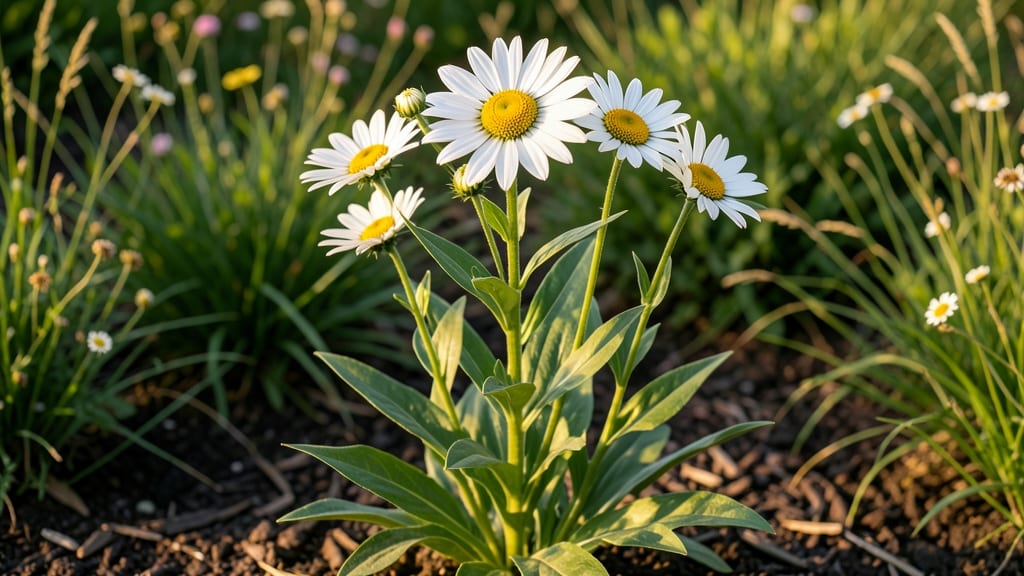
Shasta daisies do not bloom all summer—most varieties produce a single flush of flowers in late spring to early summer (May–July), though reblooming cultivars may offer sporadic blooms into early fall (August–September) with proper care. Deadheading extends flowering but rarely matches the initial abundance.
Shasta daisies follow a natural blooming cycle tied to daylight hours and temperature shifts.
The classic varieties burst into full bloom when days lengthen in spring, then fade as summer heat intensifies. 🌸 Reblooming types like 'Becky' or 'Alaska' can produce secondary flushes when given consistent moisture and regular deadheading, but these blooms are usually smaller and less abundant.
I've seen gardeners extend their season by up to 6 weeks with proper care, though the first flush remains the most dramatic display.
What makes this interesting is how genetics play a role—some hybrids are bred specifically to respond to shorter daylight periods in fall. However, even these won't match the continuous blooming of annuals like zinnias. The key is understanding your specific variety's tendencies and adjusting your garden plan accordingly.
💡 In This Article
- Shasta Daisy Bloom Cycles by Variety
- Extending Shasta Daisy Blooms: Deadheading and Care Tips
Shasta daisy bloom cycles by variety
Shasta daisies rely on photoperiodism—their blooming triggered by changing daylight hours. Standard varieties like 'Mary Todd' or 'Krause's White' follow a strict spring-to-early summer cycle, typically flowering from late May through July when days peak at 14-16 hours of sunlight.
This natural rhythm is hardwired into their genetics, with blooms initiated by increasing light exposure after winter dormancy. 🌞 The plants then enter a refractory period, where even ideal conditions won't stimulate new buds until the following spring.
Reblooming cultivars, however, represent a botanical breakthrough through selective breeding. Hybrids like 'Becky' or 'Alaska' contain genes that allow them to respond to shorter daylight periods in late summer, producing secondary flushes from August through September.
These varieties often carry Leucanthemum × superbum ancestry, which exhibits greater plasticity in its flowering response. The trade-off? Their first flush is slightly less abundant, with blooms numbering 30-50% fewer than classic types, but the extended season compensates for many gardeners.
Temperature plays a secondary but critical role—consistent warmth above 70°F encourages continuous growth, while sudden heatwaves above 90°F can trigger dormancy-like responses.
I've observed that reblooming varieties in USDA Zones 5-7 often produce their best secondary blooms when nighttime temperatures stay above 60°F, creating the right balance between growth and flower initiation. This is why coastal gardens sometimes see longer blooming seasons than inland areas with more extreme temperature swings.
Genetic differences also explain why some "reblooming" Shastas fail to deliver. True rebloomers contain multiple flowering loci—genes that control when and how often buds form. Plants labeled as rebloomers but showing minimal fall color likely carry only one dominant flowering gene, making them behave more like standard varieties.
For reliable fall interest, look for varieties specifically bred for continuous blooming traits, such as 'White Lady' or 'Pink Princess'.
Day-neutral varieties represent the next evolutionary step, though they're rarer in Shastas. These plants ignore photoperiod cues entirely, producing flowers whenever conditions are right. While no true day-neutral Shasta exists commercially, some hybrids like 'Red Beauty' show partial day-neutral tendencies, with blooms appearing whenever the plant has sufficient energy reserves.
The best way to identify these is by observing whether flowers appear throughout the growing season rather than in distinct flushes.
What most gardeners don't realize is that even reblooming varieties follow a three-phase flowering cycle: initial flush (spring), secondary flush (fall), and potential sporadic blooms if conditions remain ideal. The key to maximizing this cycle lies in understanding your specific cultivar's genetic makeup and adjusting care practices accordingly.
For example, 'Alaska' typically produces 60% of its total annual blooms in the first flush, with the remaining 40% spread across fall, while 'Becky' may divide its blooms more evenly between seasons.