
Blooming
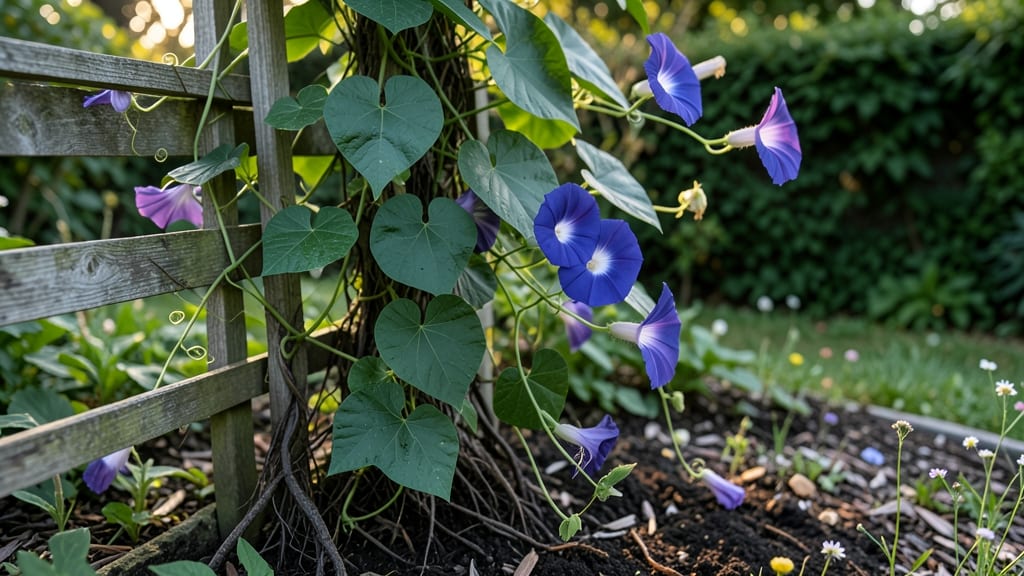
Morning glories don't always bloom only in the morning—most varieties open during daylight hours and close by evening, but tropical species often stay open longer or even bloom at night, influenced by sunlight exposure and genetic traits. Cooler weather or overcast days can also shift their blooming patterns.
This light-dependent behavior is called photoperiodism, where plants respond to daylight length. 🌞 Common morning glories like Ipomoea purpurea typically follow this pattern, but tropical varieties such as Ipomoea alba (moonflower) bloom at night when conditions are right.
The key factors are sunlight duration and temperature—warmer climates allow for more flexible bloom times, while cooler seasons may delay opening or closing.
For gardeners, this means selecting the right variety matters. If you want evening blooms, tropical species are your best bet, while traditional morning glories thrive in full sun with predictable daytime cycles. Understanding these patterns helps you create a garden that stays vibrant from dawn to dusk.
💡 In This Article
- Why Morning Glories Follow a Light-Dependent Bloom Cycle
- Morning Glory Varieties That Defy the ‘Morning-Only’ Rule
Why morning glories follow a light-dependent bloom cycle
Morning glories rely on a biological process called photoperiodism, where their blooms open and close in response to light exposure. These plants contain specialized cells called phytochromes, which act like natural light sensors.
When sunlight hits these pigments—particularly red and far-red wavelengths—they trigger biochemical signals that cause the flower buds to open. This process is most active during 6-8 hours of daylight, which explains why traditional varieties like Ipomoea purpurea typically bloom in the morning and close by late afternoon.
The closing mechanism works similarly: as daylight fades, the phytochromes detect decreasing light levels, and the plant releases a hormone called abscisic acid.
This chemical causes the flower's petals to wilt and close, conserving energy until the next day. 🌅 Interestingly, the timing can shift by up to 1-2 hours depending on the season—longer days in summer may delay closing, while shorter winter days can make flowers close earlier.
Humidity also plays a role: dry conditions can accelerate wilting, while higher moisture levels may prolong bloom duration slightly.
Genetics create fascinating variations among species. For example, Ipomoea tricolor (heavenly blue morning glory) follows a strict short-day photoperiodism pattern, meaning it needs less than 12 hours of daylight to trigger blooming. This is why it thrives in tropical regions where days are consistently long but nights are warm.
In contrast, Ipomoea nil (Japanese morning glory) has a more flexible response, adapting to both short and long daylight periods depending on its environment.
Temperature amplifies these effects. Morning glories grown in warmer climates (75-85°F) often bloom later in the day or even at night because higher temperatures accelerate the biochemical reactions that control opening and closing.
Conversely, cooler weather (55-65°F) slows these processes, which is why you might see flowers opening later in spring or closing earlier in fall.
This temperature sensitivity explains why tropical varieties like Ipomoea alba (moonflower) can bloom at night—their genetic makeup allows them to override the strict light-dependent cycle when conditions are right.
What most gardeners don't realize is that even within the same species, individual plants can show slight variations in bloom timing. Factors like soil nutrients, water availability, and microclimates (like shade from nearby structures) create subtle differences.
For instance, a morning glory growing in partial shade might open 1-2 hours later than one in full sun because the reduced light intensity delays the phytochrome activation. This adaptability is why morning glories thrive in diverse environments—from urban balconies to rural fields.
Understanding these mechanisms helps you predict and even influence bloom patterns. If you want your morning glories to stay open longer, try planting them in warmer microclimates or providing afternoon shade to extend daylight exposure.
For night-blooming effects, tropical varieties are your best bet—their genetic flexibility allows them to defy the traditional morning-only rule when given the right conditions. 🌙