
Blooming
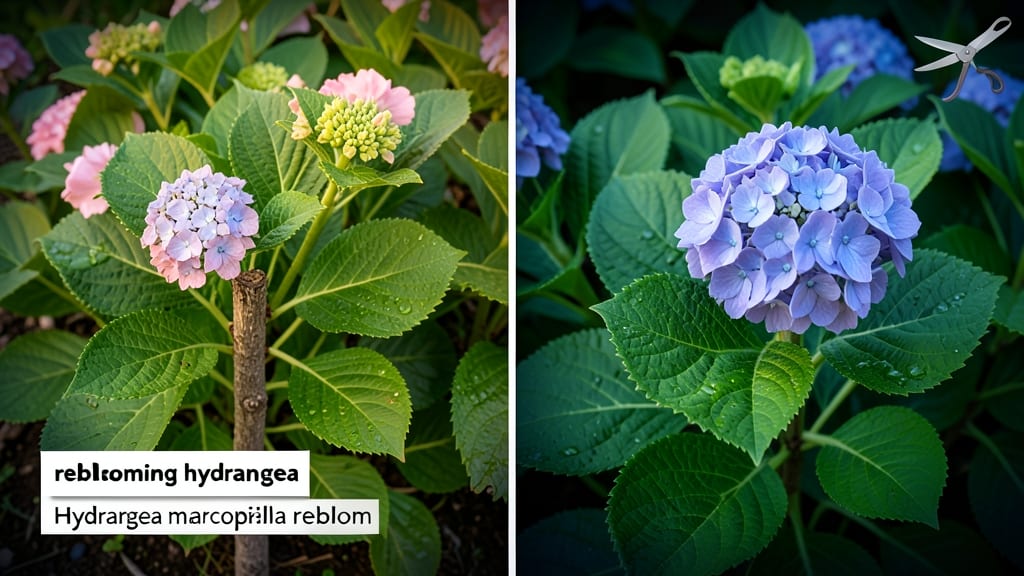
Some hydrangeas bloom more than once per season, particularly reblooming varieties like Endless Summer or Annabelle, which develop two distinct flower cycles. Traditional types like Bigleaf hydrangeas typically produce just one flush of blooms annually, usually between late spring and early summer. Proper pruning and climate conditions play a key role in encouraging repeat blooms.
Hydrangeas that rebloom do so because they develop flower buds on both old and new wood, unlike their once-blooming cousins. 🌸 The first flush appears on last year's growth, while the second wave emerges from fresh stems.
This dual system requires careful pruning—rebloomers need minimal cuts in late winter, while non-rebloomers benefit from more aggressive trimming after flowering. Climate also matters: cooler summers and consistent moisture help trigger that second bloom cycle.
For example, Endless Summer hydrangeas thrive in zones 3-9 when given partial shade and regular watering. I've found that mulching around the base helps maintain soil moisture, which is critical for those second blooms.
The trade-off? Rebloomers often sacrifice some size or vibrancy in their second flush compared to their once-blooming relatives.
💡 In This Article
- Reblooming Hydrangea Varieties: How They Produce Two Flower Flushes
- Pruning and Care Tips to Encourage Repeat Blooms in Hydrangeas
Reblooming hydrangea varieties: how they produce two flower flushes
The magic behind reblooming hydrangeas lies in their unique bud formation process. Unlike once-blooming varieties that rely solely on buds set the previous summer, rebloomers like Endless Summer develop flower buds on both old wood (last year's growth) and new wood (current season's stems).
This dual system creates two distinct bloom cycles: the first flush appears in early summer from old wood buds, while the second wave emerges from new wood buds in late summer or fall. 🌿 The key trigger is temperature fluctuations—cooler nights after warm days signal the plant to form new flower buds.
Botanically, this process involves a complex interplay of hormones. When temperatures drop below 60°F after a warm spell, the plant's growth hormones shift from promoting leaf production to flower bud development.
Rebloomers like Annabelle hydrangeas can produce up to 70% more flowers in their second flush compared to non-rebloomers, though the blooms may be slightly smaller. The trade-off? This dual production requires more energy, which is why rebloomers often need consistent moisture and balanced fertilization to maintain vigor.
Seasonal growth patterns reveal the difference clearly. Once-blooming varieties like Bigleaf hydrangeas set all their buds in late summer/early fall, which then bloom the following spring. In contrast, rebloomers continue setting new buds throughout the growing season.
For example, Oakleaf hydrangeas (once-bloomers) produce dramatic fall foliage but only one flower flush, while Endless Summer types can continue blooming until frost if conditions are right. This explains why rebloomers often appear in garden centers with continuous color displays.
Climate plays a crucial role in this botanical performance. Rebloomers thrive in regions with moderate summer temperatures (75-85°F) and distinct seasonal changes. In hot climates (zones 8-9), second blooms may be minimal due to heat stress, while cooler areas (zones 3-6) often see more consistent reblooming.
The plant's ability to photosynthesize efficiently during the first bloom period determines how well it can support the second wave—this is why proper sunlight (partial shade) and watering (1-1.5 inches weekly) are critical. 💧
Here's what happens under the microscope: Flower buds on old wood contain dormant cells that remain viable until triggered by temperature shifts. New wood buds form at stem nodes after the first bloom, requiring 6-8 weeks of consistent growth to mature.
This explains why late pruning (after June 1st) can reduce second blooms—it removes potential new wood growth sites. The science shows that reblooming capability is genetically programmed but environmentally modulated.
Consider this comparison: A once-blooming Bigleaf hydrangea might produce 50-100 flowers in its single flush, while a reblooming Endless Summer could yield 150-300 flowers across two cycles. The difference lies in the plant's ability to allocate resources between vegetative growth and reproductive cycles.
Rebloomers prioritize flower production over leaf mass, which is why they often appear more "bushy" with smaller leaves compared to their once-blooming counterparts. This adaptation allows them to maximize floral display in a single growing season.