
Blooming
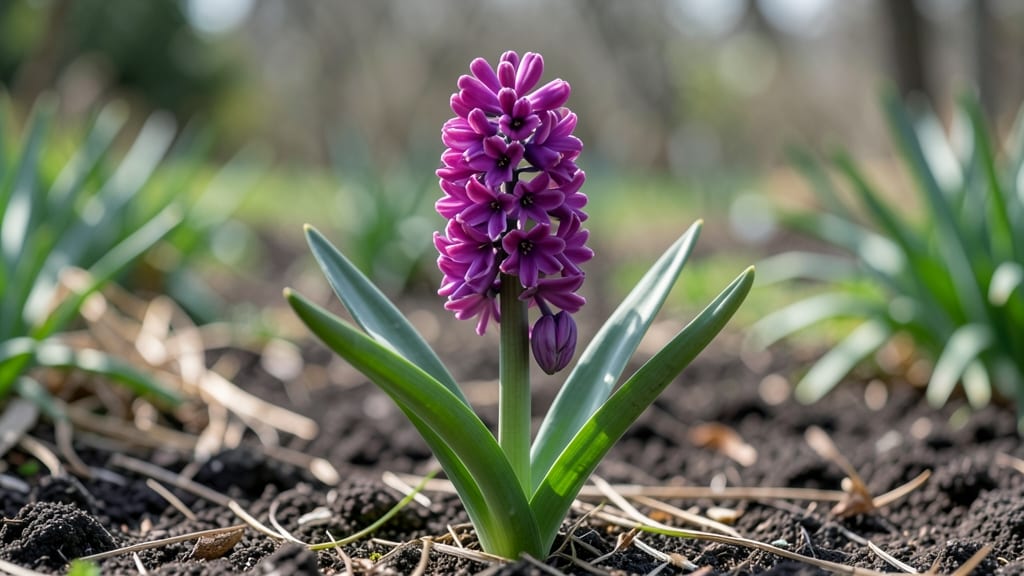
Hyacinths do not bloom all summer; they flower exclusively in spring for 2-3 weeks, creating their signature fragrant clusters before entering a natural dormancy period.
Hyacinths are what gardeners call spring ephemerals—plants designed by nature to burst into bloom for a brief, spectacular window each year. 🌸 The timing is triggered by cool winter temperatures (a process called vernalization) and increasing daylight hours, which signal their roots to push up those iconic bell-shaped flowers.
What's fascinating is how their entire life cycle revolves around this seasonal cue: once they've finished blooming, they focus all their energy on storing nutrients underground for next year's show.
That said, you can absolutely extend their display with proper care. After the flowers fade, cutting the stalks but leaving the foliage lets the plant photosynthesize and build strength for next season.
In cooler climates, some varieties may even surprise you with a second, smaller bloom later in summer—but don't count on it lasting long. The key is replicating their natural conditions: bright light, well-draining soil, and a good winter chill period.
💡 In This Article
- Hyacinth Blooming Season: Natural Growth Cycles Explained
- Extending Hyacinth Blooms: Care Tips for Longer Seasonal Displays
Hyacinth blooming season: natural growth cycles explained
The hyacinth's blooming window is hardwired by nature as a spring ephemeral, meaning it follows a precise seasonal script triggered by two key factors: vernalization (cold treatment) and photoperiodism (daylight exposure).
During winter, hyacinth bulbs require 6-8 weeks of temperatures between 35-50°F to break dormancy—a process that mimics their native Mediterranean climate where cool winters signal safe conditions to bloom. This cold exposure activates genes that produce flower-forming hormones, setting the stage for their dramatic spring display.
Once temperatures rise and daylight stretches beyond 12 hours per day, hyacinths receive the final cue to push up their iconic flower spikes. The timing varies slightly by variety—'Anna Marie' typically blooms earliest (late March), while 'Woodstock' may wait until early May—but all follow this same biological rhythm.
What's remarkable is how efficiently they allocate resources: after just 2-3 weeks of flowering, they shift focus entirely to replenishing their bulbs underground, a survival strategy that ensures next year's performance rather than prolonged summer blooms.
Their classification as ephemerals isn't just about timing—it's about ecological strategy. Hyacinths evolved to bloom early when few other plants compete for pollinators, then retreat underground by midsummer to avoid drought and heat stress. This dormancy period is crucial: without it, the bulbs would exhaust their energy reserves.
In fact, forcing hyacinths to bloom outside their natural window (like indoor forcing) often results in weaker subsequent blooms because the plant skips this essential recovery phase.
Climate plays a surprisingly large role in bloom duration. In Zone 5 or colder, where winters are harsher, hyacinths may bloom 1-2 weeks later but produce more robust flowers due to extended vernalization.
Conversely, in Zone 8+ climates, milder winters can lead to inconsistent blooming or even summer dormancy if the bulbs don't receive sufficient chill hours.
This explains why some gardeners in warm regions report hyacinths blooming sporadically in late summer—it's not a second bloom but rather a delayed response to inadequate winter chilling.
What most gardeners overlook is how light intensity affects bloom quality. Hyacinths need full sun (6+ hours daily) during their active growing season to maximize flower production, but too much summer heat without adequate moisture can stress the plant.
The trade-off is striking: while they'll produce more flowers in ideal conditions, each bloom cycle still lasts only 2-3 weeks before the plant enters its mandatory dormancy period. This biological constraint is why hybridizers focus on creating varieties with larger, more fragrant blooms rather than longer flowering periods.
Interestingly, the hyacinth's scent plays an ecological role in bloom timing. Their strong fragrance attracts pollinators during the brief window when other flowers are scarce, but this same trait makes them vulnerable to pests if blooming extends too long.
Nature's design ensures they finish their reproductive cycle before summer pests become active—a perfect example of how plant biology shapes seasonal behavior. 🌸