
Blooming
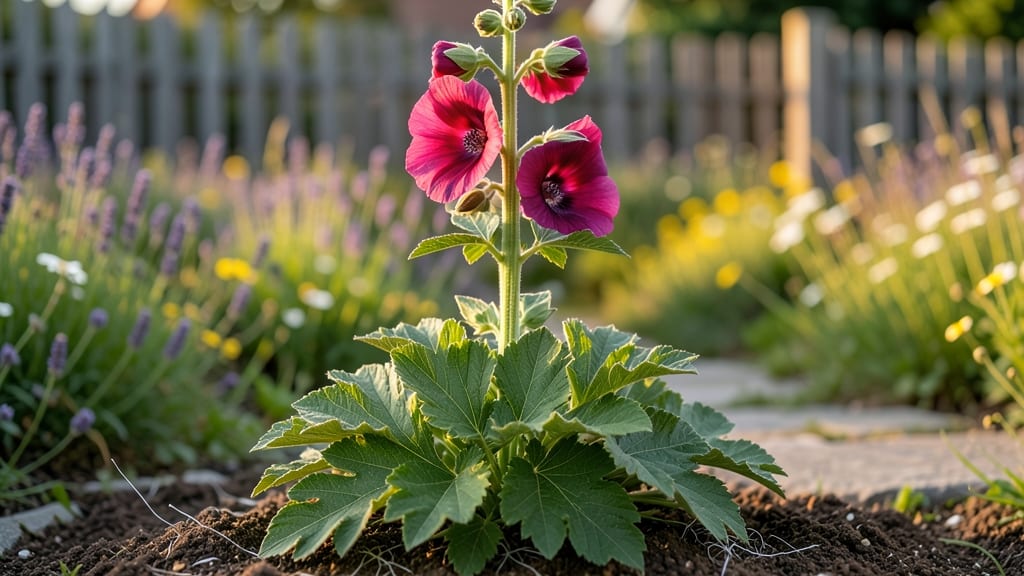
Hollyhocks don't usually bloom the first year after planting, since they prioritize building a strong root system and leaf growth. Most varieties need 12-18 months before producing flowers, though compact varieties might bloom earlier with ideal growing conditions.
This delayed flowering makes sense when you understand hollyhocks' growth patterns. 🌱 Like many biennials, they invest their first season in developing deep roots and sturdy stems—think of it as their "foundation year."
The good news is that once established, they'll reward you with 2-3 weeks of vibrant blooms each summer, often returning for years. I've seen gardeners rush to prune early foliage hoping for flowers, but that actually delays blooming further—patience pays off!
For those eager to see flowers sooner, focus on rich, well-draining soil and consistent moisture during the first growing season. A balanced fertilizer in early spring can give them a growth boost without encouraging early blooming.
The key is helping them build that strong framework first—then the spectacular flower shows will follow!
💡 In This Article
- Why Hollyhocks Skip Flowering in Their First Year
- Encouraging First-Year Hollyhock Growth for Faster Blooms
Why hollyhocks skip flowering in their first year
The secret behind hollyhocks' delayed blooming lies in their energy allocation strategy. During their first growing season, these plants prioritize developing a robust root system that can anchor them through future blooming cycles.
Botanists call this phase the "vegetative stage," where up to 70% of the plant's energy goes into expanding roots and leaf mass rather than producing flowers. This deep root network can extend 3-4 feet below the surface, giving them stability and access to nutrients during their flowering years.
Hollyhocks exhibit biennial growth patterns, though they're sometimes treated as perennials. In their first year, they focus on building biomass—think of it like a skyscraper's foundation. The plant stores carbohydrates in its roots and stems, creating an energy reserve for flower production.
This process mirrors what happens with biennials like carrots or cabbage, though hollyhocks often behave more like short-lived perennials. The transition to flowering typically occurs when the plant reaches 18-24 inches in height and has developed a mature root system.
Seasonal timing plays a crucial role too. Hollyhocks planted in spring will focus on foliage growth until fall, when they enter dormancy. The following spring, with stored energy from the previous year, they'll finally produce flower buds.
This two-year cycle explains why gardeners often see their first blooms in late June or July of the second year. The plant's internal clock, influenced by daylight hours and temperature shifts, triggers this transition when conditions are optimal for successful flowering.
There's a fascinating botanical twist: hollyhocks produce flowers on stems that grow from the previous year's growth. This means the flower stalks you see in year two are actually extensions of the plant's first-year development.
The energy stored in those sturdy stems during the vegetative phase becomes the fuel for the spectacular 2-3 week bloom period. This delayed gratification ensures each flower display is more abundant and longer-lasting than if the plant had bloomed prematurely.
What most gardeners don't realize is that early flowering attempts actually weaken the plant. When hollyhocks produce flowers in their first year, they often do so at the expense of root development, leading to smaller, less vibrant blooms in subsequent years.
The plant's survival strategy is clever—it ensures each bloom cycle is as spectacular as possible by making the plant as strong as possible first. This is why you'll often see hollyhocks with multiple flower stalks in their second year, each capable of producing dozens of blooms.
Consider this comparison: A first-year hollyhock might produce 5-10 flowers if pushed, but a properly established second-year plant can support 50-100 flowers per stalk. The trade-off between immediate gratification and long-term success is what makes hollyhocks such rewarding garden plants for patient growers.
Understanding this growth cycle helps explain why even well-cared-for plants might not bloom until their second season—it's not a sign of failure, but rather an essential part of their natural development process. 🌿