
Blooming
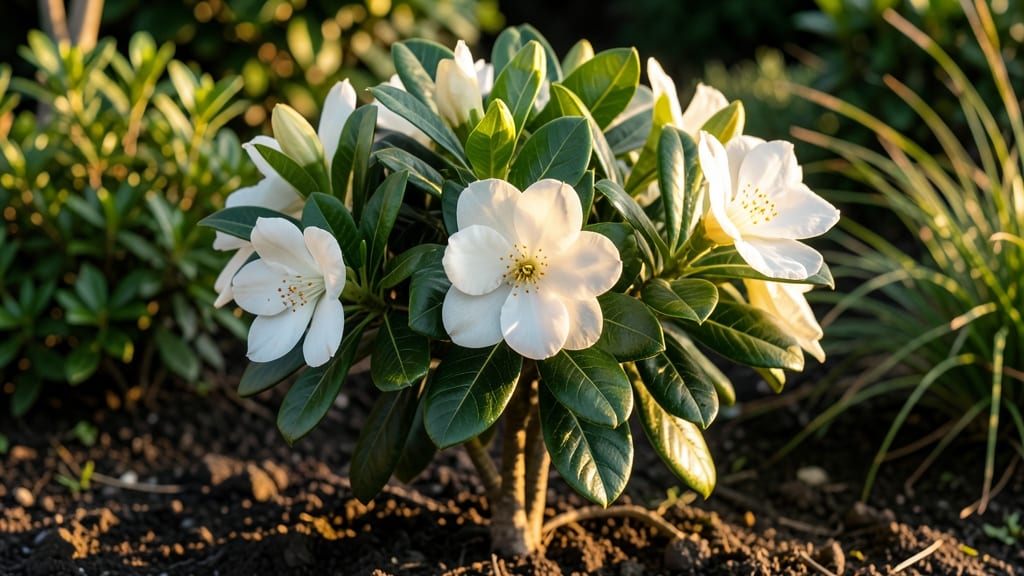
Gardenias don't bloom all summer, since their flowering cycles vary by type and location—most varieties peak in late spring and early fall, though tropical hybrids may continue blooming into late summer with ideal growing conditions. Consistent care helps maximize their bloom time.
Gardenias are famous for their intoxicating fragrance, but their blooming patterns are more seasonal than continuous. 🌸 The classic G. jasminoides variety typically blooms in waves from May through September, with peak production during warmer months.
Tropical gardenias, however, can extend their flowering into late summer if temperatures stay mild and humidity levels remain high. What's fascinating is how daylight hours trigger blooming—longer summer days actually signal some varieties to take a break, conserving energy for their next flush.
If you're dreaming of year-round gardenia blooms, focus on creating optimal conditions rather than fighting nature. 🌿 Proper pruning after blooming (never in spring) encourages new growth, while maintaining slightly acidic soil (pH 5.5-6.5) and regular feeding with phosphorus-rich fertilizer supports flower production.
Even a well-cared-for gardenia will take seasonal breaks—think of it as their way of recharging for another spectacular show.
💡 In This Article
- Gardenia Blooming Seasons by Variety
- Tips to Extend Gardenia Flowering Beyond Summer
Gardenia blooming seasons by variety
The classic Gardenia jasminoides, often called the Cape jasmine, follows a predictable seasonal rhythm that aligns with its natural tropical origins. This variety typically begins blooming in late spring (around May) and continues through early fall, with peak production occurring when daytime temperatures hover between 70-85°F.
The blooms respond to the increasing daylight of spring and summer, but they often taper off by September as daylight hours shorten—a biological signal that triggers dormancy. 🌸
Tropical gardenia hybrids, bred for extended flowering, behave differently. Varieties like 'Radicans' or 'Kleimschmidtiana' can produce blooms well into late summer (through August) if grown in warmer climates (USDA zones 8-11).
These hybrids have adapted to take advantage of longer growing seasons, but they still require consistent moisture and protection from extreme heat, which can cause buds to drop.
The key difference lies in their genetic tolerance for higher temperatures—while G. jasminoides prefers 65-75°F, tropical hybrids can handle up to 90°F with proper care.
Climate plays a dramatic role in blooming patterns. In cooler northern regions (zones 6-7), gardenias may only bloom for 6-8 weeks during summer, while in southern climates (zones 9-11), they can flower continuously with minimal breaks.
The critical factor is temperature consistency—sudden heat spikes above 95°F or cold snaps below 50°F both stress the plant and disrupt flowering. This is why gardeners in transitional climates often see two bloom cycles: one in spring and another in early fall.
Daylight hours act as a natural timer for gardenias. These plants are sensitive to photoperiodism—the way changing light levels trigger physiological responses. When days shorten in late summer, gardenias interpret this as a signal to conserve energy for root and foliage growth rather than producing flowers.
This is why even well-maintained plants may stop blooming by mid-September in most regions, regardless of care. The exception occurs in tropical hybrids, which have been bred to maintain blooming longer by reducing their sensitivity to shorter days.
What most gardeners don't realize is how soil temperature affects blooming. Gardenias develop buds underground in response to warm soil (70-75°F), which typically occurs in spring. If your plant's roots aren't warm enough, bud formation will be delayed or incomplete.
This is why mulching with organic matter (like 3-4 inches of pine bark) helps maintain consistent soil temperatures and supports longer flowering periods. The mulch also retains moisture, which is crucial since gardenias need consistently damp (not soggy) soil to produce blooms.
For a visual comparison, imagine two gardenias side by side: one in Georgia (zone 8) with 10 weeks of blooms, and another in Florida (zone 10) with 14 weeks. The Florida plant's extended season comes from its ability to handle warmer nights and more consistent moisture.
The lesson here is that while you can't force gardenias to bloom year-round, creating the right microclimate can significantly extend their natural flowering window. 🌿