
Blooming
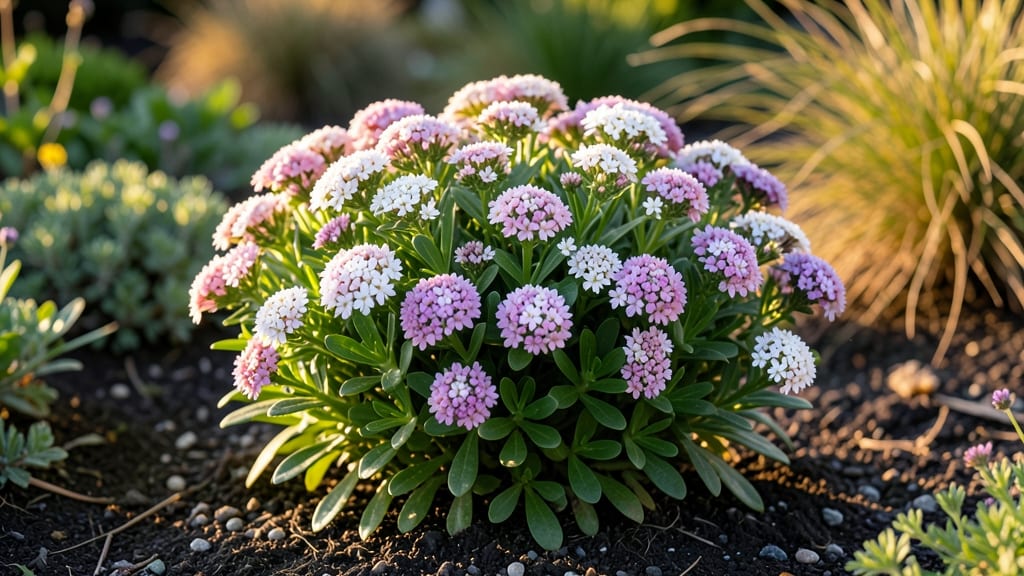
Candytuft does not bloom all summer continuously; its flowers typically appear in spring and early summer, lasting 4-6 weeks before fading unless deadheaded regularly to encourage sporadic reblooming in some varieties like Iberis sempervirens.
Candytuft's blooming cycle is naturally seasonal, with most varieties peaking in late spring to early summer. 🌸 The plant responds to temperature shifts—cool evenings after warm days trigger flower production, while prolonged heat often causes blooms to fade faster.
If you're hoping for year-round color, varieties like Iberis sempervirens can sometimes produce scattered blooms later in the season when given proper care, but don't expect a full summer display. The key lies in understanding your climate: northern gardeners may see longer blooming periods than those in hot southern regions.
This seasonal pattern isn't a limitation—it's part of candytuft's charm. Many gardeners embrace its short but vibrant display, using it as a spring highlight before transitioning to summer-blooming perennials. The trade-off? That same seasonal nature makes deadheading critical for maximizing what blooms you do get.
With the right techniques, you can stretch those flowers by a few weeks and even coax a few late-season surprises.
💡 In This Article
- Candytuft Flowering Seasons and Climate Factors
- Deadheading Candytuft for Extended Blooms: Step-by-Step Guide
Candytuft flowering seasons and climate factors
Candytuft (Iberis) is a cool-season plant that follows a strict botanical rhythm tied to daylight and temperature. Its primary blooming window—typically 4-6 weeks—aligns with late spring to early summer when days are long but nights remain cool (50-65°F).
This pattern mirrors its natural habitat in Mediterranean climates, where mild winters and warm-but-not-hot summers trigger flowering. The key hormonal signal comes from vernalization (cold exposure) followed by thermoperiodism (day-night temperature fluctuations), which primes the plant to bloom.
Climate plays a dramatic role in how long candytuft stays in flower. In cooler northern regions, the extended spring and early summer provide ideal conditions—blooms may last 6-8 weeks with proper care. But in hot southern climates**, prolonged temperatures above 80°F accelerate bloom fade by stressing the plant.
Varieties like Iberis sempervirens handle heat slightly better, but even they struggle to maintain continuous blooms. The heat triggers early senescence (aging) of flower buds, causing them to drop before opening fully.
Daylight length is another critical factor. Candytuft is a short-day neutral plant—it doesn't strictly require short days to bloom, but it does respond to increasing daylight hours.
Once summer solstice arrives (around June 21), the longer daylight periods can signal the plant to shift focus from blooming to seed production.
This is why most gardeners see a sharp decline in new flowers after mid-summer—the plant's internal clock tells it to "save energy" for reproduction rather than extending the show.
Regional variations create dramatic differences in blooming behavior. In Pacific Northwest gardens, candytuft often blooms from April through June, while in Deep South landscapes, the same plant may only flower for 3-4 weeks in late spring before wilting under summer heat.
This explains why some gardeners in cooler zones report "accidental" late-season blooms—those plants aren't reblooming so much as responding to favorable autumn temperature drops that mimic spring conditions.
What most gardeners don't realize is that candytuft's flowering cycle is tied to its root zone temperature. When soil temperatures exceed 75°F, the plant's metabolic processes shift, reducing flower production.
This is why mulching with 2-3 inches of organic matter can extend blooming by 1-2 weeks—it keeps roots cooler and stress levels lower. The trade-off? Over-mulching can suffocate roots, so finding that balance is key to maximizing bloom time.
For those hoping to push blooms later in the season, timing is everything. If you notice buds forming in late summer or early autumn, it's likely a response to cooler night temperatures (below 60°F) rather than true reblooming.
These autumn flowers are essentially a "second chance" bloom triggered by the same temperature cues that initiated spring flowering. The plant isn't cheating its seasonal nature—it's following the same biological rules that have worked for centuries in its native Mediterranean environment.