
Blooming
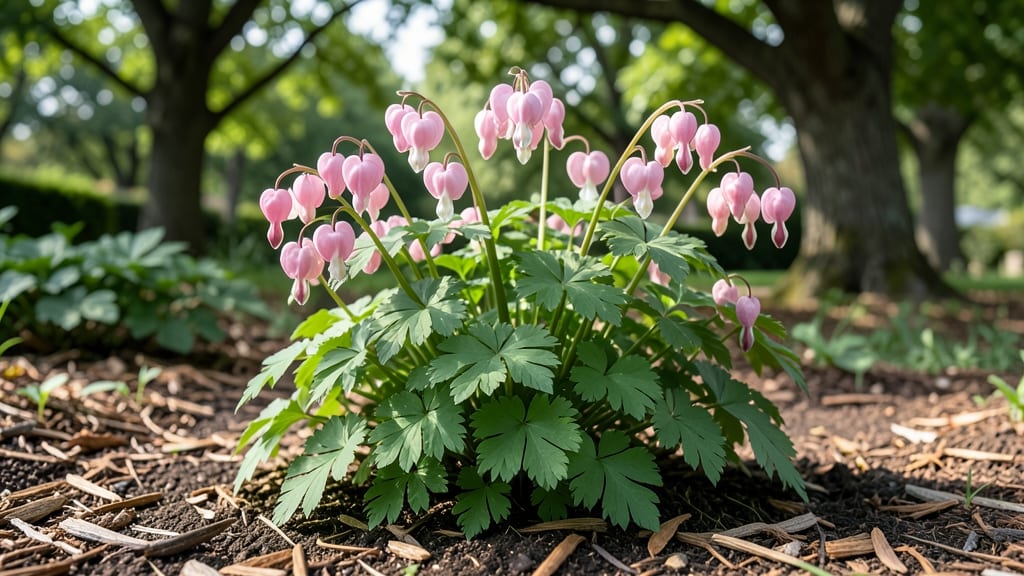
Bleeding hearts do not bloom all summer; they typically flower in spring through early summer, with peak blooms lasting 6-8 weeks before entering dormancy. Proper care can extend their season slightly, but they require winter rest for optimal reblooming.
Bleeding hearts are spring ephemerals, meaning their natural growth cycle is timed to bloom early before summer heat arrives. 🌸 Their flowers appear as days lengthen in late winter or early spring, triggered by a process called vernalization—where cold exposure signals the plant to flower.
Once they finish blooming, the foliage remains attractive but the plant focuses on storing energy for next year's growth. In warmer climates (zones 6-9), they may produce a second, lighter flush of blooms in fall, but this isn't typical for most gardeners.
What many gardeners don't realize is that these plants actually prefer their summer dormancy period. When you see bleeding hearts struggling in midsummer with wilted leaves, it's often because they're conserving energy—not because they're unhealthy.
The key to encouraging reblooming is giving them a proper winter rest: reduce watering in fall, mulch heavily, and avoid fertilizing after early summer. This mimics their natural cycle and ensures stronger blooms next spring.
💡 In This Article
- Bleeding Heart Bloom Season: Natural Cycle and Growth Patterns
- Extending Bleeding Heart Blooms: Pruning and Care Strategies
Bleeding heart bloom season: natural cycle and growth patterns
The bleeding heart plant's (Dicentra spectabilis) blooming cycle is governed by a botanical process called vernalization, where exposure to cold temperatures (typically 35-45°F for 4-6 weeks) triggers flowering hormones. This explains why their blooms appear in spring—after winter's chill signals the plant it's safe to flower.
The flowers themselves are actually modified leaves called tepals, which hang downward in heart shapes, a unique adaptation that attracts pollinators like hummingbirds with their nectar-rich structure.
Photoperiod sensitivity also plays a role: these plants respond to increasing daylight hours (a phenomenon called long-day flowering). Once the days reach about 14-16 hours of light, the plant shifts from vegetative growth to flowering.
In northern climates (zones 3-5), blooming typically starts in late April to May, while in warmer southern zones (7-9), it may begin as early as March.
The 6-8 week bloom window occurs because the plant's energy reserves are finite—after flowering, it enters a summer dormancy to conserve moisture and nutrients for next year's growth.
This dormancy isn't laziness—it's a survival strategy. The plant's large, lush foliage would transpire (lose water) excessively in summer heat without this rest period. You'll notice the leaves often yellow and die back by late June or July, but this is normal.
The plant is actually storing carbohydrates in its rhizomes (underground stems) for next spring's rebloom. In fact, studies show that plants given artificial light or heat during summer dormancy often fail to rebloom the following year because their natural cycle is disrupted.
Climate zones dramatically affect timing but not the fundamental cycle. In zone 6, for example, you might see blooms from mid-May to early July, while in zone 8, the window shifts to February to April.
The key difference is that warmer zones may experience a second, weaker flush of flowers in fall (September-October) when temperatures cool slightly. However, this second bloom is rarely as robust as the spring display because the plant's energy reserves are already partially depleted from the first flowering cycle.
What's often misunderstood is how the plant's foliage continues growing after flowering stops. Those heart-shaped leaves aren't just decorative—they're performing photosynthesis to build energy stores.
The plant's ability to maintain this foliage through summer is why gardeners in zone 5 or colder sometimes see more consistent growth than those in hotter zones where the foliage often wilts completely by mid-summer.
This foliage persistence is nature's way of extending the plant's growing season while still preparing for dormancy.
Here's a visual way to think about it: Imagine the plant's energy budget like a bank account. Spring blooming is the big withdrawal (using stored winter energy), summer dormancy is the account freeze (conserving resources), and fall/winter is the deposit period (building reserves).
Any disruption to this cycle—like over-fertilizing in summer or not providing winter mulch—can lead to weaker blooms next spring. 🌿