
Blooming
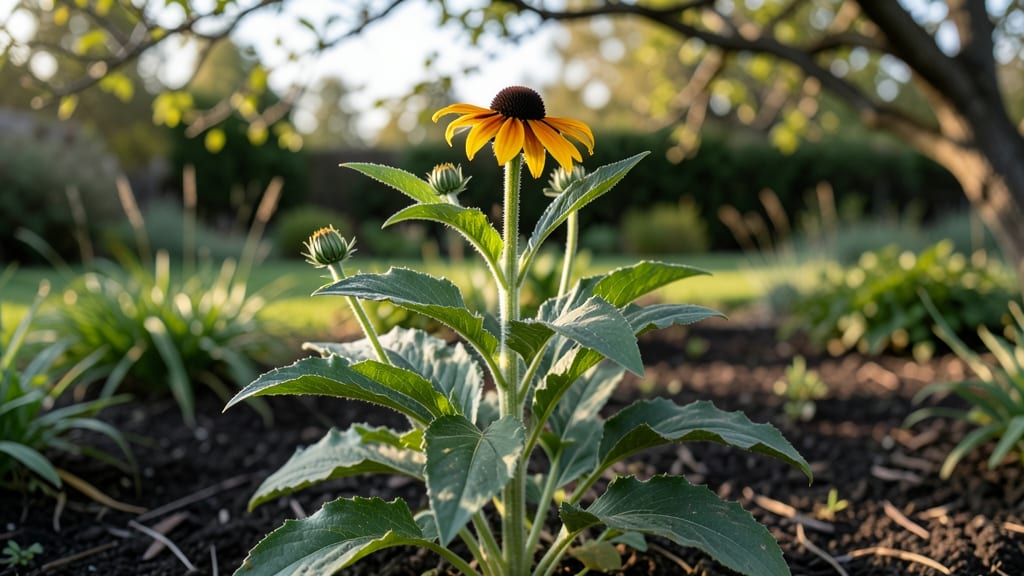
Black Eyed Susans typically do not bloom the first year, focusing instead on establishing strong roots and foliage. Most varieties require 120-180 days to mature and produce flowers, with blooming occurring in the second growing season under optimal conditions.
Black Eyed Susans prioritize root development in their first year, storing energy for future blooms. 🌱 This survival strategy ensures stronger plants that produce more vibrant flowers in subsequent seasons.
Unlike fast-flowering annuals, these perennials invest heavily in underground growth, which is why patience pays off—second-year plants often reward gardeners with spectacular displays.
Understanding your climate zone matters too. In cooler regions like USDA Zones 3-5, planting in early spring gives seedlings extra time to establish before winter, while warmer zones (6-9) may see earlier foliage growth.
Proper soil prep—rich in organic matter—and consistent moisture (but not soggy) can shave weeks off maturation time, helping plants reach blooming readiness faster.
💡 In This Article
- Why Black Eyed Susans Delay Flowering
- Maximizing First-Year Growth for Early Blooms
Why Black Eyed Susans delay flowering
Black Eyed Susans (Rudbeckia hirta) follow a biological strategy called "juvenile dormancy," where young plants prioritize root and foliage development over flowering.
This survival mechanism ensures they store enough energy in their taproots to survive harsh winters and produce abundant blooms later. 🌱 Unlike fast-flowering annuals like marigolds (which bloom in 6-8 weeks), Black Eyed Susans allocate 60-70% of their energy to underground growth during their first year, creating a robust root system that can reach 12-18 inches deep.
The timing of flowering is triggered by a combination of factors: day length (photoperiodism), temperature thresholds, and plant maturity. Most varieties need 120-180 days of growth to reach the "flowering competent" stage, which occurs when they've developed 4-6 true leaves and a root system capable of sustaining blooms.
In cooler climates (USDA Zones 3-5), seedlings planted in early spring may not reach this stage until their second summer, while those in warmer zones (6-9) might approach flowering by late fall of year one—but still rarely bloom.
Temperature plays a critical role in this process. Black Eyed Susans are cool-season perennials that require 50-60°F soil temperatures for optimal germination and root development. If planted too late in warm climates, seedlings may enter a state of "thermodormancy," where high temperatures (>85°F) suppress growth until conditions improve.
This is why gardeners in Zone 9 often see delayed blooming even in the first year—heat stress forces the plant to focus on survival rather than reproduction.
Comparing Black Eyed Susans to fast-flowering annuals highlights this difference. A sunflower seedling, for example, can produce blooms in just 8-10 weeks because it's an annual with no need to invest in perennial structures. In contrast, Black Eyed Susans are perennials that must balance immediate survival with long-term reproductive success.
Their delayed flowering is a trade-off that pays off with 3-5 years of reliable blooms if cared for properly.
Light exposure also influences this cycle. Black Eyed Susans thrive in full sun (6-8 hours daily), but seedlings need moderate shade (4-6 hours) during their first few weeks to prevent stress.
Too much direct sunlight can cause young plants to bolt (prematurely flower) or develop weak stems, while insufficient light slows root growth. This delicate balance explains why first-year plants often look lush but flowerless—they're conserving energy for future seasons.
What most gardeners don't realize is that the plant's internal clock (circadian rhythm) also regulates flowering. Even if a Black Eyed Susan reaches maturity in year one, it may still wait for environmental cues like increasing day length in spring to trigger bloom production.
This dual requirement for both age and environmental signals ensures the plant only flowers when conditions are optimal for seed production and survival.