
Blooming
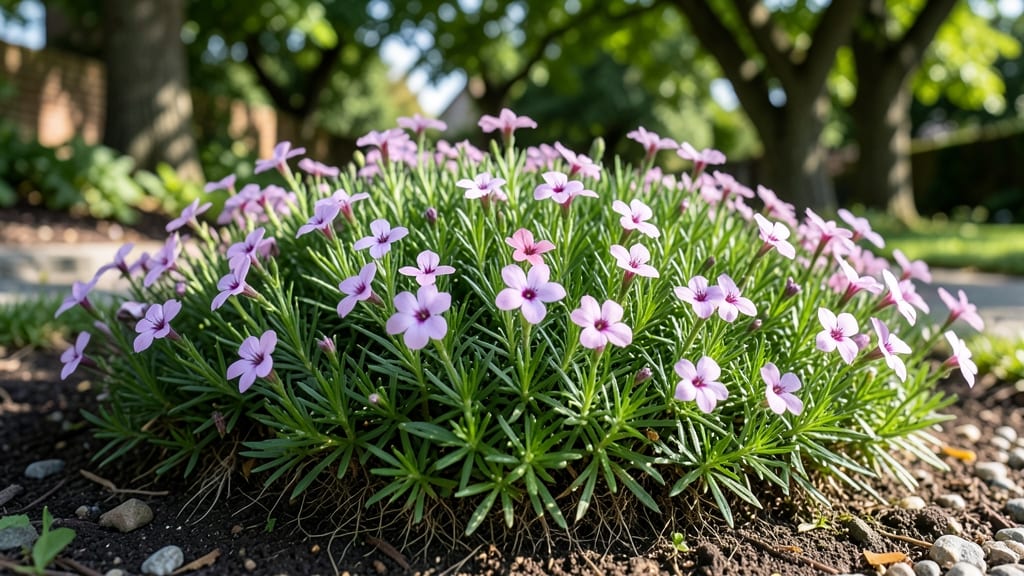
Creeping phlox unfurls its purple carpet every spring, and timing is everything. 🌸 Most gardeners see those first delicate blooms in late March to early May, depending on where you live—warmer zones get an earlier show, while colder areas wait until frost is long gone.
I’ve watched mine push through the soil like clockwork, turning my front yard into a sea of color that lasts for weeks.
The secret to longer blooms starts with sunlight. Creeping phlox craves 6+ hours of sun daily—more light means more flowers, and fewer gaps between blooms. I also keep the soil well-draining; soggy roots mean fewer blooms.
A light layer of mulch after flowering helps too, keeping weeds at bay and moisture steady for next year’s show.
With the right care, you’ll extend that purple display from 3 to 6 weeks. Deadhead spent blooms (or just wait for them to fade naturally) to encourage more flowers, and avoid heavy pruning until after blooming—cutting too early removes next year’s buds.
In cooler climates, some varieties even put on a second, smaller show in fall.
Whether you’re planning your spring garden or troubleshooting a lackluster display, this timing and care combo makes all the difference. Once you see that first flush of color, you’ll understand why creeping phlox is a garden staple—and how to keep it coming back year after year.
📚 In This Guide
- What you need
- Instructions
- Tips and common mistakes
- Wrapping up and next steps
What you need
- ● Creeping phlox plants: 3–5 plants per 10 sq. ft. (choose varieties like Phlox subulata for best results).
- ● Well-draining soil: Mix 60% native soil with 40% organic matter (compost or aged manure).
- ● Mulch: 2–3 inches of pine bark or shredded leaves to retain moisture and suppress weeds.
- ● Balanced fertilizer: 10-10-10 or 5-10-10 (apply in early spring and after blooming).
- ○ Slow-release fertilizer: Optional for a steady nutrient boost (e.g., Osmocote 14-14-14).
- ● Pruners: Sharp, clean bypass pruners for trimming spent blooms.
- ● Garden gloves: A pair to protect your hands from thorns (some varieties have them!).
- ● Watering can or hose with a gentle spray nozzle: For even hydration without damaging delicate stems.
- ● Epsom salt: 1 tbsp per gallon of water (monthly foliar spray for magnesium boost).
- ● Soil pH test kit: To ensure soil pH is between 5.5–7.0 (creeping phlox thrives in slightly acidic to neutral soil).
- ● Drip irrigation system: For automated, consistent watering during dry spells.
- ● Companion plants: Pair with heuchera or sedum for a stunning ground cover combo.
- ● Plant labels: To track varieties and bloom times!
How to extend creeping phlox bloom time year after year
Here’s how I’ve kept my creeping phlox blooming reliably for over a decade—no fancy tricks, just smart timing and care.
🌱 Step 1: Plant in the Right Spot for Long-Lasting Color
Creeping phlox thrives in full sun to partial shade, but the key is choosing a location with at least 6 hours of morning sun. Too much afternoon sun in hot climates can scorch the foliage, while too much shade delays blooming. I plant mine where they get dappled light in the afternoon—think under deciduous trees or near a north-facing wall.
Amend the soil with compost or well-rotted manure before planting to ensure good drainage. Creeping phlox hates soggy roots, so if your soil stays wet, raise the planting area by mounding soil or using a raised bed. The roots should sit in soil that feels like a damp sponge—not muddy or bone-dry.
☀️ Step 2: Water Deeply and Consistently Through Establishment
Newly planted creeping phlox needs 1 inch of water per week for the first growing season to build strong roots. Water deeply once or twice a week rather than shallow daily watering—this encourages roots to grow downward. You’ll know you’re doing it right when the soil feels moist 2-3 inches below the surface.
Once established (after about a year), creeping phlox becomes drought-tolerant, but it still rewards consistent moisture. During blooming season, I water every 7-10 days unless we’ve had heavy rain. Watch for wilting leaves—this is your signal to water. If the foliage stays crisp and upright, you’re golden.
✂️ Step 3: Deadhead and Prune for Next Year’s Blooms
Deadheading spent blooms right after they fade is the secret to a second flush of flowers. Use clean pruners to snip off the flower stems just above the first set of healthy leaves. I do this every 2-3 days during peak bloom to keep the plant looking tidy and encourage more buds to form.
After the main blooming season ends, cut back the foliage by one-third to promote new growth. This isn’t just for looks—it prevents the plant from getting leggy and ensures stronger stems next spring. I always prune in early fall, right after the first light frost, so the plant can recover before winter.
🌿 Step 4: Feed and Mulch for Continuous Color
In early spring, before new growth appears, apply a balanced, slow-release fertilizer (like 10-10-10) around the base of the plant. This gives the phlox the nutrients it needs to produce abundant blooms. I sprinkle it lightly over the soil and water it in—no need to dig it into the ground.
Add a 2-inch layer of mulch (like shredded bark or straw) around the plants to retain moisture and regulate soil temperature. Keep the mulch 2 inches away from the stems to prevent rot. This simple step keeps the roots happy and the blooms coming back year after year.
⏰ Step 5: Protect and Prepare for Winter
Creeping phlox is hardy, but a thick layer of mulch helps insulate the roots in winter. I add an extra 3-4 inches of mulch in late fall, especially in colder climates. This protects the plant from freezing and thawing cycles, which can damage the roots.
In early spring, remove the old mulch and check for any dead or damaged stems. Snip them off with clean pruners to make room for fresh growth. The first sign of new shoots is your cue to start fertilizing and watering again—this is when the magic happens, and you’ll see those familiar purple carpets return.
Tips & tricks for extending creeping phlox bloom time
These simple strategies will help you keep your phlox blooming like clockwork every spring.
Lighting Strategy: That 6-hour morning sun requirement is non-negotiable for consistent blooms. If your yard gets intense afternoon heat, consider planting creeping phlox where they'll receive morning sun and afternoon shade from nearby trees or structures. I've seen phlox in my own garden completely fail in full afternoon sun—it's like wilting under a heat lamp. The key is that morning sunlight gives them the energy boost they need without the stress of afternoon heat.
Soil Prep Secret: Before planting, mix in a generous amount of compost or well-rotted manure—this isn't just about nutrients, it's about creating that perfect "damp sponge" texture in the soil. I've found that adding a handful of perlite to heavy clay soils helps prevent waterlogging, which is deadly for phlox roots. Think of it as creating a root-friendly environment where moisture and air can balance perfectly.
Watering Wisdom: The 1-inch weekly watering rule during establishment might seem strict, but it's what builds those strong roots. I've learned the hard way that shallow watering leads to weak, shallow roots that can't support good blooms. Use a rain gauge or tuna can to measure—you'd be surprised how little water actually makes it to the roots with regular watering cans. Aim for deep watering that penetrates 2-3 inches into the soil.
Pruning Precision: When deadheading those spent blooms every 2-3 days, don't just snip at random—cut right above the first set of healthy leaves. This might seem like a small detail, but it encourages new buds to form exactly where you want them. I've seen gardeners accidentally cut into the stem too far down, which can leave unsightly stubs and reduce next year's blooms. Think of it as giving your plant a clean haircut that promotes new growth.
Pro Tips for Creeping Phlox Bloom Time
- These simple strategies will help you keep your phlox blooming like clockwork every spring.
- Lighting Strategy: That 6-hour morning sun requirement is non-negotiable for consistent blooms.
- Soil Prep Secret: Before planting, mix in a generous amount of compost or well-rotted manure—this isn't just about nutrients, it's about creating that perfect "damp sponge" texture in the soil.
Frequently asked questions
Got questions about creeping phlox and its stunning bloom time?
Here are answers to the most common ones—so you can plan your garden like a pro!
When does creeping phlox typically bloom?
Creeping phlox usually bursts into color in early to mid-spring, often between March and May, depending on your climate zone. In warmer regions, blooms may start as early as February, while cooler areas might see them in late April or May. Choose early-, mid-, or late-season varieties to extend your garden’s purple carpet!
How long does creeping phlox bloom?
With proper care, creeping phlox blooms for 3–6 weeks, creating a vibrant display. To prolong flowering, deadhead spent blooms regularly and fertilize lightly after the first flush. Some varieties, like Phlox subulata ‘Scarlet Flame,’ may rebloom lightly in fall with the right conditions!
Why isn’t my creeping phlox blooming this year?
Common culprits include overcrowding (thin plants every 3–4 years), poor sunlight (they need full sun for 6+ hours daily), or excessive nitrogen (which promotes foliage over flowers). Check soil drainage too—creeping phlox hates soggy roots! Pro tip: Prune back faded blooms in early summer to encourage new growth for next spring.
Can I plant creeping phlox in containers or hanging baskets?
Creeping phlox thrives in containers and cascades beautifully in hanging baskets, especially varieties like ‘Emerald Blanket’ or ‘Pink Blanket.’ Use well-draining soil and a pot with drainage holes. Just remember: Containers dry out faster, so water consistently and fertilize monthly during the growing season.
What’s a good alternative if creeping phlox blooms too late for my garden?
If you want early spring color, consider heather (Calluna vulgaris) or wintergreen (Gaultheria procumbens) for ground cover. For a similar trailing habit with earlier blooms, try ajuga (Bugleweed) or dichondra ‘Silver Falls.’ All three offer low-maintenance, long-lasting greenery with seasonal interest!
Does creeping phlox bloom every year?
Yes! When established, creeping phlox is a perennial that returns year after year. However, heavy foot traffic, pests (like slugs), or disease (such as powdery mildew) can reduce blooms. Mulch around plants in winter to protect roots, and space them properly to prevent overcrowding. With care, you’ll enjoy that purple carpet for decades!
Wrapping up and next steps
Creeping phlox is a true springtime showstopper, gracing your garden with vibrant blooms that feel like a purple carpet 🌸. Whether you’re a seasoned gardener or just starting, understanding its bloom time—typically March to May—helps you plan for a stunning, low-maintenance display.
With the right care, your phlox will reward you year after year, turning your yard into a blooming masterpiece.
Ready to transform your garden? Start by choosing the perfect spot—sunny, well-drained soil—and watch your creeping phlox thrive! 🌿