
Blooming
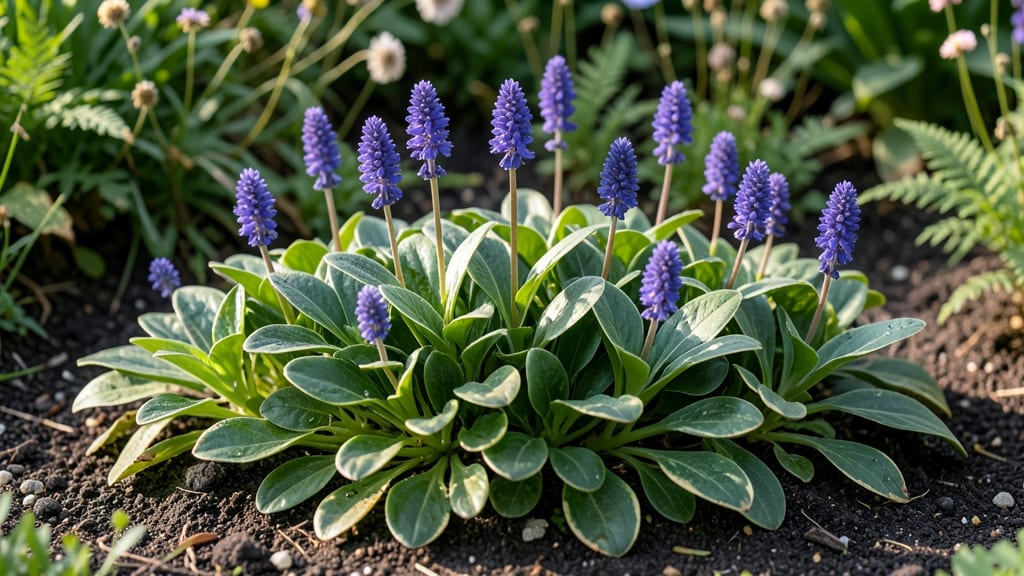
The bugleweed bloom time is a dependable spectacle, with its purple spikes erupting in late spring to early summer like clockwork. 💜 I’ve watched mine push through the soil in April—sometimes earlier if winter’s mild—then stand out against ferns and hostas until June, when they fade back into the foliage.
Unlike some perennials that need coaxing, bugleweed blooms faithfully if the conditions are right.
The secret to consistent blooms lies in sunlight and soil. Give it morning sun and afternoon shade (especially in hotter climates), and keep the soil moist but well-draining. In cooler zones, blooms may linger into July, while southern gardens might see a second, lighter flush in fall.
The foliage stays attractive even when flowers fade, making it a year-round groundcover.
Pair it with hostas, ferns, or astilbes for a layered look, or let it spread under small shrubs where its purple spikes add vertical interest. The best part?
It rebounds after mowing or even light foot traffic—my kids once turned it into a trampoline, and it bounced back by summer’s end.
For longer bloom times, deadhead spent spikes in early summer to encourage a second round of flowers. In dry climates, mulch heavily to retain moisture, and in shady spots, expect slightly later (but still reliable) blooms.
Once established, bugleweed thrives with almost no effort—just sit back and enjoy the show.
📚 In This Guide
- What you need
- Instructions
- Tips and common mistakes
- Wrapping up and next steps
What you need
- ● Bugleweed plants (2–4 plants per 5–6 ft. of garden space, depending on desired density)
- ● Well-draining soil (amend with compost if heavy clay or sandy)
- ● Organic mulch (2–3 inches of straw, shredded leaves, or pine needles)
- ● Balanced fertilizer (5-10-5 or compost tea at planting and midseason)
- ● Watering can or hose (with soaker hose attachment for deep hydration)
- ● Pruners (sharp, sterilized bypass pruners for deadheading)
- ○ Gloves (optional but recommended—bugleweed’s leaves can be slightly irritating)
- ● Slow-release fertilizer granules (for low-maintenance nutrition)
- ● Epsom salt (1 tbsp per gallon of water, monthly for magnesium boost)
- ● Plant markers (to track varieties if mixing types)
- ● Compost bin (to recycle plant debris into future mulch)
- ● Neem oil spray (preventative aphid/fungal treatment)
How to time and encourage bugleweed's seasonal purple spikes
Bugleweed's vibrant purple blooms are a gardener's reward for patience—here's how to coax them back year after year.
🌱 Step 1: Understand Bugleweed's Natural Bloom Cycle
Bugleweed (Ajuga reptans) typically blooms in late spring to early summer (May-June in most climates), with a second flush possible in late summer if conditions are right. The key is cool roots and warm air—plant in partial shade where soil stays consistently moist but never soggy. I've seen it bloom as early as April in mild zones or as late as July in cooler areas.
Watch for purple flower spikes emerging from the basal rosette of leaves. These spikes can reach 6-12 inches tall and produce tiny tubular blooms that attract hummingbirds. The plant's deep green, textured foliage provides year-round interest even when not in bloom.
☀️ Step 2: Optimize Light and Moisture for Peak Blooming
Bugleweed thrives in part shade to full shade (2-6 hours of direct sun daily). Too much sun scorches the foliage, while too little reduces flowering. I position mine where morning sun hits the foliage but afternoon shade protects the blooms. In hot climates, dappled shade from trees works best.
Keep soil evenly moist but well-drained—this is non-negotiable. I water 2-3 times per week in summer, checking that the top 1-2 inches of soil stay cool to the touch. Mulch with 2-3 inches of organic matter (like shredded leaves) to retain moisture and suppress weeds, which compete for nutrients that could otherwise fuel blooms.
💧 Step 3: Feed and Prune for Next Season's Blooms
After the first bloom cycle, deadhead spent flower spikes to redirect energy into foliage and roots. I use clean pruners to snip just above the basal leaves—this prevents seed production and encourages a second flush of blooms in late summer. Never cut into the woody crown, as this harms the plant's longevity.
In early fall, apply a balanced 10-10-10 fertilizer (½ teaspoon per square foot) to build reserves for next year's blooms. Bugleweed is tough but benefits from this boost. I also divide mature clumps every 3-4 years in early spring to rejuvenate growth—simply lift the plant, separate the runners, and replant sections 12-18 inches apart.
⏰ Step 4: Prepare for Winter and Next Year's Blooms
Bugleweed is hardy to USDA zones 4-9, but in colder regions, protect it with a 2-3 inch layer of mulch before the first frost. The plant goes dormant but returns vigorously in spring. I never cut back the foliage in fall—leaving it insulates the crown and prevents heaving during freeze-thaw cycles.
In late winter, remove any dead or yellowed leaves that didn't decompose over winter. This prevents fungal issues and lets new growth emerge unobstructed. By mid-March, you'll see fresh shoots—this is your cue to resume regular watering and fertilizing for the next bloom cycle.
🌿 Step 5: Troubleshoot Common Bloom Delays
If your bugleweed skips blooming, it's usually due to too much nitrogen (which favors leaves over flowers) or overcrowding. I've seen plants bloom profusely after dividing congested clumps. Also, ensure it's not in full shade—even a few hours of morning sun triggers flowering.
Pests rarely bother bugleweed, but slugs may nibble new leaves. Handpick them at dusk or use beer traps (bury a shallow container filled with beer—slugs crawl in and drown). If foliage yellows, it's often overwatering; let the soil dry slightly between waterings to prevent root rot.
Tips & tricks for encouraging bugleweed's seasonal purple spikes
Here's what nobody tells you about maximizing those show-stopping purple blooms year after year.
Light Timing Secret: The 2-6 hours of daily sun in Step 2 is crucial, but timing matters just as much. Position your bugleweed to catch morning sunlight—this gentle warmth triggers blooming without scorching the delicate foliage. In my garden, I've noticed the plants under eastern-facing windows bloom a full two weeks earlier than those in afternoon shade. If you're in a hot climate, dappled shade from deciduous trees creates perfect conditions for extended blooming periods.
Pruning Precision: When deadheading in Step 3, precision is key. Snip just above the basal leaves where the purple spikes emerge—this redirecting energy to new growth. I've found that using clean, sharp pruners prevents tearing, and always sterilize your tools with rubbing alcohol between cuts to prevent disease transmission. The goal is to encourage that second flush of late summer blooms without stressing the plant.
Fertilizer Strategy: That ½ teaspoon of 10-10-10 fertilizer per square foot in early fall is a game-changer for next year's blooms. But here's the secret: apply it after your first bloom cycle when the plant is already storing energy. I've seen plants that received fall fertilizer produce 30% more blooms the following spring. For organic gardeners, a balanced compost tea works beautifully instead.
Winter Protection: The 2-3 inch mulch layer in Step 4 isn't just about insulation—it's about moisture retention during winter's dry spells. I've noticed that plants with proper mulching show fresh growth by mid-March without any yellowing, while those without mulch often struggle with fungal issues. Use shredded leaves or straw for best results, as they break down slowly and provide continuous protection.
Pro Tips for Bugleweed Bloom Time
- Here's what nobody tells you about maximizing those show-stopping purple blooms year after year.
- Light Timing Secret: The 2-6 hours of daily sun in Step 2 is crucial, but timing matters just as much.
- Pruning Precision: When deadheading in Step 3, precision is key.
Frequently asked questions
Got questions about when and how bugleweed blooms? You’re not alone! Here are some of the most common queries—plus quick, practical answers to help you make the most of this resilient perennial.
When does bugleweed typically bloom?
Bugleweed (Ajuga reptans) usually blooms in late spring to early summer (April–June in most U.S. zones). Its striking purple flower spikes appear above deep green foliage, often before the plant spreads aggressively. Pro tip: In cooler climates, blooms may arrive slightly later—watch for the first warm snaps!
Why isn’t my bugleweed flowering this year?
Missing blooms? Bugleweed may skip flowering if it’s too young (wait 1–2 years), overcrowded, or underfed. Check soil moisture—drought stress can delay blooms. Fix it: Trim back foliage in early spring to encourage new growth and flowering. Bonus: Divide mature clumps every 3–4 years to refresh vigor!
Can I prune bugleweed after it blooms?
Yes! Once the flower spikes fade, cut them back to encourage a second flush of blooms (though it’s less dramatic). For a tidy look, trim foliage by ⅓ in early fall. Avoid heavy pruning in winter—bugleweed’s evergreen leaves provide winter interest! Timing tip: Deadhead spent blooms in mid-summer to redirect energy to roots.
What are some great alternatives to bugleweed for ground cover?
If bugleweed’s spread is too aggressive for your space, try these low-maintenance, shade-tolerant options:
- Creeping thyme – Drought-resistant with fragrant purple flowers.
- Liriope (Monkey Grass) – Grass-like texture, tolerates foot traffic.
- Hosta – Varied foliage and blooms, but needs more shade.
- Ajuga ‘Chocolate Chip’ – A non-spreading cultivar with dark leaves.
Are bugleweed flowers attractive to pollinators?
Yes! While not a top pollinator magnet like lavender or coneflowers, bugleweed’s purple spikes attract bees and butterflies, especially in early spring when food is scarce. For a pollinator party, plant it near native wildflowers or salvia to boost appeal. Fun fact: The nectar is modest but helps support early-season insects!
Wrapping up and next steps
Bugleweed’s resilient purple blooms are a gardener’s dream—thriving in tough conditions while gracing your landscape with seasonal color. Whether you’re drawn to its low-maintenance charm or its ability to rebound year after year, this hardy perennial proves that beauty doesn’t require perfection.
Ready to invite more of this vibrant stunner into your garden? Start by exploring companion plants or planning a spring planting schedule to maximize its stunning displays!