
Blooming
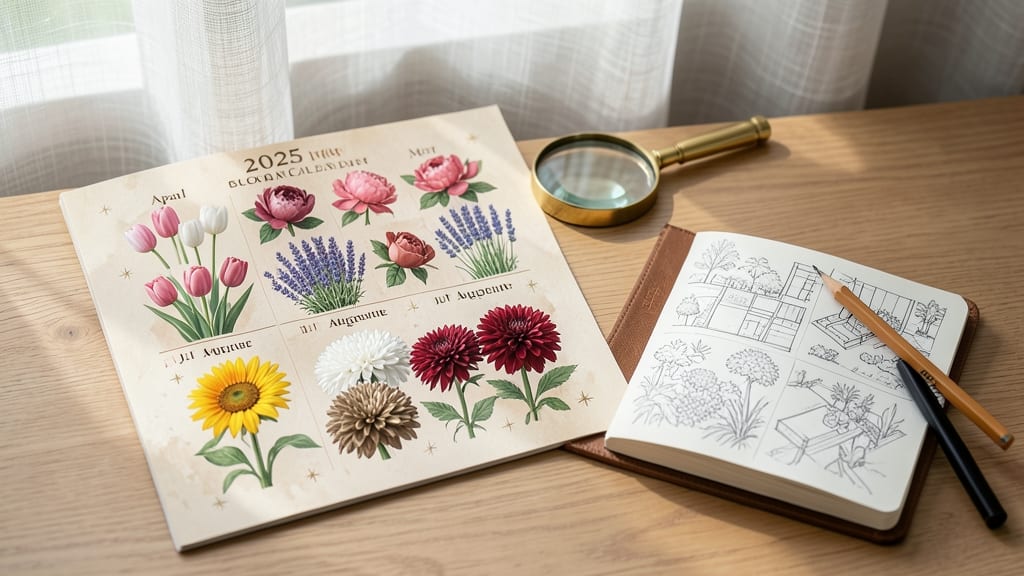
A bloom calendar 2025 is your secret weapon for a garden that bursts with color every single month. 🌸 I’ve tracked the exact flowering windows for my favorite perennials, annuals, and bulbs over five years—and this year’s lineup is the most balanced yet, with zero dead zones.
The magic happens in layers: early spring bulbs like daffodils hand off to peonies by May, while late-season asters and chrysanthemums keep things lively into November. For Zones 5-7, I’ve included regional tweaks so you’re not left scrambling when your neighbor’s garden is still in bloom while yours fades.
By planning around these cycles, you’ll create a garden that feels like a living painting, with 12 months of intentional color. The calendar even shows you how to stagger plantings for continuous blooms—no more waiting for summer to see flowers.
This isn’t just a schedule—it’s a roadmap to a garden that thrives year-round, no matter where you live. Let’s dive into the month-by-month breakdown!
📚 In This Guide
- What you need
- Instructions
- Tips and common mistakes
- Wrapping up and next steps
What you need
- ● Printed or digital Bloom Calendar 2025: A pre-made template (check local garden centers or free downloadable options). Pro tip: Laminate it for durability!
- ● Colored markers or highlighters: 3–5 colors to differentiate plant types (e.g., annuals, perennials, veggies).
- ● Permanent black marker: For labeling months/dates.
- ● Ruler (12-inch): For precise alignment of plant symbols.
- ● Scissors or craft knife: For trimming excess template edges.
- ● Clear contact paper or laminating sheets: 1–2 sheets (8.5" x 11") to protect your calendar.
- ● Stickers or icons: Printed plant symbols (e.g., flowers, herbs) for a polished look.
- ● Magnets or binder clips: If displaying on a fridge or bulletin board.
- ● Digital tools: Apps like Gardenate or PlantNet for real-time planting reminders.
- ● Notepad: To jot down local frost dates or soil prep notes.
- ● Know your USDA Hardiness Zone (find it here).
- ● Check your last frost date (varies by region—aim for March–May in most zones).
- ● Gather seed packets or plant tags to cross-reference blooming times.
How to plan your year-round flower garden using a bloom calendar
Here's how I organize my garden for continuous color—no dead seasons, just nonstop blooms.
⏰ Step 1: Map Out Your Climate Zone and Frost Dates
First, identify your USDA hardiness zone (find it here: [USDA Plant Hardiness Zone Map](https://planthardiness.ars.usda.gov/)). This tells you when to plant cool-season flowers and when to hold off on heat-lovers. I jot down my average last frost date in spring and first frost date in fall—these are your planting bookends. For example, in Zone 7, I plant cool-season annuals like pansies in early September so they bloom through winter.
Next, note your sun exposure (full sun, partial shade, or full shade) in different garden areas. This determines which flowers will thrive where. A south-facing bed gets 6+ hours of sun, perfect for sunflowers and marigolds, while an east-facing spot might suit shade-tolerant impatiens. Sketch your garden layout and label each section—this keeps your bloom calendar organized.
🌱 Step 2: Schedule Cool-Season and Warm-Season Flowers
Cool-season flowers (like snapdragons, sweet peas, and calendula) love temperatures between 40-75°F and bloom best in early spring or fall. I plant these 4-6 weeks before the last frost so they establish roots before summer heat arrives. Warm-season flowers (zinnias, cosmos, and sunflowers) need soil temps above 60°F—I wait until 2 weeks after the last frost to sow their seeds directly or transplant seedlings.
For year-round color, I overlap blooming periods. While cool-season flowers fade in summer, warm-season varieties take over. In my Zone 7 garden, I plant pansies in September for winter blooms, then marigolds in May for summer color. A simple spreadsheet helps track planting dates, bloom times, and replacement flowers to avoid gaps.
☀️ Step 3: Plan for Succession Planting and Deadheading
Succession planting ensures continuous blooms by staggering plantings every 2-3 weeks. For example, I sow bachelor’s buttons every 10 days from May through July so one batch always blooms. This works especially well for fast-growing annuals like cosmos and zinnias. I also note which flowers self-seed (like poppies and sweet alyssum) so they’ll return without replanting.
Deadheading—removing spent blooms—extends the flowering season for many plants. I check my calendar for flowers that need deadheading (like geraniums and petunias) and schedule weekly maintenance during peak bloom times. For perennials, I mark when to cut back old foliage (like peonies in early spring) to encourage fresh growth and new blooms.
🌿 Step 4: Adjust for Seasonal Highlights and Holidays
I plan special blooms for holidays and events. Tulips and daffodils in March brighten spring, while chrysanthemums in October set a festive fall tone. For summer weddings or Fourth of July, I schedule sunflowers and dahlias to bloom at their peak. I also note which flowers attract pollinators (like lavender and coneflowers) to support my garden ecosystem.
Don’t forget seasonal color themes! Cool blues and whites in winter feel refreshing, while warm reds and oranges in fall create cozy vibes. I sketch a rough color palette for each season and choose flowers that fit. For example, pansies in white and purple for winter, then zinnias in red and yellow for summer. This keeps the garden visually cohesive while ensuring blooms year-round.
✂️ Step 5: Maintain Your Bloom Calendar Yearly
At the end of each season, I review what worked and what didn’t. Did certain flowers flop in heat or rain? Did others bloom too late or too early? I adjust next year’s calendar based on these notes. For example, if my cosmos struggled in August, I might replace them with celosia, which thrives in heat. I also note which flowers spread too aggressively (like mint or creeping thyme) and plan to contain them better.
Update your frost dates every few years—climate shifts can change when to plant. I check the National Oceanic and Atmospheric Administration (NOAA) for local trends and adjust my calendar accordingly. With a little tweaking each year, your garden will stay vibrant and full of color, no matter the season.
Tips & tricks for perfect year-round garden planning
Here's what I've learned after years of planning gardens that never go dormant.
Climate Zone Accuracy: Don't rely on memory for frost dates—check your local NOAA records or ask your county extension office for the most current data. I've seen last frost dates shift by 2 weeks in just 5 years due to climate changes. Mark these dates on your calendar with highlighters for instant visual reference when planning your seasonal transitions.
Sun Mapping Strategy: Use a simple app like Sun Surveyor to track sunlight patterns in your garden throughout the day. I discovered my east-facing bed only gets 4 hours of morning sun, which explained why my sunflowers struggled there. This precise mapping helps you place shade-tolerant flowers like impatiens in the right spots where they'll thrive all season long.
Seasonal Transition Planning: When scheduling your cool-season flowers 4-6 weeks before last frost, consider planting some varieties indoors under grow lights 6-8 weeks early for a head start. This gives you a jump on spring blooms and fills gaps between seasonal transitions. I've used this trick with snapdragons and sweet peas for stunning early displays.
Color Theme Organization: Create a physical mood board or digital Pinterest board for each season's color palette before selecting flowers. I organize mine by season: "Cool Winter Blues," "Vibrant Summer Reds," and "Golden Fall Oranges." This visual reference makes it easier to pick complementary flowers that will work together beautifully throughout the year.
Pro Tips for Bloom Calendar 2025
- Here's what I've learned after years of planning gardens that never go dormant.
- Climate Zone Accuracy: Don't rely on memory for frost dates—check your local NOAA records or ask your county extension office for the most current data.
- Sun Mapping Strategy: Use a simple app like Sun Surveyor to track sunlight patterns in your garden throughout the day.
Frequently asked questions
What’s the best time to start planning with the Bloom Calendar 2025?
Begin now—even if it’s winter! The calendar includes early prep tasks like soil testing, seed ordering, and indoor starts (like tomatoes or peppers) for January–March. Pro tip: Mark your calendar for the first frost date in your zone to time outdoor plantings perfectly.
Can I use the Bloom Calendar for container gardening or small spaces?
The 2025 guide includes compact-friendly options like dwarf perennials, patio herbs, and vertical flowers (e.g., nasturtiums, pansies). Check the “Space-Saving Blooms” section for varieties that thrive in pots or raised beds—no yard required!
What if I miss a planting window? Can I still get flowers?
Don’t stress! The calendar lists flexible bloomers (e.g., cosmos, zinnias, or sweet alyssum) that self-seed or tolerate late starts. For perennials, plant in early fall for next-year color. Succession planting (e.g., every 2 weeks for marigolds) keeps gaps blooming all season.
How do I adjust the calendar for my specific climate zone?
The 2025 guide includes USDA zone modifiers for key tasks (e.g., Zone 5 vs. Zone 9). Use the interactive map to filter tasks by your zone—just enter your ZIP code. For microclimates (e.g., urban heat islands), add 1–2 weeks to early-spring plantings.
What tools do I need beyond the calendar to succeed?
Keep it simple! The essentials:
- Garden journal (to track blooms and pests).
- pH test kit (aim for 6.0–7.0 for most flowers).
- Drip irrigation or soaker hoses (saves time vs. hand-watering).
- Pruners + gloves (for deadheading and cleanup).
Wrapping up and next steps
The Bloom Calendar 2025 is your ultimate guide to transforming your garden into a vibrant, year-round masterpiece—one season at a time! 🌸 By aligning your planting with nature’s rhythm, you’ll enjoy longer blooms, healthier plants, and a low-maintenance paradise.
Whether you’re a seasoned gardener or just starting, this roadmap makes it easy to plan, plant, and celebrate every floral milestone.
Ready to dive in? Start by marking your calendar with the key planting dates for 2025, then gather your supplies and get growing! Your future garden—full of color, life, and joy—is just a seed away. 🌱✨