
Blooming
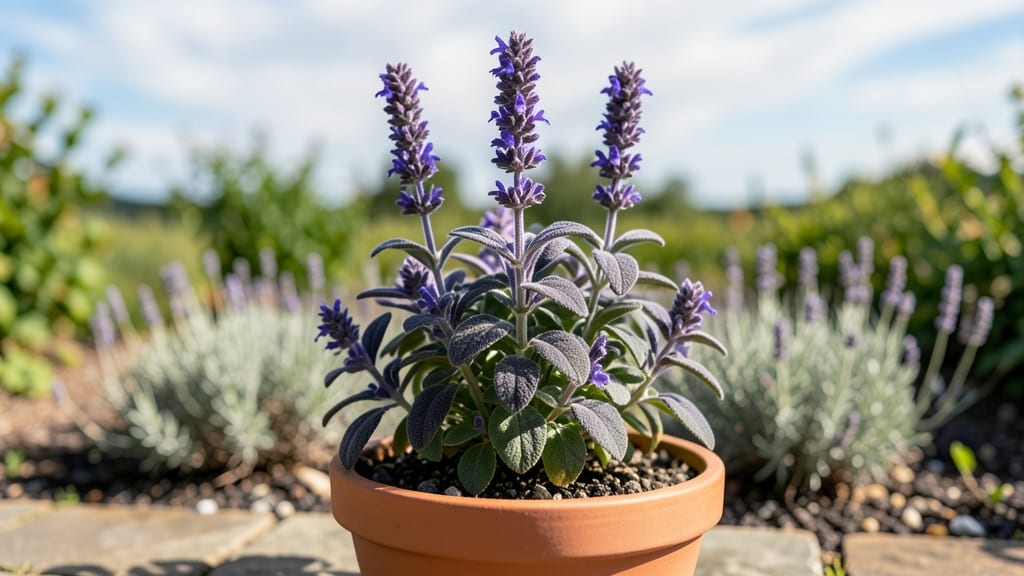
"Black and Bloom" sage transforms any garden into a velvety purple dream—its deep burgundy stems and lavender blooms create a striking contrast that lasts from spring through frost. 🌿 I fell in love with this variety after seeing it border a friend’s herb garden, where its rich hues made every other plant pop. Unlike traditional sage, this one keeps reblooming all season, giving you that dramatic, long-lasting color without sacrificing fragrance.
The secret to its showstopping performance lies in its sun-loving nature and drought tolerance—perfect for borders, containers, or as a focal point in herb spirals.
Pair it with silver foliage like lamb’s ear or dusty miller to make the purple stems sing, or contrast it with bright yellow coreopsis for a bold, cottage-garden look. Even in small spaces, it delivers year-round visual impact with minimal effort.
What makes this sage truly special is how it softens edges while adding structure—its upright growth habit creates movement, while the blooms attract pollinators all season. The fragrance? Even better than regular sage, with a sweet, herbal scent that lingers on your hands.
Plant it where you’ll see it daily, like near patios or walkways, and watch how it elevates the entire garden.
For best results, prune lightly after blooming to encourage bushier growth, and avoid overwatering—this is a low-maintenance superstar that thrives on neglect. Whether you’re designing a cutting garden, a pollinator-friendly border, or just want a fragrant, eye-catching centerpiece, this sage delivers effortless elegance that keeps giving.
📚 In This Guide
- What you need
- Instructions
- Tips and common mistakes
- Wrapping up and next steps
What you need
- ● Black and Bloom Sage Plants: 1-3 nursery-grown plants (6-8" tall) or seeds (if starting from scratch). Choose healthy, disease-free specimens with vibrant purple stems.
- ● Well-Draining Potting Soil: 10-15 lbs of high-quality, organic potting mix (e.g., Miracle-Gro Potting Mix or a cactus/succulent blend). Avoid heavy clay soil.
- ● Containers or Garden Bed: Containers: 5-7 gallon pots (with drainage holes) for each plant. Terracotta or fabric pots work best.
- ● Garden Bed: Full sun exposure (6+ hours daily) in a well-drained, slightly rocky or sandy soil area.
- ● Slow-Release Fertilizer: 1 lb of organic fertilizer (e.g., Osmocote Smart-Release Plant Food) or a balanced 10-10-10 granular fertilizer.
- ● Pruning Shears: Sharp, clean pair (e.g., Felco Classic F2) for trimming stems and encouraging blooms.
- ● Watering Can or Hose: With a gentle spray nozzle to avoid overwatering.
- ● Mulch: 2-3 lbs of gravel, pebbles, or organic mulch (e.g., pine bark) to retain moisture and improve drainage.
- ● Plant Support: Small stakes or cages (for container plants) to keep stems upright as they grow.
- ● pH Test Kit: To ensure soil pH is between 6.0-7.0 (sage thrives in slightly acidic to neutral soil).
- ● Compost: 1-2 cups per plant to enrich soil and boost blooms.
- ● Garden Gloves: To protect your hands while handling prickly stems or soil.
How to grow Black and Bloom sage with vibrant purple stems
Here's how to coax those striking purple stems and endless blooms from this showstopper variety.
🌱 Step 1: Select and Prepare the Right Planting Site
Black and Bloom sage thrives in full sun—at least 6 hours daily—so choose a south-facing location where it gets maximum exposure. The purple stems develop most intensely with 6-8 hours of direct sunlight, so avoid shaded spots. Amend the soil with 1-2 inches of compost to improve drainage, as this variety hates soggy roots.
Test your soil's pH before planting—Black and Bloom prefers slightly alkaline conditions between 7.0-7.5. If your soil is acidic, mix in a handful of crushed limestone per planting hole. The plant will reward you with deeper purple stems and more prolific blooms when happy in its ideal environment.
🪴 Step 2: Plant with Proper Spacing and Mulch
Dig a hole twice as wide as the root ball but no deeper. Place the plant so the top of the root ball sits ½ inch above soil level—this prevents rot during heavy watering. Space plants 2-3 feet apart to allow air circulation, which is crucial for preventing fungal diseases that can discolor those prized purple stems.
Backfill with native soil mixed with a slow-release 10-10-10 fertilizer (about 1 tablespoon per hole). Water deeply to settle the soil, then apply 2-3 inches of mulch around the base, keeping it 2 inches away from the stem. Use pine bark or gravel—organic mulches can compact and suffocate roots over time.
☀️ Step 3: Water Strategically for Purple Stems
Black and Bloom sage is drought-tolerant once established, but the secret to vibrant purple stems lies in consistent moisture during the first growing season. Water deeply once weekly during dry spells, delivering 1 inch of water per week—more in extreme heat. Let the top 2 inches of soil dry out between waterings to encourage deep root growth.
Here's the thing—underwatering causes stems to revert to green, while overwatering washes away nutrients that fuel the purple pigment. You'll know you're doing it right when new growth maintains its deep purple hue and the plant produces continuous blooms from early summer through fall.
✂️ Step 4: Prune for Bushier Growth and Reblooming
Prune Black and Bloom sage right after flowering to encourage a second flush of blooms. Use clean, sharp pruners to cut back ⅓ of the plant's height, focusing on leggy stems and spent flowers. Make cuts just above a set of leaves to promote new growth from that node.
Remove any stems that turn completely brown or show signs of disease—these won't recover their purple color and can spread problems. After pruning, apply a balanced liquid fertilizer (like 5-5-5) at half strength. This timing jumpstarts the next round of purple-stemmed growth that will bloom again in 6-8 weeks.
🌿 Step 5: Overwinter for Next Season's Purple Display
In colder climates, protect Black and Bloom sage by applying 4-6 inches of mulch around the base after the first frost. The plant's woody stems can handle down to 0°F, but the mulch prevents soil heaving that could damage roots. In warmer zones, no special care is needed—the plant will continue producing purple stems and blooms year-round.
Come spring, remove the old mulch and trim any dead stems back to 2-3 inches above the ground. You'll see fresh purple growth emerge within 3-4 weeks, proving this variety's hardiness. The key to maintaining those showstopping stems? Consistent care and avoiding heavy pruning in late summer—this forces the plant to focus on root growth rather than new shoots.
Tips & tricks for cultivating vibrant Black and Bloom sage
These essential insights will help you maximize those showstopping purple stems and keep your sage blooming beautifully all season.
Sunlight Optimization: While the instructions call for 6-8 hours of direct sunlight, I've found that positioning your plants on the western side of your garden gives them that extra hour of intense afternoon sun that really intensifies the purple pigment. If you're in a particularly hot climate, provide light afternoon shade during the hottest months to prevent stress—this helps maintain the vibrant color while still encouraging blooms. The key is finding that balance between maximum sun exposure and preventing heat stress that could revert the stems to green.
Soil Science Secret: The instructions mention testing for slightly alkaline soil (7.0-7.5), but here's what nobody tells you—the color development is most dramatic when your soil's pH is at the upper end of that range (7.4-7.5). If you're unsure about your soil's pH, grab a simple test kit from your garden center. For a quick fix, sprinkle ½ cup of wood ash around each plant annually—it naturally raises pH and provides potassium that supports those striking purple stems. Just don't overdo it, as too much ash can make the soil too alkaline.
Watering Technique: When the instructions say to water once weekly delivering 1 inch of water, I recommend using a soaker hose placed at the base of the plant rather than overhead watering. This method delivers water directly to the roots where it's needed most, while preventing fungal issues that can develop on the leaves. The deep watering also encourages those roots to grow deeper, which makes the plant more drought-tolerant once established. I've seen plants that get only ½ inch of water weekly in my dry climate still thrive because of this technique.
Pruning Precision: The instructions specify cutting back ⅓ of the plant's height after flowering, but I've found that making these cuts just above a set of leaves (as mentioned) works best when you also angle the cut slightly downward. This technique helps water run off the cut rather than pool, reducing the risk of disease. Also, when you see those first signs of new purple growth after pruning, resist the urge to trim again—let that second flush of blooms develop fully before any additional pruning. You'll get more vibrant stems and longer bloom times.
Pro Tips for Black And Bloom Sage
- These essential insights will help you maximize those showstopping purple stems and keep your sage blooming beautifully all season.
- If you're in a particularly hot climate, provide light afternoon shade during the hottest months to prevent stress—this helps maintain the vibrant color while still encouraging blooms.
- If you're unsure about your soil's pH, grab a simple test kit from your garden center.
Frequently asked questions
Why isn’t my Black and Bloom Sage blooming?
Patience is key! This sage typically blooms after its second year, especially if pruned correctly. Ensure it gets 6+ hours of sun daily and well-draining soil. Over-fertilizing can delay blooms—stick to a low-nitrogen feed in early spring. If it’s still sluggish, check for root-bound pots or pests like spider mites.
How often should I prune Black and Bloom Sage for reblooming?
Prune once in early spring (just after new growth appears) to shape the plant and encourage bushiness. For continuous blooms, give it a light trim after flowering (but avoid cutting into woody stems). Never prune in fall—this sage needs time to harden off for winter. Use clean, sharp shears to avoid disease!
Is Black and Bloom Sage drought-tolerant?
Once established, it thrives on infrequent watering—aim for deep watering every 1–2 weeks (less in winter). Overwatering is the #1 killer—sage hates soggy roots. Mulch around the base to retain moisture and keep roots cool. If leaves yellow, you’re likely overdoing it!
Can I grow Black and Bloom Sage in containers?
Yes! It’s perfect for pots—just use a fast-draining mix (add perlite or sand). Choose a container at least 12 inches wide with drainage holes. Terracotta pots work great because they wick away excess moisture. Move containers to a sheltered spot in winter if temps drop below 10°F (-12°C).
What’s a good alternative if I can’t find Black and Bloom Sage?
Try these purple-stemmed or reblooming sages:
- ‘Tricolor Sage’ – Variegated leaves with purple-tinged stems.
- ‘Berggarten’ Sage – Deep purple foliage and long blooms.
- ‘May Night’ Sage – Dark purple leaves, drought-tolerant.
How do I treat pests on my Black and Bloom Sage?
Spider mites and aphids love sage! Blast them off with a strong spray of water, then apply neem oil or insecticidal soap. For severe infestations, isolate the plant and repeat every 5–7 days. Prevent pests by pruning for airflow and avoiding overhead watering.
Still stumped? Drop your question in the comments—we’re happy to help your sage thrive!
Wrapping up and next steps
Growing black and bloom sage is a rewarding journey that brings vibrant purple stems and fragrant blooms to your garden all season long! With the right care—well-draining soil, full sun, and occasional pruning—this striking variety thrives effortlessly.
Whether you’re a seasoned gardener or just starting out, its resilience and beauty make it a must-have for any herb or ornamental garden.
Ready to transform your space? Start with a single plant and watch it flourish—your garden (and senses!) will thank you. 🌿✨